
The best towns inside a nature park that have a serious restaurant in Liguria
Liguria is narrow enough that a protected ridge and a working harbour can sit within the same commune. The parks here cover holm oak and pine on the headlands, olive terraces held up by dry-stone walls, and the reed beds and sandbanks where the Magra runs out to the Tyrrhenian. The building material is the same throughout: slate for the doorframes and roofs, render painted ochre and rose, shutters that go green with salt. Autumn is the season the kitchens sharpen, when the mushrooms come out of the inland woods and the anchovies have finished their run, and spring brings the first wild herbs into the pasta.
The Cinque Terre absorbs most of the region's walkers. The path between the villages is ticketed, the trains are full through the middle of the day, and the restaurants along the main street of each village are cooking for people who will not come back. It is a fine piece of coast and the terracing is remarkable, but the trail is often busy enough that stopping to look at anything is awkward, and lunch is a queue.
The protected land does not stop where the famous stretch does. The same walls, the same slate, the same sea run north to the Portofino headland and south into the estuary of the Magra, and inland the parks climb into the Val Bormida where the food turns towards mushrooms, game and chestnut. The towns collected here all sit inside a regional nature park and all hold a restaurant listed by the most demanding of the guides, which is a rarer pairing in Liguria than it sounds. Fewer people walk in from these directions.
Of the 54 communes we have mapped in Liguria, 6 qualify as towns inside a nature park with a serious restaurant: each sits inside a regional nature park, and each holds a restaurant listed by the most demanding of the guides. The smallest, Portofino, has 355 residents.
If you are still choosing, we have also written The best towns inside a nature park that eat well in Liguria and The best coastal towns inside a nature park in Liguria.
Millesimo
Why visit Millesimo
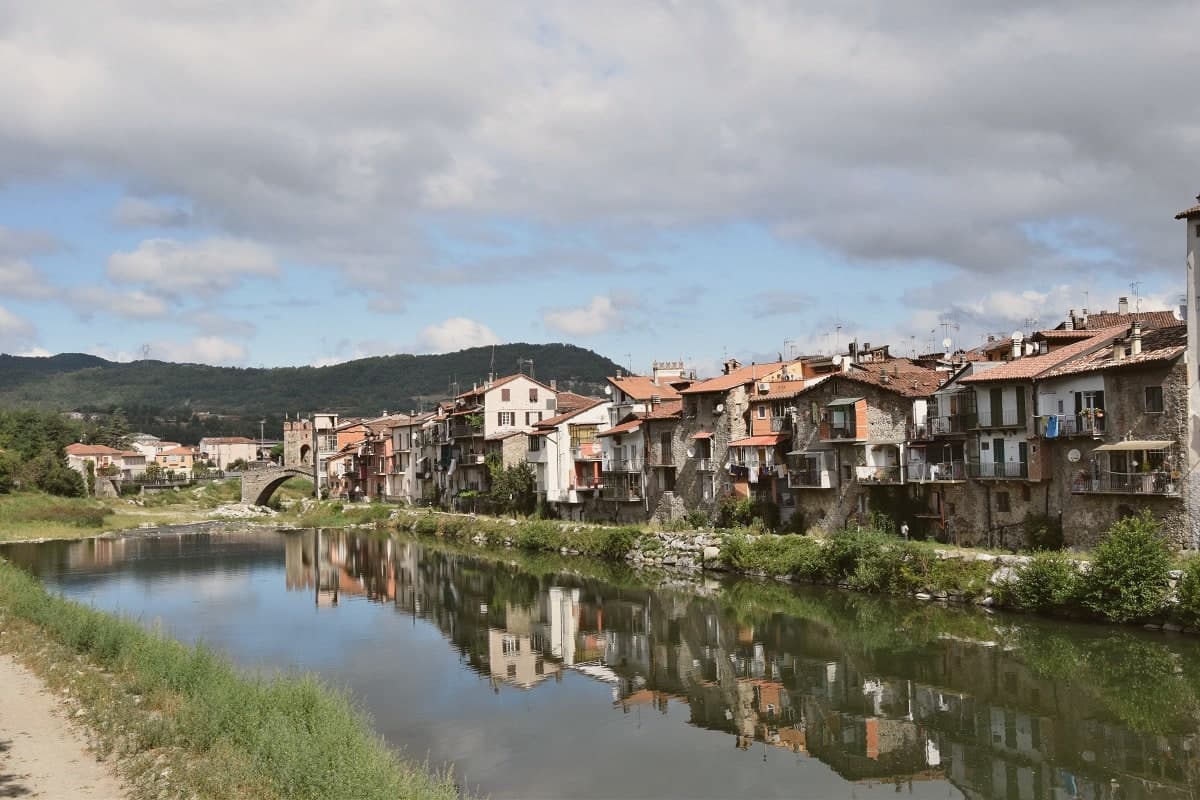
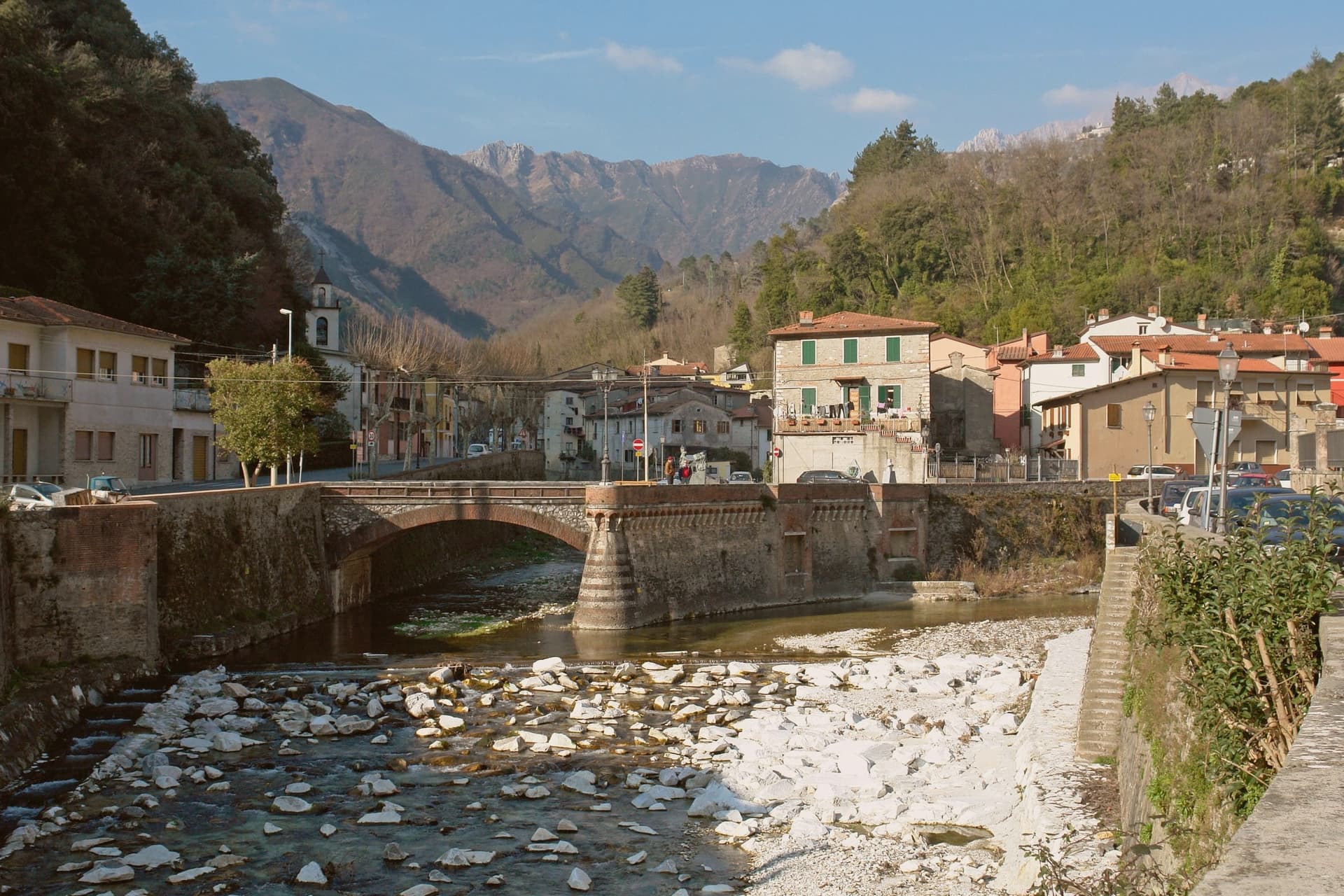
Millesimo sits sixty kilometers inland from Genoa, over the Apennine watershed, in the upper reaches of the valley that gives the wider area its name. Enrico II Del Carretto turned the village into a fortified borgo in 1206, and his successors raised the castle later in the same century on the high ground above the settlement.
The town itself grew on the right bank of the river below that castle, its stone houses laid out in a triangle around the central piazza, with the fortified bridge carrying the crossing at the valley floor and the pilgrimage sanctuary set apart on the outskirts as the valley's separate religious focus. More than three thousand casualties fell on each side when Napoleon Bonaparte defeated the combined Austro-Sardinian forces here on 13-14 April 1796, directing the campaign from the Del Carretto palazzo on the piazza that now serves as the town hall.
The pattern is one of a small defensive settlement whose river crossing, castle and family seat all sit within sight of each other, later put to use for a battle whose scale had nothing to do with the size of the place that hosted it.
Locanda dell'Angelo have been named by a guide.
What to see in Millesimo
- Ponte della Gaietta. The old fortified body still spans the river below the village, narrow enough that its defensive purpose is obvious from either bank.
- Castello Del Carretto. Tower, keep and east wall stand above the village on the high ground, the stronghold that gave the marquis line command of the valley approach.
- Palazzo Del Carretto. The family palazzo faces the central piazza and now serves as the town hall, its rooms the setting for the 1796 headquarters rather than a battlefield relic.
How to get to Millesimo
Genova is roughly 73 minutes away by road.
Our tip
April through June and September through October are the dry months in the upper Val Bormida. The interior of Liguria runs cooler than the coast at this elevation, with mild days and chilly evenings; the rivers run higher in spring after the watershed melt. July and August warm up but Millesimo's 429 meters stay tolerable. XXXIV Festa nazionale del tartufo della Val Bormida a Millesimo falls in October.
Santa Margherita Ligure
Why visit Santa Margherita Ligure
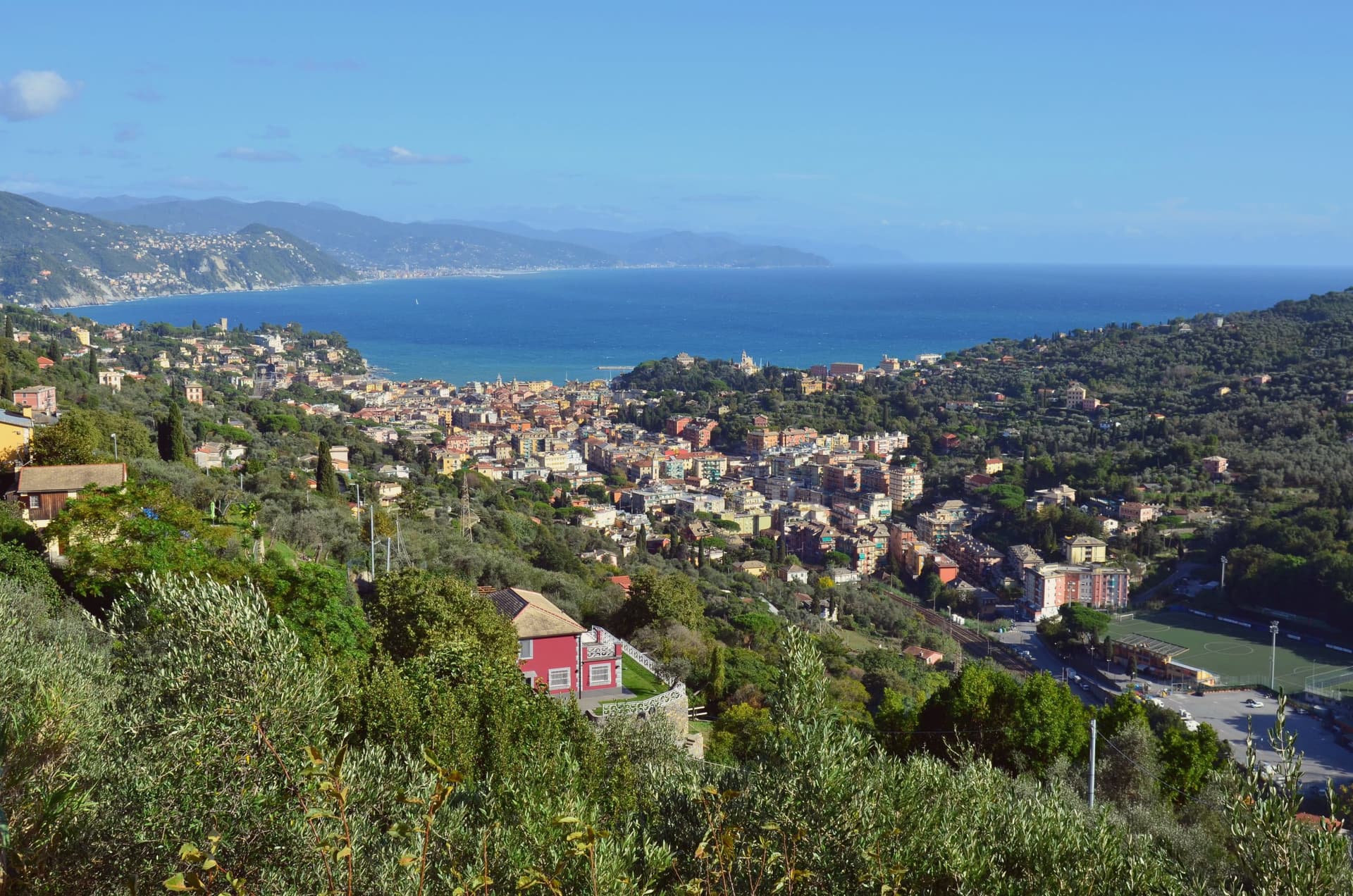
Santa Margherita Ligure sits on the inner curve of the Tigullio gulf, 35 kilometers southeast of Genova, between Camogli and Portofino. The two medieval burghs of Pescino and Corte were unified in 1813 under Napoleonic rule as Porto Napoleone, then renamed when the Kingdom of Sardinia took the coast back in 1815.
Genoese architecture survived the merger: trompe-l'oeil facades on the seafront, the 1658 Basilica of Santa Margherita d'Antiochia with its baroque interior of marble and crystal, the 1550 castle built against North African corsair raids by the architect who built Rapallo's. Villa Durazzo, raised in 1678 as a Genoese summer residence, holds three hectares of terraced gardens above the harbor.
The port still works fishing boats alongside the yachts. Most day-trippers continue to Portofino.
The ones who stop find a town that uses its seafront rather than performing it.
Taverna Colombo, Langosteria Paraggi, ö Magazín In Spiaggia and 1 more have been named by a guide.
What to see in Santa Margherita Ligure
- Basilica di Santa Margherita d'Antiochia. Baroque parish basilica from 1658, crystal chandeliers and gilded statuary, dominating Piazza Caprera in the centro storico.
- Villa Durazzo-Centurione. Genoese summer villa from 1678 with frescoed Piano Nobile apartments and a three-hectare terraced park above the Tigullio gulf.
- Castello di Santa Margherita Ligure. Coastal fort raised by the Republic of Genoa in 1550 against Saracen and Barbary raids, designed by the architect of Rapallo's castle.
How to get to Santa Margherita Ligure
There is a railway station in the town, so you can arrive without a car and never need one while you are here. Genova is roughly 40 minutes away by road.
Our tip
April through June and September into October are the strongest months. The sea is warm enough from late May, the Tigullio quiets after September, and Villa Durazzo's gardens are at their best in shoulder season. July and August fill the seafront, the Portofino ferries run packed, and the inland streets keep a few degrees of shade.
Portofino
Why visit Portofino
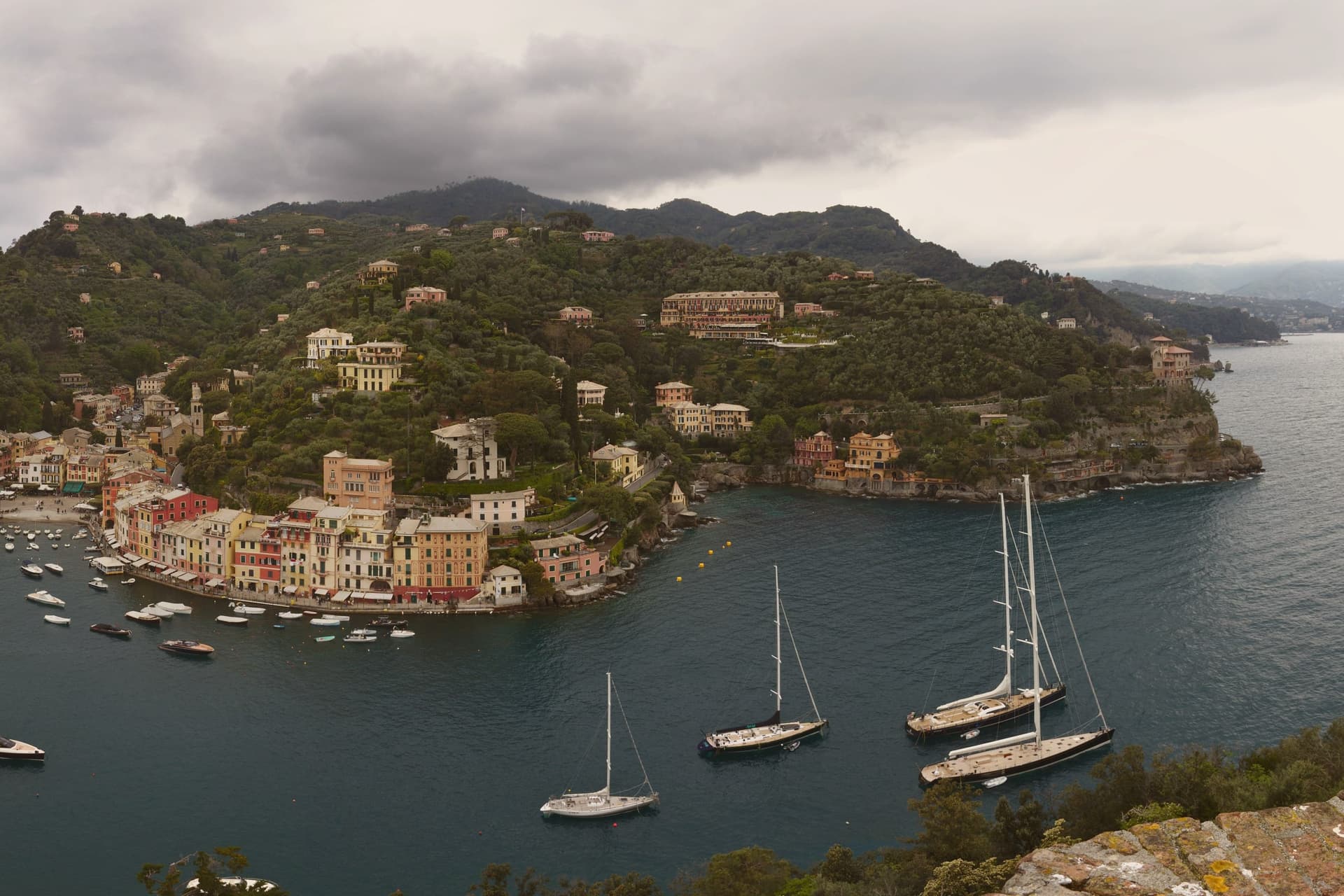
Portofino occupies the smallest municipal territory in the Metropolitan City of Genova, 355 residents on a horseshoe harbor on the southern tip of the Portofino headland. The whole commune sits inside the Portofino Regional Natural Park and the Portofino Protected Marine Area.
Roman fortification stood on the hill above the harbor; the medieval Genoese fort took the name Castello di San Giorgio, was later renamed Castello Brown after the British consul who bought it in 1867. British and then northern European aristocrats discovered the village in the late nineteenth century.
Aubrey Herbert and Elizabeth von Arnim were among the early regulars. By 1950 tourism had replaced fishing as the main industry.
The Chiesa di San Giorgio, first built in 1154 and destroyed by a wartime bomb, was rebuilt in 1950 on the 1760 plans. The painted facades around the harbor are the photograph everyone takes.
The footpaths into the park behind the village are the reason to stay longer than the cruise day-trippers.
Piazzetta di Portofino, Cracco Portofino, DaV Mare have been named by a guide.
What to see in Portofino
- Castello Brown. Genoese coastal fort raised over a Roman site, renamed in 1867 after British consul Montague Yeats Brown, now a historic house museum above the harbor.
- Chiesa di San Giorgio. Church first built in 1154, destroyed in Second World War bombing, rebuilt in 1950 on 1760 plans, on the path up to Castello Brown.
- Faro di Portofino. Lighthouse at the tip of the Portofino headland, walking distance from the harbor along the Punta del Capo coastal path.
How to get to Portofino
Genova is roughly 78 minutes away by road.
Our tip
May through June and September into October are the best months. The harbor is open, the park trails are dry, and the day-tripper rush from cruise ships is less intense than in midsummer. July and August fill the piazzetta from late morning to dusk, the ferry queues from Santa Margherita stretch to the seafront, and parking is closed to outside cars.
Ameglia
Why visit Ameglia
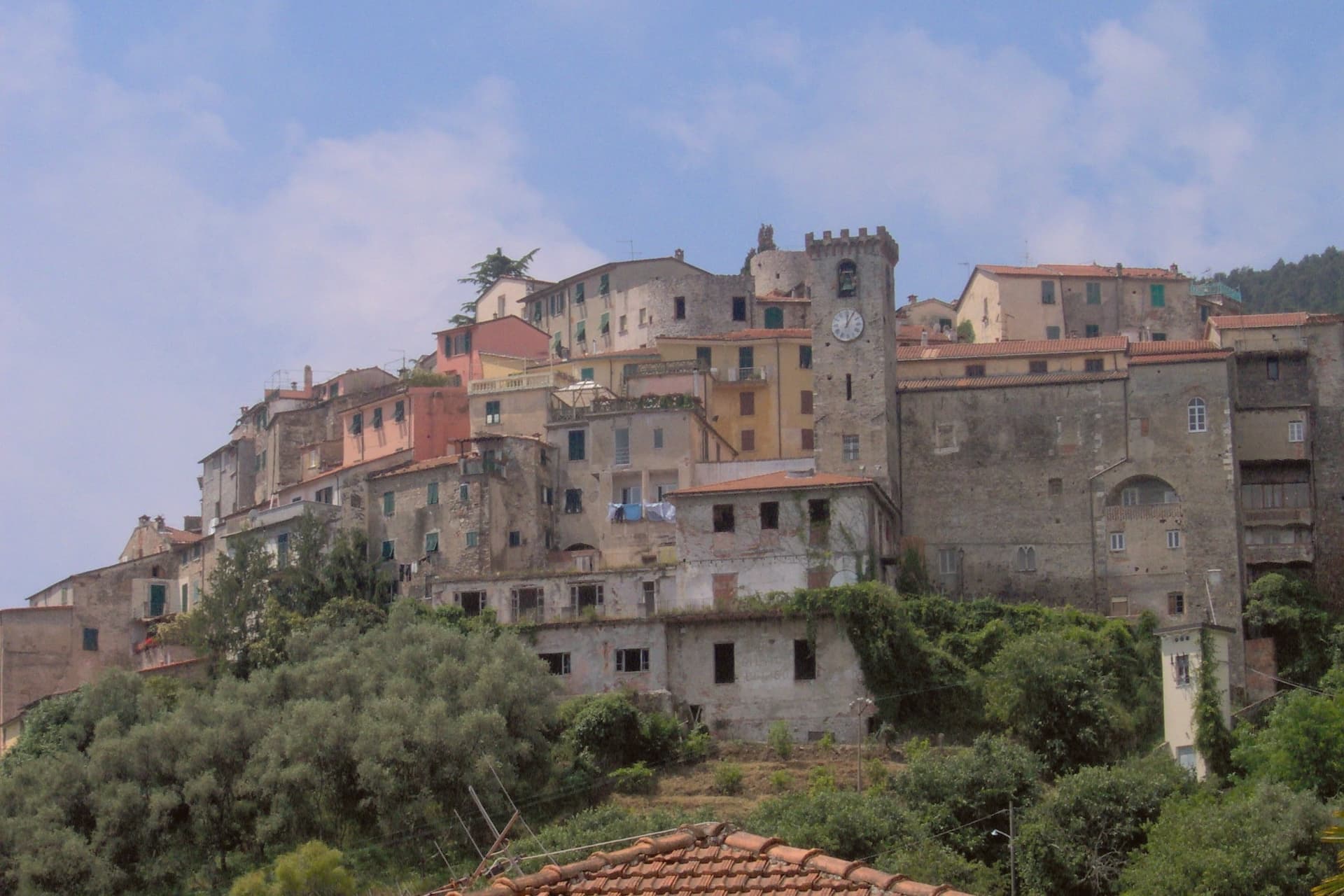
The Magra was the Roman Macra, the eastern boundary of Liguria, and the hill at Ameglia stands on the border between Lunigiana and the Riviera where that river reaches the sea. Genoa bought part of the fief in 1141, the bishops took it back by 1284, and Castruccio Castracani of Lucca conquered it in 1321: a small fortress passed between larger powers for three and a half centuries before it settled into the shape it now has.
The marina at the river mouth is a separate world from the hill town above it. Where the castle and its concentric streets sit on the summit, the frazione at the water is a former fishing village, flat, tied to the tide and to summer moorings rather than to the bishops who once held the heights.
The two headlands south of that marina are reachable only by boat or steep footpath, cut off from the estuary settlement by their own geography rather than by distance. The town, in effect, is two places joined by the same river: a fortified height that answered to Luni and Genoa, and a working shoreline that answered to the sea.
Pescarino-Sapori di Terra e di Mare, LUV Ristorante have been named by a guide.
What to see in Ameglia
- Castello di Ameglia. Rebuilt in 1174 on a tenth-century footprint, episcopal fortress of the bishops of Luni, cylindrical keep above the Magra estuary.
- Centro storico di Ameglia. Concentric medieval streets around the castle, twelfth and thirteenth-century houses with stone arches and external staircases.
- Bocca di Magra. Old fishing village and marina at the river mouth, summer mooring for small craft, departure point for Punta Corvo by sea.
How to get to Ameglia
Pisa is roughly 60 minutes away by road.
✷ We have written about Ameglia
“It has the best panorama in Liguria, full stop, and I do not think it is close. The reasons are two. The first is the obvious one. You are 266 meters up, the cliff is high enough that there is no rocky beach below to draw a crowd, the sea on one side is the Gulf of La Spezia with Portovenere across the water and the Cinque Terre fading north, and the view on the other side is the Magra running into its delta with the white Apuane behind it and Tuscany beyond.”
Read our piece on Ameglia →Magra Delta Roadtrip | A Tagine, a Lighthouse, and a Dead Roman City
Our tip
April through June and September to October bring the river's best months: clear estuary water, the headland walks down to Punta Corvo manageable, marinas at Bocca di Magra not yet at summer capacity. July and August fill the river mouth with summer boats from across the Gulf of Poets, and the road down from the borgo backs up on weekends. The Sagra del Pesce in mid-August draws thousands. Mercato Settimanale Di Ameglia falls in August.
Lerici
Why visit Lerici
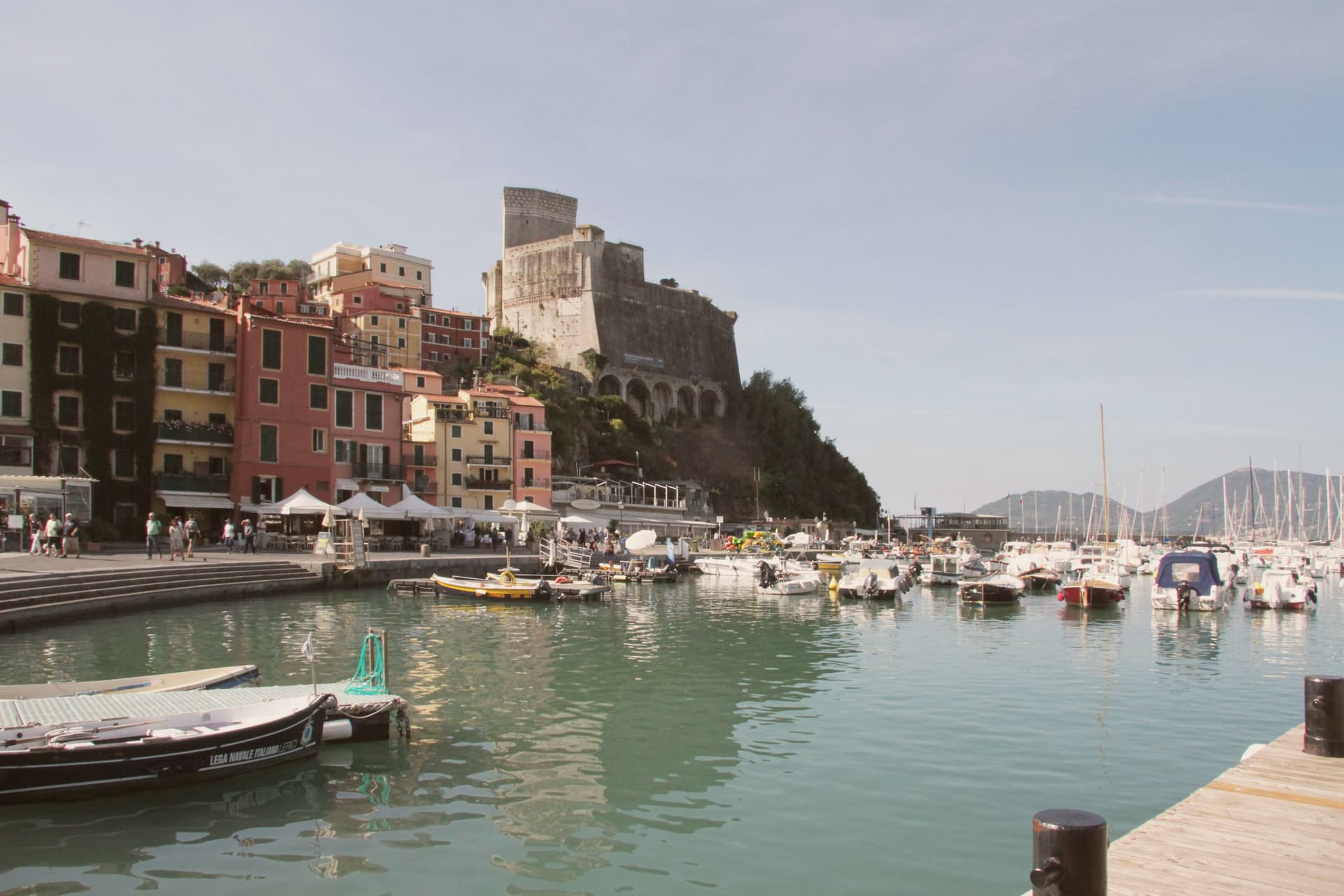
The Gulf of La Spezia takes its eastern shore here, and English Romantics renamed that shore the Bay of Poets after Byron and Shelley made it their address in the early 19th century. The fortress that defines the harbour was begun by the Pisans in 1152 to control the gulf, captured by the Genoese in 1256, and rebuilt in its present pentagonal form through the 14th and 15th centuries; it now holds a paleontology museum with Jurassic dinosaur tracks recovered from the local sandstone.
Shelley lived at a house in nearby San Terenzo in 1822, he drowned that summer sailing from Livorno, and Byron swam across the bay from Portovenere on his way to visit him. Beyond the historic harbour the commune stretches south past a colourful frazione perched on a rocky promontory above the sea, a member of the Borghi più belli d'Italia network in its own right; a coastal trail links the two through olive terraces and pine woods.
The town beach holds a Bandiera Blu and the harbour fills with sailing dinghies all summer. Upper fortress and lower water, working harbour and outlying fishing hamlet: the whole gulf edge here reads as one address that two poets happened to share, and the parts of the commune as its castle, its beach, and its outpost on the rocks.
Il Fico trentacareghe, La Barca have been named by a guide.
What to see in Lerici
- Castello di Lerici. Begun by the Pisans in 1152, captured by Genoa in 1256, rebuilt in its present form in the 14th-15th centuries. The pentagonal walls still hold the harbour under them, and the paleontology museum inside keeps the Jurassic tracks pulled from the local sandstone.
- Bay of Poets / Casa Magni. The Casa Magni at San Terenzo, a Lerici frazione, was Shelley's residence in 1822, the year he drowned in the bay. The house still stands on the shore that gave the Bay of Poets its name.
- Tellaro. Pastel-coloured fishing frazione clinging to a rocky promontory at the southern edge of the bay. Linked to Lerici by the coastal Castelnuovo trail.
How to get to Lerici
Pisa is roughly 61 minutes away by road.
✷ We have written about Lerici
“We know the steep streets above the castle by heart. We know which restaurant is for the view and which is for the dinner. We know that the gelato in San Terenzo, made at a place called La Rana Golosa, is worth the half-hour walk along the sea to find. We know the underpass that takes you to the small free beach under the castle, the rocks at the back of it, and the bench halfway along the promenade to San Terenzo where, on a good day, the wind off the Gulf has the precise temperature of being alive.”
Read our piece on Lerici →Lerici | An Old Friend on the Gulf of Poets
Our tip
April through October is the open season in the Bay of Poets — warm coastal days, calm seas from late spring, and the sailing fleet active all summer. June and September are the best months: warm sea, longer light, fewer crowds than July-August. The castle is open year-round (paleontology museum included) and Tellaro is best in October-November when the colours go warm. Mytiliade a Lerici falls in September.
Sarzana
Why visit Sarzana
Sarzana sits on the Magra plain at the Liguria-Tuscany border, eighty kilometers from Parma and thirteen from the sea at Portovenere. The town inherited the episcopal seat of Luni in 1204, when Pope Innocent III moved it here away from the malarial plain, and the cathedral built for that new seat still anchors the centro storico.
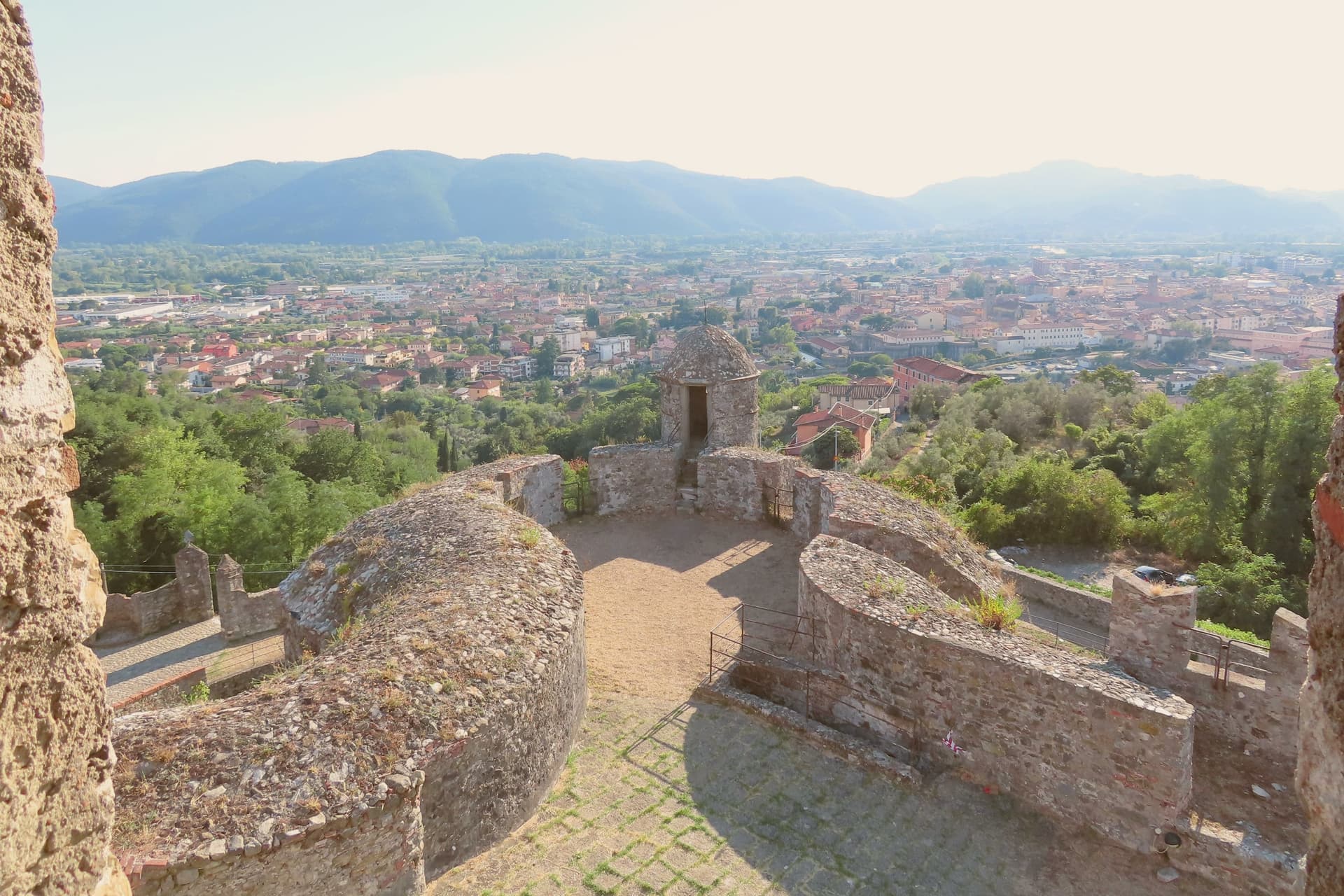
The walled center keeps its grid plan, with Via Mazzini and the cathedral square running through it and the Palazzo Roderio still doing duty as the town hall. Above the town, on a ridge, a second fortress with a triangular plan looks down on the plain and the older one below.
A future pope was born here in 1397. Between the hill fortress from the fourteenth century, the Renaissance rebuilding of the lower cittadella, and a cathedral that changed hands with a diocese, the town's layout reads as a record of who controlled the Magra plain and when.
Pasticceria Gemmi il Loggiato, Il Cardinale Vino e Cucina, Piccolo Ristorante and 1 more have been named by a guide.
What to see in Sarzana
- Fortezza Firmafede. The fortress replaced a medieval cittadella on the same ground. Giuliano da Sangallo's plan survives largely intact, with the bulk and angles of the walls still readable from the approach into town.
- Cattedrale di Santa Maria Assunta. Late Gothic Tuscan cathedral, elevated to minor basilica in 1947. A cardinal born in the town, half-brother to a native-born pope, left his mark on the later additions.
- Croce di Mastro Guglielmo. The cross hangs inside the cathedral it has occupied since the seat moved here. Signed by its maker, it is the object the town's Romanesque reputation rests on.
How to get to Sarzana
There is a railway station in the town, so you can arrive without a car and never need one while you are here. Pisa is roughly 54 minutes away by road.
Our tip
April through June and September into October are the strongest months for the centro storico, with the Festival della Mente filling the squares at the end of August. July and August are hot on the Magra plain, often 32 to 35 degrees; the Fortezza Firmafede holds courtyard concerts in the evenings. The town stays open year-round because it is a working provincial center of 21,650 residents, with daily markets and trains to La Spezia, Pisa, and Parma. Marinella Fish Festival falls in August.
More from Anywhere Italy
 The best towns inside a nature park that eat well in Liguria
- The best coastal towns inside a nature park in Liguria
 The best small towns inside a nature park in Liguria
- The best small towns inside a nature park that eat well in Liguria
- The prettiest villages inside a nature park in Liguria
 The best coastal towns inside a nature park within 90 minutes of Pisa