
The best olive oil towns within 45 minutes of Catania
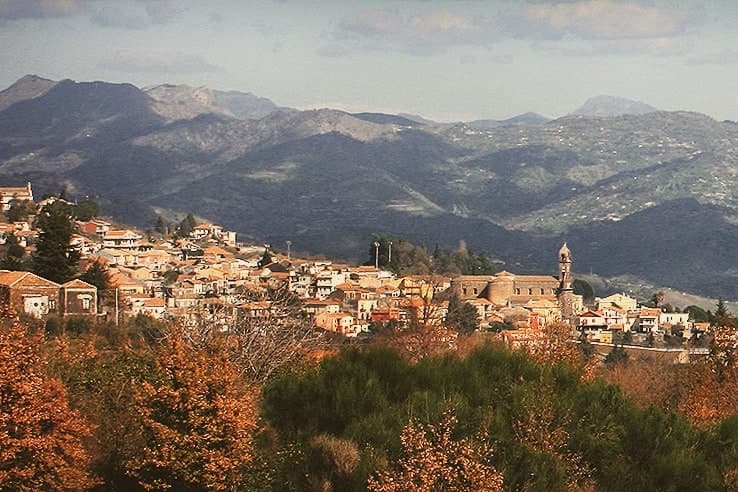
Etna's eastern flank grows olives on ground the colour of soot, terraced behind dry lava walls and interrupted by chestnut, vine and lemon. The oil from these slopes tends to be green and sharp at the back of the throat, best in the weeks after the autumn harvest when the frantoi run late and new oil goes onto grilled bread with nothing but salt. Houses are built from the same basalt as the walls, so whole streets read dark grey under a very bright sky. Late October and November are the months to come for the pressing, though the groves are worth walking in spring when the ground between the trees is full of wild fennel.
Most visitors to this stretch of Sicily go straight up to Taormina, and it earns the attention: the Greek theatre, the sea drop, the terraces looking back at the volcano. It is also the place every coach on the Ionian coast is heading for, and in summer the main corso moves at the pace of the slowest group in front of you. Prices on the balcony tables reflect the view rather than the kitchen. The oil in the carafe often comes from somewhere else entirely.
The groves, the lava terraces and the harbours carry on north and south of the famous headland, and that is where these towns are. Some sit high on the volcano among chestnut woods, others down at sea level where fishing boats and citrus warehouses share the same waterfront. All of them fall inside the production zone of a protected olive oil, and all are within about three quarters of an hour of Catania, which makes them a straightforward day out or a quieter base than the coast road resorts.
Of the 7 communes we have mapped in a 45-minute drive of Catania, 6 qualify as olive oil towns: each sits inside the production zone of a protected olive oil. The smallest, Sant'Alfio, has 1,509 residents.
Elsewhere in the catalogue: The best towns known for what they grow within 45 minutes of Catania and The best coastal towns within an hour of Catania.
Sant'Alfio
Why visit Sant'Alfio
Sant'Alfio sits at 537 meters on the eastern slope of Etna, eight kilometers from the active crater. The village grew around a seventeenth-century sanctuary dedicated to the brothers Alfio, Filadelfo and Cirino, three Christian martyrs deported from the Greek Aegean to Sicily under Decius and venerated as the town's patrons.
The real draw is older. The Castagno dei Cento Cavalli, on the Linguaglossa road just outside the centro, is the largest and oldest sweet chestnut in the world, between 2,000 and 4,000 years old, listed by Guinness for a recorded girth of 57.9 meters in 1780.
The trunk has since split into separate stems sharing one root system. The legend gives the tree its name: Queen Joanna of Aragon and her hundred mounted retainers are said to have sheltered beneath it during a storm.
The slopes around the village produce Etna Rosso DOC from Nerello Mascalese and cherries that fill the late-June sagra.
What to see in Sant'Alfio
- Castagno dei Cento Cavalli. Sweet chestnut between 2,000 and 4,000 years old on the Linguaglossa road, recorded by Guinness for a girth of 57.9 meters.
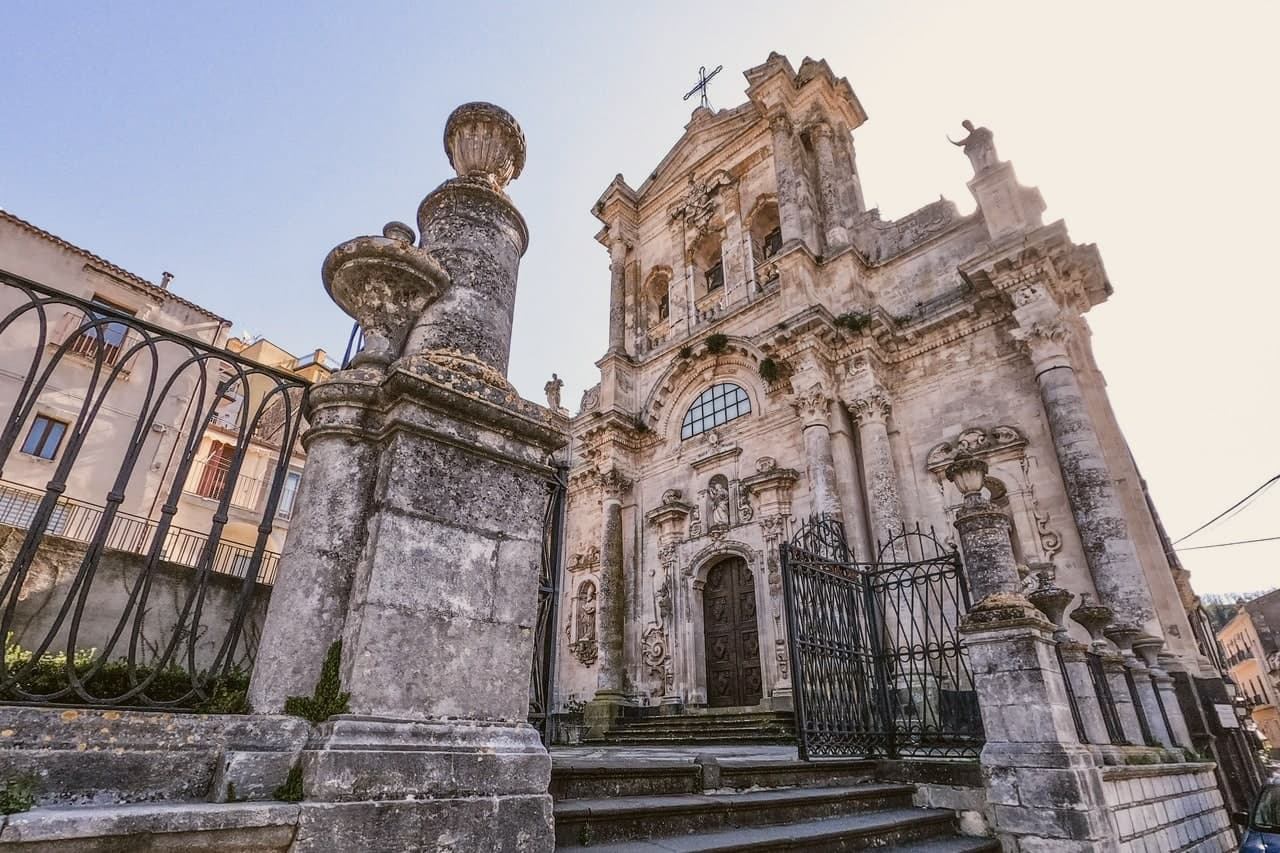
- Santuario dei Santi Martiri Alfio, Filadelfo e Cirino. Seventeenth-century parish sanctuary dedicated to the three brother martyrs, raised on a staircase of black Etna lava stone.
- Versante orientale dell'Etna. Lava fields and chestnut and oak woods on the volcano's east flank, crossed by trails from the village toward the summit craters.
How to get to Sant'Alfio
Catania is roughly 44 minutes away by road.
Our tip
April through June and September through November are the working months on the east slope of Etna. The chestnut woods leaf out in May, the Sagra della Ciliegia fills the last weekend of June, and the grape harvest runs from late September into October. July and August stay cooler than the Catania plain because of the 537-meter elevation, but the sun is hard and many visitors come for the volcano rather than the village.
Nicolosi
Why visit Nicolosi
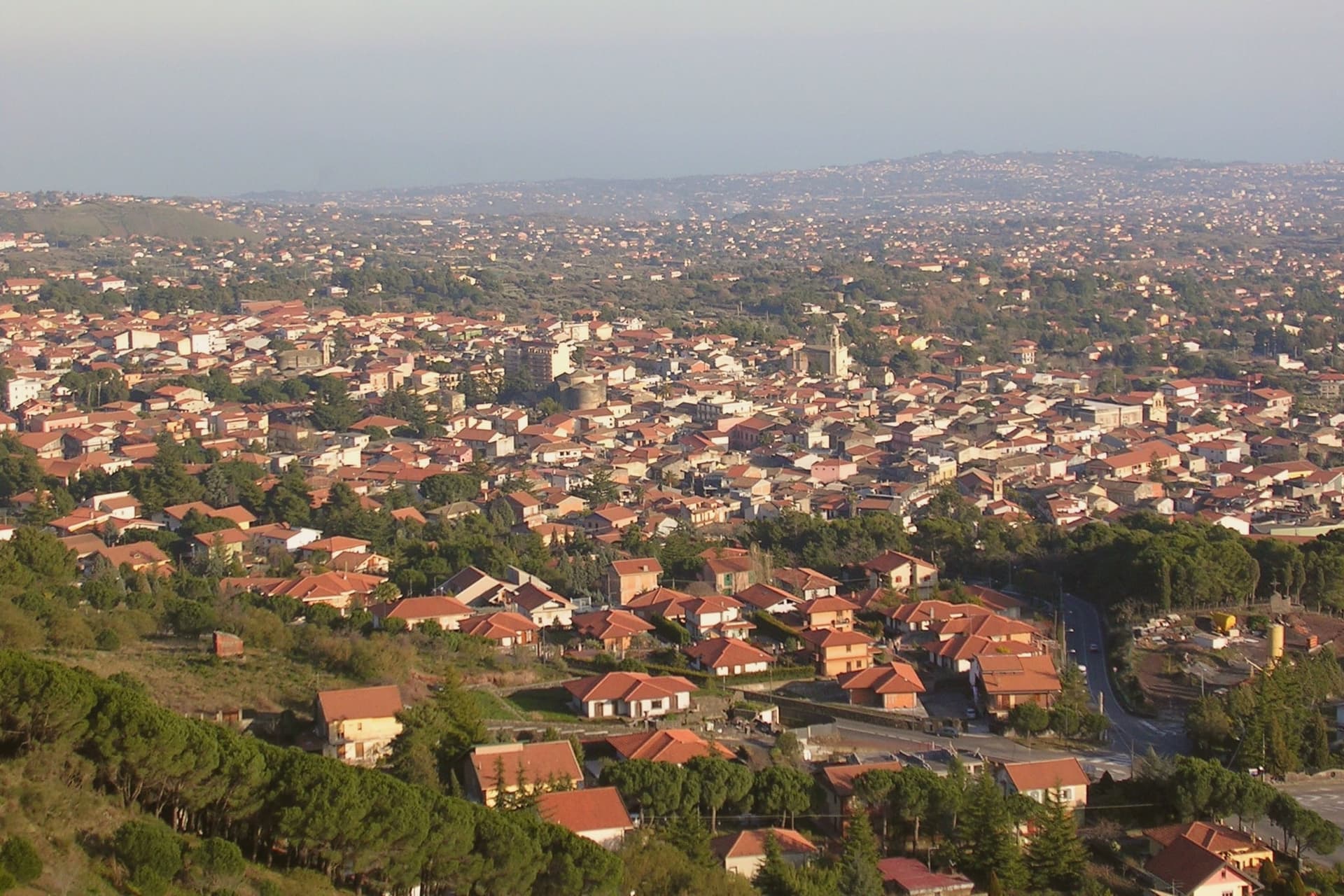
Nicolosi sits at 698 meters on the southern slope of Etna, twelve kilometers north of Catania. The town was founded in 1359 around the Benedictine monastery of San Nicolò l'Arena.
In March 1669 a fissure opened above the town and Etna erupted for four months, lava burying part of the settlement and pushing on to Catania harbor. What remained was rebuilt around the church the flow had spared, and the cones left by that eruption, first called Monte della Ruina, later took their name from their color.
Above the rebuilt town the road climbs toward the volcano park and the cable car station, so that Nicolosi works as the point where the settled southern slope, its bread, honey and olive groves, gives way to the bare upper mountain. The town is where the ordinary, inhabited Etna ends and the crater country begins.
What to see in Nicolosi
- Monti Rossi. Twin cones standing over the town, walkable on paths that circle the craters, the ground still dark scoria underfoot.
- Funivia dell'Etna a Rifugio Sapienza. Cable car rising to 2,500 meters, the station reached twenty minutes uphill from Nicolosi and marking the start of the southern ascent on foot beyond the lift.
- Chiesa di Santa Maria delle Grazie. The church the lava did not reach, standing at the center of the rebuilt town, its fabric showing the later repairs made after further seismic damage.
How to get to Nicolosi
Catania is roughly 28 minutes away by road.
Our tip
May through October are the working months on the southern Etna slope. Nicolosi at 698 meters runs five to seven degrees cooler than Catania; July and August are bearable here while the coast is not. The Funivia dell'Etna operates year-round, with snow at the cable car upper station from late November through April.
Riposto
Why visit Riposto
Riposto sits on the Ionian coast twenty-five kilometres north of Catania, at the eastern foot of Etna and the southern edge of the Giarre-Riposto conurbation. The name is commercial: u ripostu in Sicilian, the cellar, because the wine produced in the surrounding county of Mascali was stored here before being loaded onto ships.
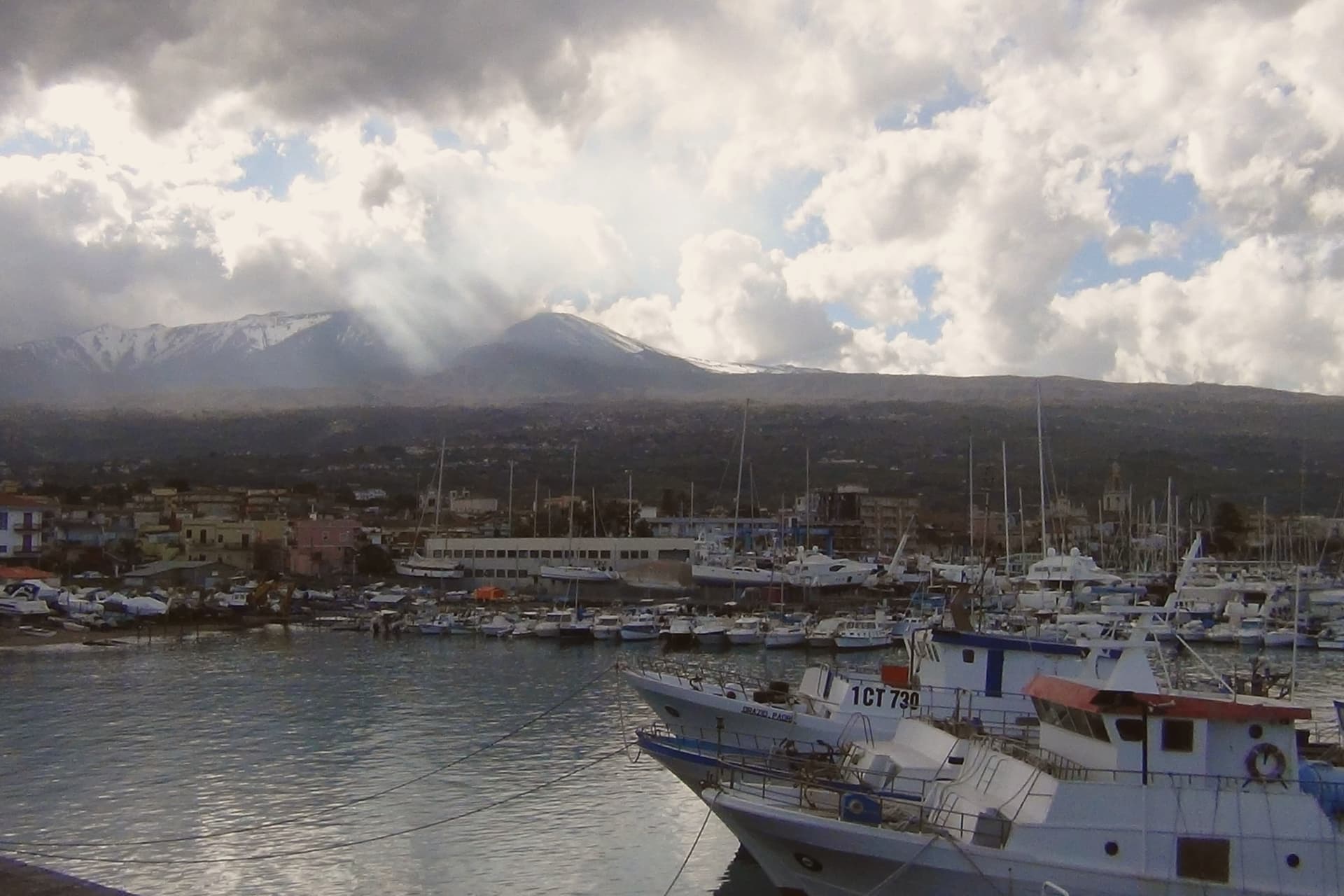
The town was the commercial port of Mascali from the sixteenth century onwards, won full administrative autonomy in the eighteenth, and was merged with neighbouring Giarre under the name Jonia from 1939 until 1945, when the two split again. Today the Porto dell'Etna, also called Marina di Riposto, runs as a combined tourist marina, fishing port and small commercial harbour.
Locals still call the town the port of the volcano. Etna fills the western skyline, the railway runs to Catania along the coast, and the historic centre threads between churches built when the wine trade still paid for them.
What to see in Riposto
- Porto dell'Etna. The combined tourist marina, fishing and commercial port, the largest pleasure harbour between Catania and Messina.
- Chiesa Madre San Pietro. The mother church on the main square, rebuilt in the eighteenth century when Riposto's wine trade financed new construction.
- Centro storico. Grid of streets parallel to the seafront, with palazzi and warehouses built during the eighteenth and nineteenth century wine boom.
How to get to Riposto
There is a railway station in the town, so you can arrive without a car and never need one while you are here. Catania is roughly 29 minutes away by road.
Our tip
May, June, September and October are the dry, clear months when the Ionian is warm enough to swim and Etna stays visible from the seafront. July and August are hot and crowded: the marina fills with sailing traffic and the lungomare runs at full capacity until late. November through March is quiet.
Aci Castello
Why visit Aci Castello
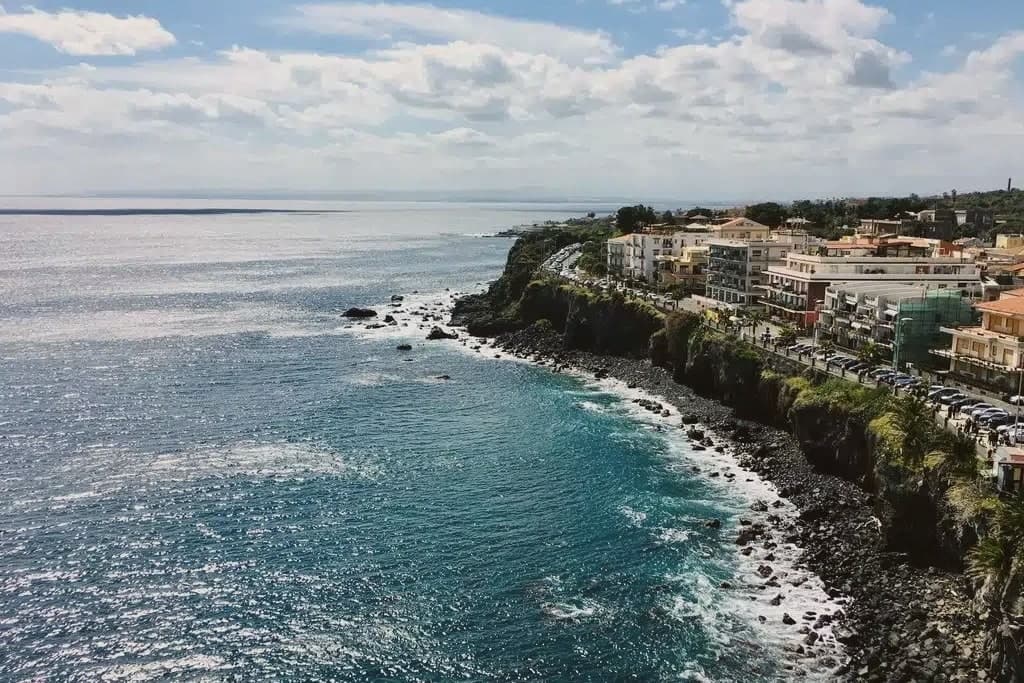
Aci Castello sits ten kilometres north of Catania on the Riviera dei Ciclopi, where the lava-black basalt coast meets the Ionian Sea. The town's anchor is the Castello Normanno (Castello d'Aci), built in 1076 by Roger I of Sicily on a basalt sea-stack thrown up by an underwater Etna eruption around 25,000 BC; the Aragonese expanded it in the 14th century and it now houses the Civic Museum of Aci Castello.
Just offshore stand the Isole dei Ciclopi — the seven basalt sea-stacks that Homer identified as the rocks Polyphemus the Cyclops hurled at Odysseus's ship in Book IX of the Odyssey, and which are now a protected marine reserve. The frazione of Aci Trezza (the larger fishing village south of the castle) is where Giovanni Verga set I Malavoglia (The House by the Medlar Tree, 1881), the founding novel of Italian verismo.
The coastline between Castello and Trezza is a single black-pebble swimming front, with the dramatic profile of Etna rising behind.
What to see in Aci Castello
- Castello Normanno di Aci. 1076 Norman castle on a basalt sea-stack thrown up by an underwater Etna eruption c. 25,000 BC. Aragonese expansion 14th c. Houses the Civic Museum with the stratigraphic and natural-history collections.
- Isole dei Ciclopi. Seven basalt sea-stacks offshore — Homer's Cyclopean rocks from Odyssey Book IX. Now a protected marine reserve (AMP Isole Ciclopi), with snorkelling tours from Aci Trezza.
- Aci Trezza — terra di Verga. Fishing-village frazione where Giovanni Verga set I Malavoglia (1881), the founding novel of Italian verismo. The old harbour and Casa del Nespolo museum trace the literary setting.
How to get to Aci Castello
There is a railway station in the town, so you can arrive without a car and never need one while you are here. Catania is roughly 12 minutes away by road.
Our tip
April through October is the season on the Ionian coast. May and September are the best months: warm Mediterranean sea, lava-rock swimming comfortable, the castle museum at full hours. June brings the patronal feast of San Mauro. Arancino Festival falls in September.
Giarre
Why visit Giarre
Giarre sits on the lower eastern slope of Etna at eighty metres, thirty kilometres north of Catania and three from the sea at Riposto. From the late sixteenth century until 1815 it was a village of the county of Mascali; it separated after the abolition of feudalism and built itself a town centre in the decades that followed.
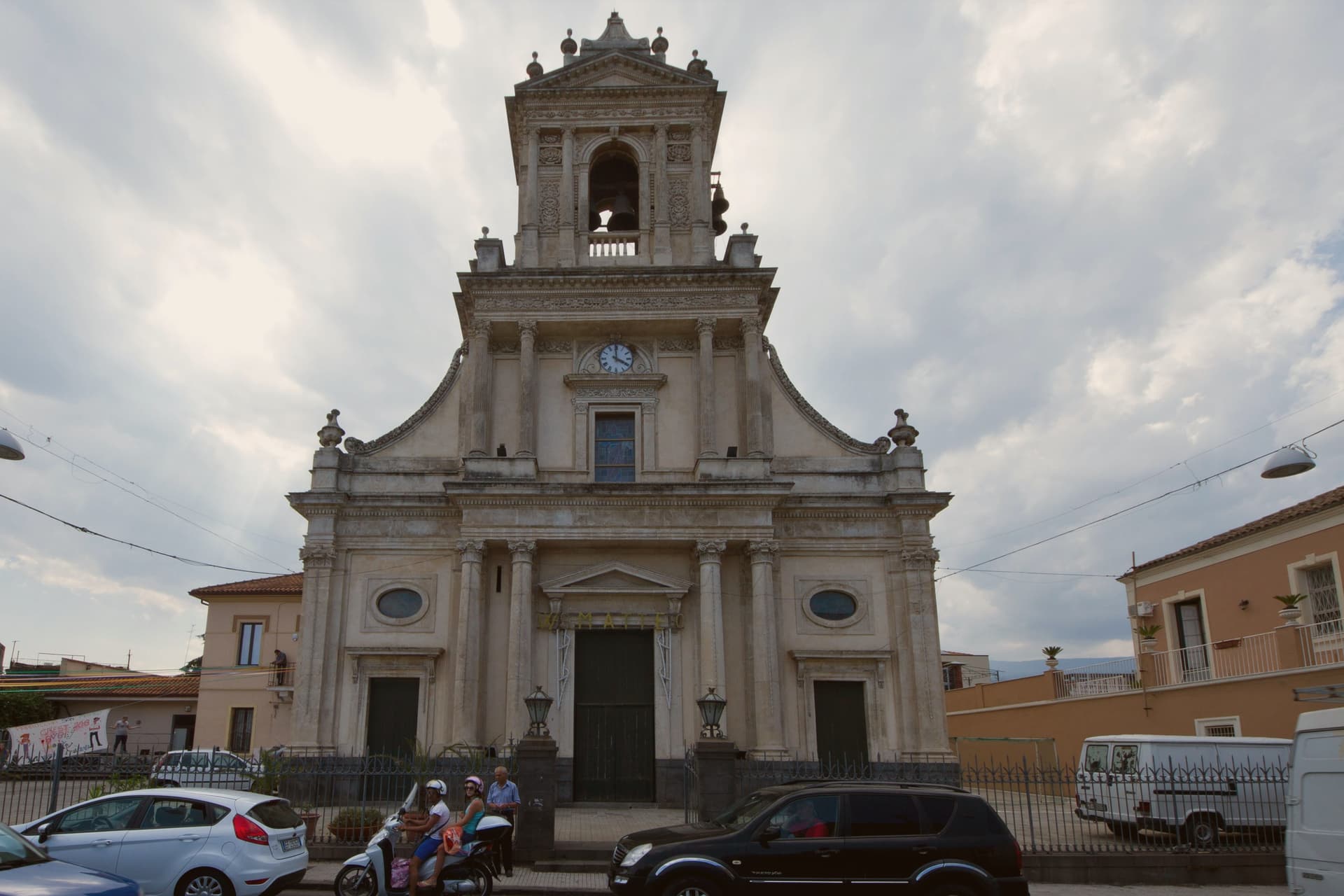
The Duomo di Sant'Isidoro Agricola, begun in 1794 and opened for worship in 1818, is the result: a neoclassical mother church in white stone, with a large central nave, two lateral naves, a transept, and a dome with lantern. The two bell towers, designed by the Neapolitan architect Pietro Valente, were begun in 1859 and finished only in 1890.
Inside, the church holds one of the most substantial collections of sacred silverware in eastern Sicily. From 1939 to 1945 Giarre was merged with Riposto under the fascist name Jonia.
The two towns still form a single conurbation along the coast.
What to see in Giarre
- Duomo di Sant'Isidoro Agricola. Neoclassical mother church begun in 1794, two bell towers by Pietro Valente, and one of eastern Sicily's largest collections of sacred silverware.
- Piazza Duomo. The main square at the centre of the historic grid, with the duomo facing the foothill of Etna to the west.
- Corso Italia. The principal axis of the town, running between the duomo and the open country towards Riposto and the sea.
How to get to Giarre
There is a railway station in the town, so you can arrive without a car and never need one while you are here. Catania is roughly 26 minutes away by road.
Our tip
April through June, then September and October, are when Giarre is at its best: clear views of Etna from the duomo square, citrus blossom on the slopes above town, and the coast at Riposto still calm. July and August are hot and crowded along the seafront, though the upper town keeps cooler at eighty metres. November through March is the quiet season, with rain off the Ionian and snow on the volcano. Festival Etneo del Porcino falls in September.
Catania
Why visit Catania
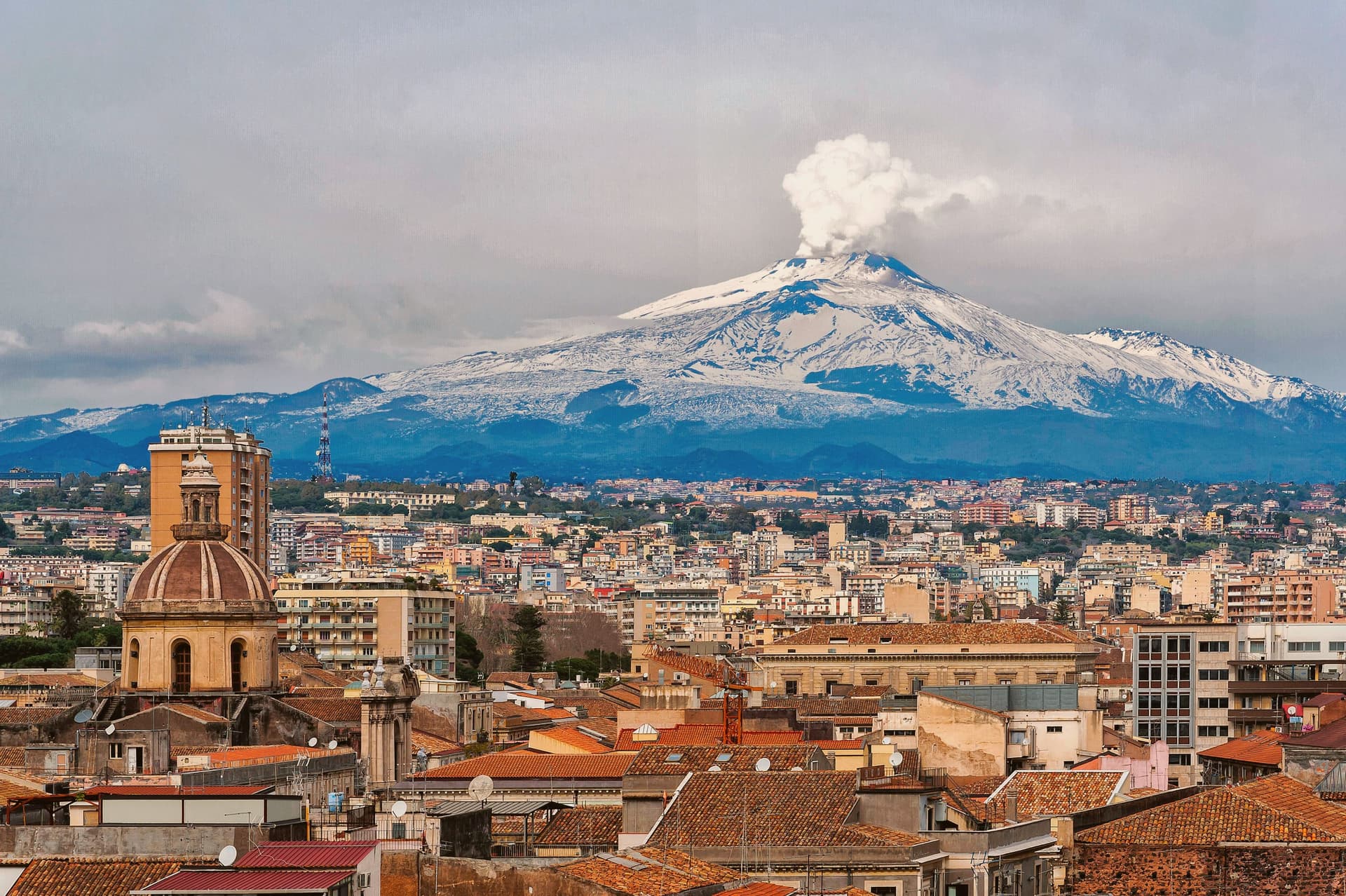
Catania is Sicily's second-largest city and the capital of the Ionian coast: 300,000 residents at the foot of Etna, with the volcano visible from every street that opens north. The current city is the third built on the same site — Greek Katánē (729 BC), Roman Catina, and the medieval town all in turn — and the version visible today was built almost entirely in the half-century after the 1693 Val di Noto earthquake destroyed 75% of the buildings and killed two-thirds of the population.
The reconstruction was led by Giovanni Battista Vaccarini, who gave Catania its distinctive late-Baroque profile: wide regular streets paved with lava basalt, palazzi faced in the same black stone with white limestone trim, and the Piazza del Duomo at the centre with Vaccarini's 1735 elephant fountain (U Liotru, a Roman-era basalt elephant supporting an Egyptian obelisk) as the city's symbol. The historic centre was inscribed on the UNESCO World Heritage list in 2002 as one of the Late Baroque Towns of the Val di Noto.
Beyond the Baroque: Bellini was born here, the Roman amphitheatre is the second-largest in Sicily, the Pescheria fish market runs every weekday morning, and the Etna cable car from Rifugio Sapienza is reachable in an hour for the high-altitude lava fields.
What to see in Catania
- Piazza del Duomo + U Liotru. Vaccarini's 1735 elephant fountain in the central square — a Roman basalt elephant supporting an Egyptian obelisk. The cathedral of Sant'Agata anchors the south side. Both rebuilt post-1693 in lava-and-limestone Baroque.
- Via dei Crociferi. Pedestrian Baroque street with four churches in 200 metres — the densest stretch of post-1693 reconstruction. UNESCO World Heritage protected.
- Etna. Europe's largest active volcano (3,357 m), an hour from the city by cable car + jeep from Rifugio Sapienza. UNESCO World Heritage in its own right since 2013.
How to get to Catania
There is a railway station in the town, so you can arrive without a car and never need one while you are here. Catania is roughly 14 minutes away by road.
Our tip
Catania is year-round. October through April is the value season — warm Mediterranean light, the centro storico navigable, the Pescheria at full output, Etna often snow-capped and stunning above the Baroque rooftops. May and June are the best months for the volcano and the coast — long warm days, Etna fully accessible, sea swimming starts. Il Mercatino di Borgo Natura falls in the season.
More from Anywhere Italy
- The best towns known for what they grow within 45 minutes of Catania
 The best coastal towns within an hour of Catania
 The best towns you can reach by train in the province of Catania
- The best coastal towns you can reach by train in Sicilia
- The best towns you can reach by train that eat well within 90 minutes of Catania
 The best olive oil towns in Sicilia