
The 8 best lake towns within 90 minutes of Monza
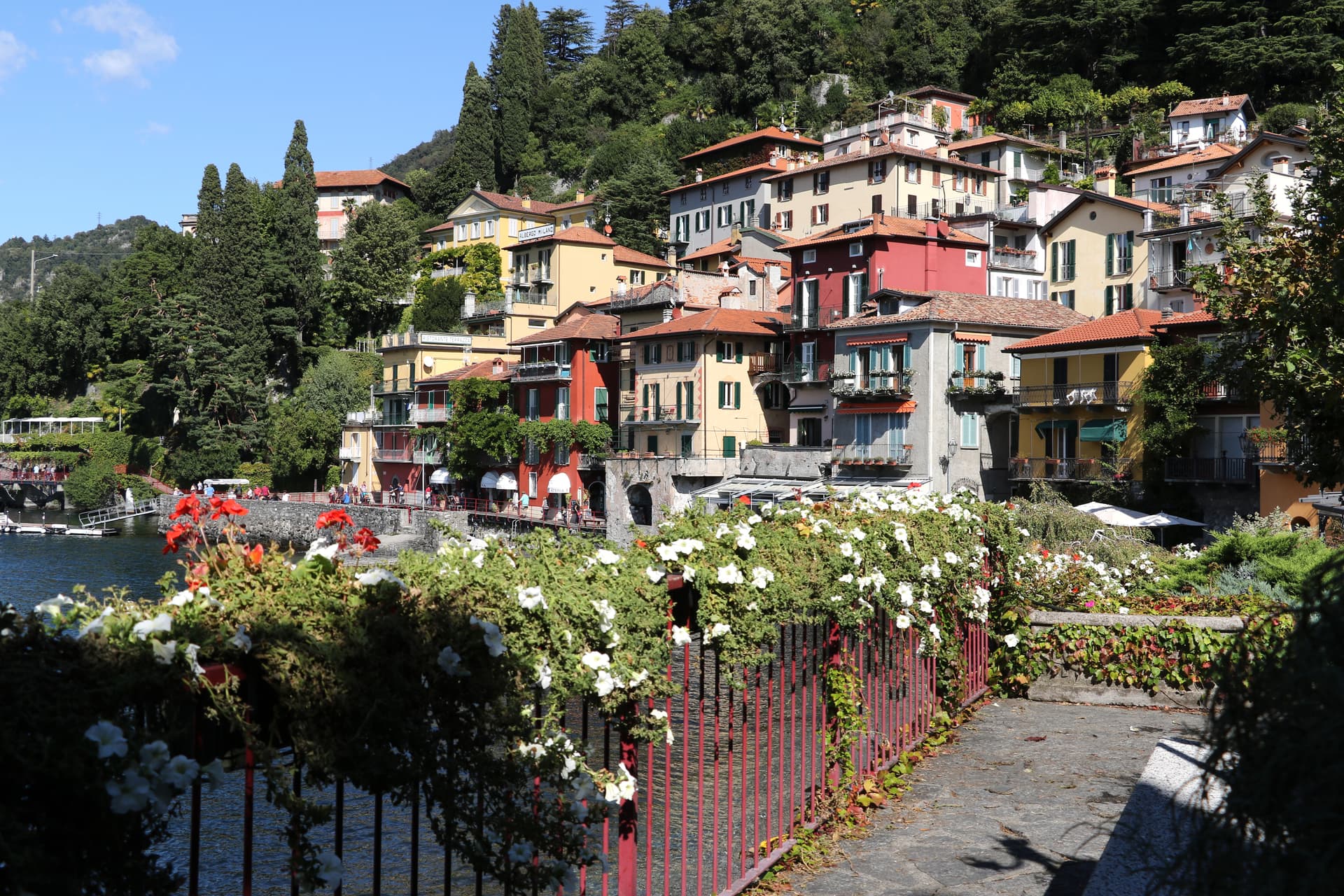
Drive north from Monza and the plain gives out quickly, replaced by water held between mountains. Lake Como narrows into its two dark arms, the shore lined with villas in ochre stucco and older houses in grey stone, their arcades opening straight onto the pier. Boats run all day between the towns, so the water works as a road. On the table there is perch risotto, missoltini dried in the sun, olive oil pressed on the western shore, and in autumn chestnuts and wine from the hills above Lecco.
The obvious move is Como itself, twenty minutes by train from the city, where the lakefront promenade, the funicular to Brunate and the cathedral square absorb most of the day-trippers arriving from Milan. Summer weekends fill the ferry queues and the parking along Lungo Lario. Sirmione, on Garda, has the same problem in a different accent. None of this is a reason to stay away, but it is a reason to keep going.
The shoreline continues well past the crowded stretch. The same steep water, the same ferries, the same lake fish and the same stone villages carry on north into the arms of the lake and along the quieter eastern bank, where fewer people get off the boat. These are the towns on that shore, all reachable from Monza inside a morning.
Of the 9 communes we have mapped in within 90 minutes of Monza, 8 qualify as lake towns: each sits on a lake shore. The smallest, Varenna, has 693 residents.
If you are still choosing, we have also written The best small lake towns that eat well in Lombardia and The 8 best small towns worth staying overnight in Lombardia.
Varenna
Why visit Varenna
Varenna sits on the eastern shore of Lake Como at the point where the lake forks into the Como and Lecco branches, opposite Bellagio and Menaggio. Local fishermen founded the village in 769.
In 1126 it was destroyed by Como during the wars between the lake's communes, and in 1169 it absorbed the refugees from the destroyed Isola Comacina. The streets fall in a steep grid toward the water, with the lakefront passerella running between the houses and the lake.
The Castello di Vezio, above the village on a spur reached by a 30-minute climb, was a Lombard watchpost reused through the Middle Ages. Villa Monastero, on the lakefront, started in the 12th century as a Cistercian convent and now runs a two-kilometer botanical garden along the shore.
The frazione of Fiumelatte hosts one of the shortest rivers in Italy, 250 meters from spring to lake.
The town sits on the water, at 220 metres.
What to see in Varenna
- Castello di Vezio. Lombard-era watchpost on a spur above the village, reached by a 30-minute climb with 160 meters of elevation gain.
- Villa Monastero. Former 12th-century Cistercian convent on the lakefront, now a museum and convention center with a 2-kilometer botanical garden along the shore.
- Villa Cipressi. Sixteenth-to-nineteenth-century lakefront villa next to Villa Monastero, with terraced gardens descending to the water.
How to get to Varenna
There is a railway station in the town, so you can arrive without a car and never need one while you are here. Monza is roughly 62 minutes away by road.
Our tip
April through October is the working season. The ferries from Bellagio and Menaggio run frequently, the villa gardens open in late March, and the lake stays mild enough to swim from June onward. July and August are crowded: 693 residents host thousands of day visitors, and the lakefront fills with photo tripods at sunset.
Torno
Why visit Torno
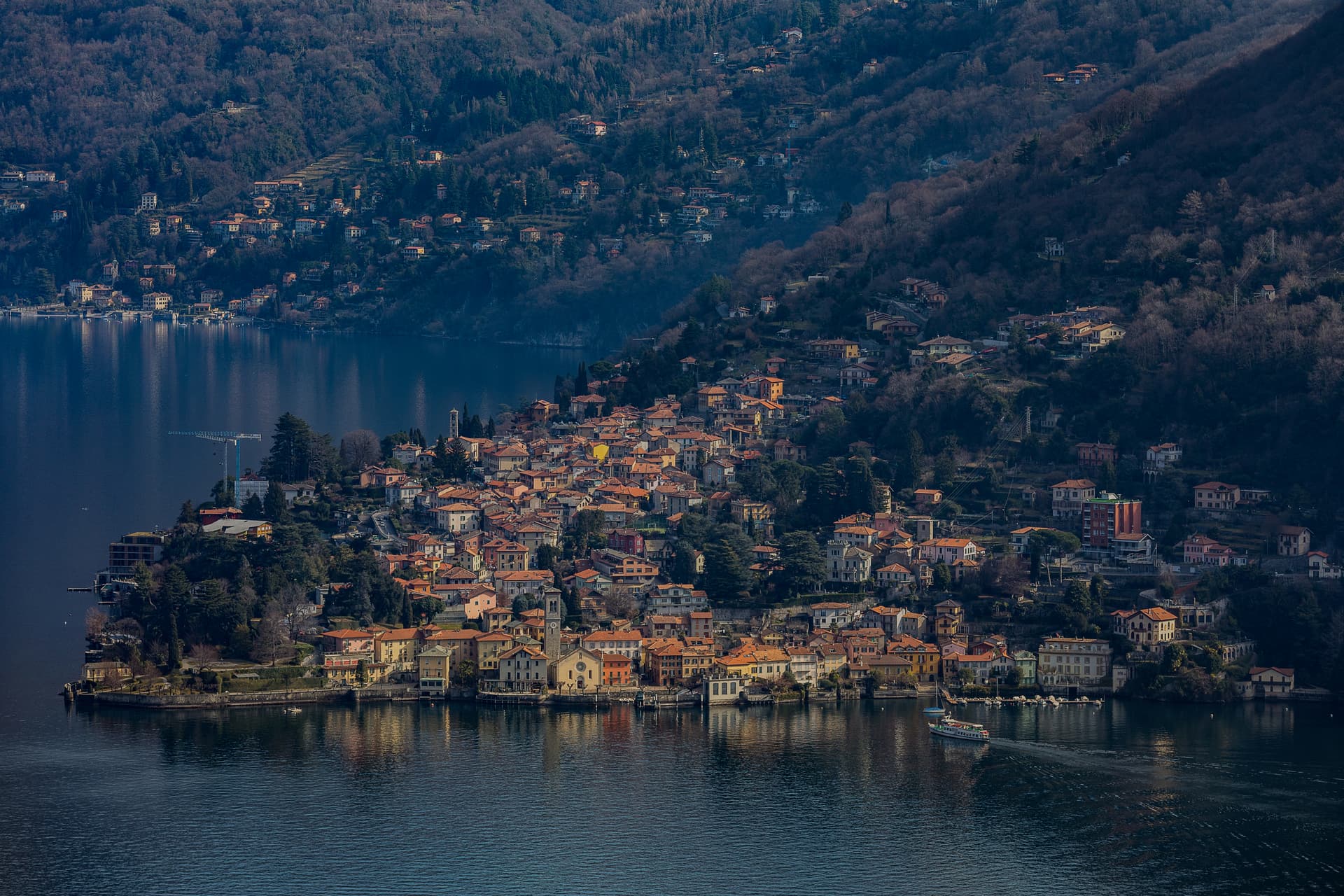
Torno sits on the eastern shore of Lake Como, five kilometres north of the city of Como and forty-five from Milan. The village climbs in narrow lanes from the small port up the steep slope behind it, a core compact enough to cover on foot in fifteen minutes.
Above the village stands a second, older church, its marble portal carved by the Maestri Comacini in the 16th century, a quieter counterpart to the more elaborate church below near the port. The church nearer the port was first mentioned in 1208, in correspondence between Pope Innocent III and the abbot of Sant'Abbondio of Como, and its Romanesque bell tower predates the rest of the structure, including the rose window, frescoes and 1480 portal added later.
Outside the built-up part of the village, at the lake edge, the villa grounds hold the spring at the centre of the town's reputation, and the villa itself has passed through a long list of owners since it was built. The village, in other words, is arranged around two poles: a compact inhabited core stacked on the hillside above its harbour, and an isolated lakeside property outside it that has drawn attention, scientific and otherwise, for far longer than the village itself has been documented.
The town sits on the water, at 225 metres.
What to see in Torno
- Chiesa di Santa Tecla. Romanesque-Gothic church first documented in 1208, with a Gothic rose window, statue niche and entrance dated 1480.
- Chiesa di San Giovanni Battista. Romanesque parish church above the village, with a marble portal carved by the Maestri Comacini in the 16th century.
- Villa Pliniana. Villa at the lake's edge built by Giovanni Anguissola, its grounds enclosing the spring that rises and falls on a rhythm Pliny the Younger recorded and that later drew Leonardo to study it.
How to get to Torno
Monza is roughly 56 minutes away by road.
Our tip
April through October is Torno's open season. Spring brings the Pliniana gardens into bloom and the rhythmic spring back to its summer pattern. May and June are the cleanest months for the lake light and the walk up to San Giovanni Battista.
Dervio
Why visit Dervio
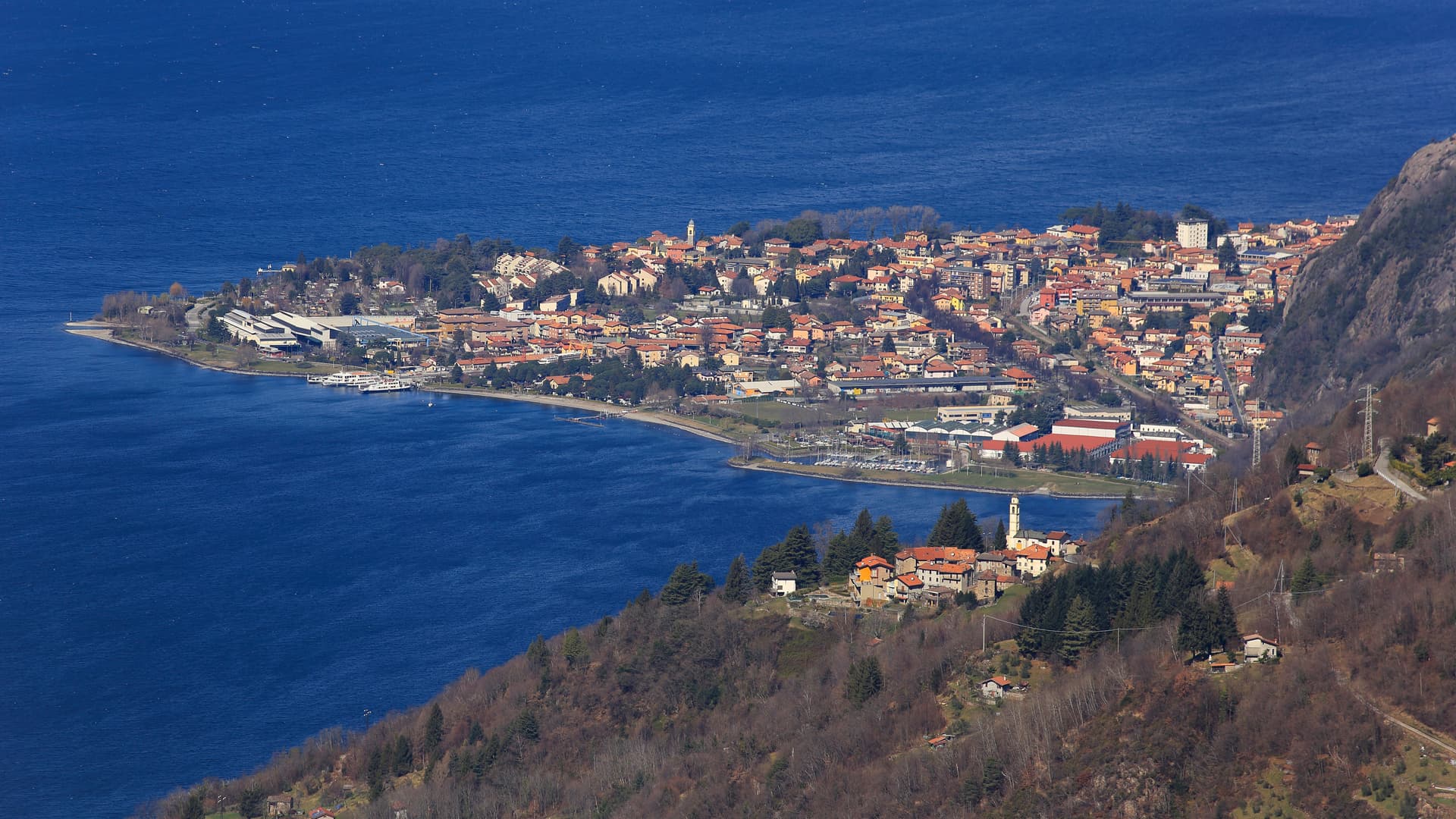
Dervio sits on a small peninsula on the eastern shore of upper Lake Como, where the Varrone torrent emerges from its valley and pushes a delta into the lake. The Romanesque bell tower of the Chiesa di San Quirico e Giulitta, attached to a church first mentioned in 814 and rebuilt around 1080, is the oldest structure in the commune.
Above the village, on a cliff that once blocked the road into the Valvarrone, stand the ruins of the Castello di Orezia, raised in the late Middle Ages and recorded in 1039 during a long siege by three Larian parishes. Dervio's reputation today rests less on its monuments than on its wind.
The position at the peninsula tip funnels the Breva and Tivano onto the lake in a way racing sailors learn to read. The commune draws sailing schools from April through October, and its lakefront promenade extends north toward Dorio along a stone path called the Sentiero del Viandante.
The town sits on the water, at 220 metres.
What to see in Dervio
- Campanile di San Quirico e Giulitta. Romanesque stone bell tower from around 1080, attached to one of the oldest churches on Lake Como, first cited in 814.
- Torre del Castello di Orezia. Late medieval tower on a cliff above Dervio, part of a fortress blocking the Valvarrone road, with documented siege in 1039.
- Chiesa dei Santi Pietro e Paolo. Eleventh-century parish church on the lakeshore, with a Romanesque bell tower and later interventions.
How to get to Dervio
There is a railway station in the town, so you can arrive without a car and never need one while you are here. Monza is roughly 62 minutes away by road.
Our tip
April through October works on this part of Lake Como. May and June bring stable winds, mild temperatures, and the alpine slopes still green. July and August are the busiest months; the peninsula fills with sailing crews and Italian families with second homes, and the lake-facing villages hold their summer festas.
Menaggio
Why visit Menaggio
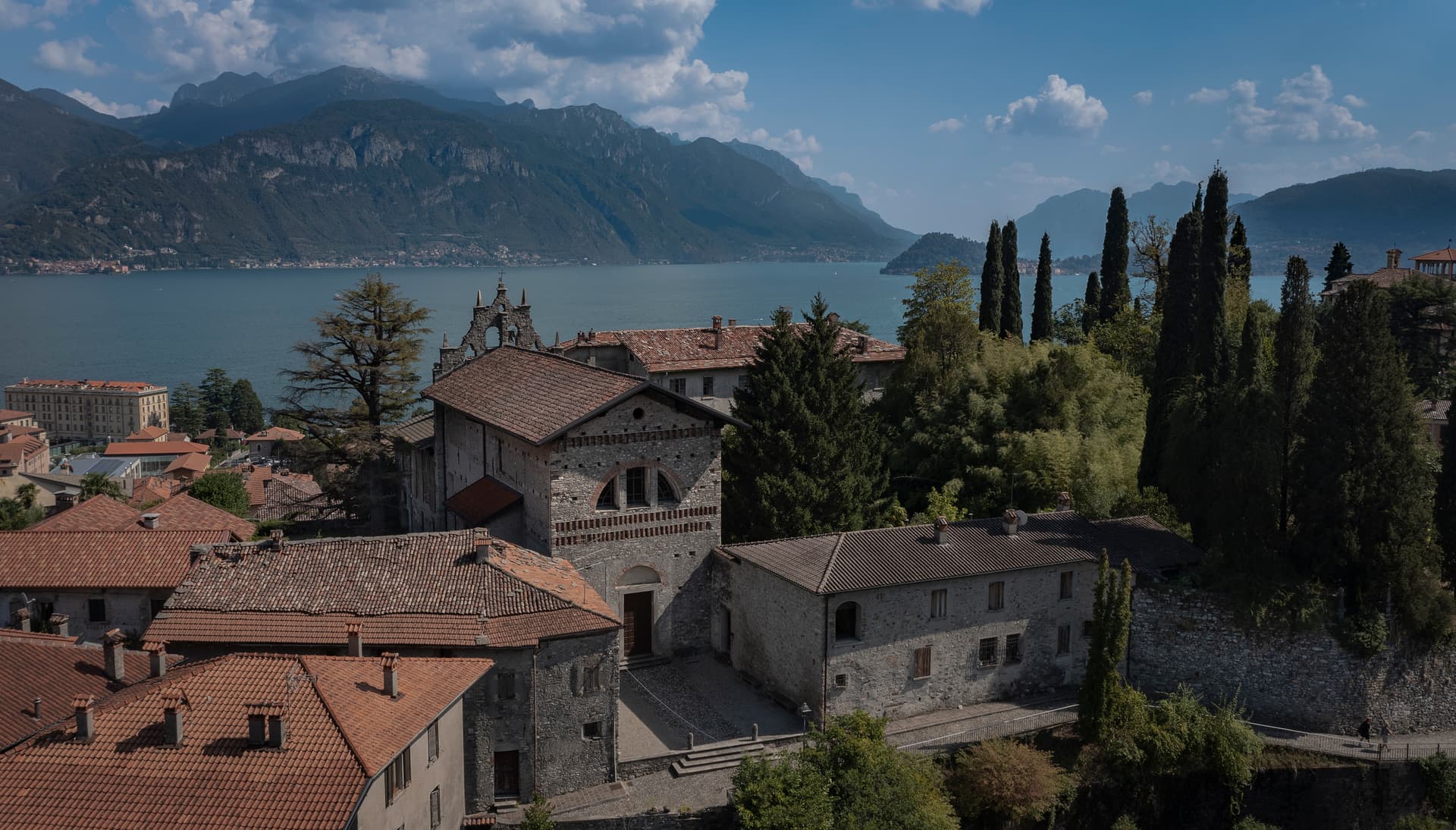
Menaggio sits on the western shore of Lake Como at the mouth of the river Senagra, the point where the lake narrows enough for ferries to fork toward Bellagio and Varenna on the opposite shore. Prehistoric finds in the territory go back to before the Gallic tribes that settled here in the fourth century BC; the Romans absorbed them and built the Via Regina, the lakeside road from Como north toward the Splügen.
The medieval castle above the Senagra torrent dates to the 10th century and was destroyed in 1523 by the Grigioni, leaving only the towers, the walls and the bridge. The Chiesa di San Carlo was built on its ruins between 1612 and 1614.
The town's later identity is the 19th-century summer resort: a mild climate, lake views across to the Grigne, and villas like Mylius-Vigoni in the Loveno hamlet, now run as a German-Italian centre for European dialogue.
The town sits on the water, at 203 metres.
What to see in Menaggio
- Piazza Garibaldi. The main lakefront square, café tables under arcades, ferry pier on one side and the medieval centre rising behind.
- Resti del Castello di Menaggio. 10th-century castle remains, destroyed in 1523, leaving the two towers, sections of wall and a bridge over the Senagra.
- Chiesa di San Carlo. Built 1612 to 1614 by Cinzio Calvi on the ruins of the destroyed castle, in the hamlet of Castello above the torrent.
How to get to Menaggio
Monza is roughly 87 minutes away by road.
Our tip
April through October is the working season on Lake Como, and Menaggio runs on it. May and June bring the gardens of Villa Mylius-Vigoni into bloom and the ferry timetables expand. July and August are crowded and warm, with day-trippers off the Bellagio crossing filling Piazza Garibaldi from late morning.
Bellano
Why visit Bellano
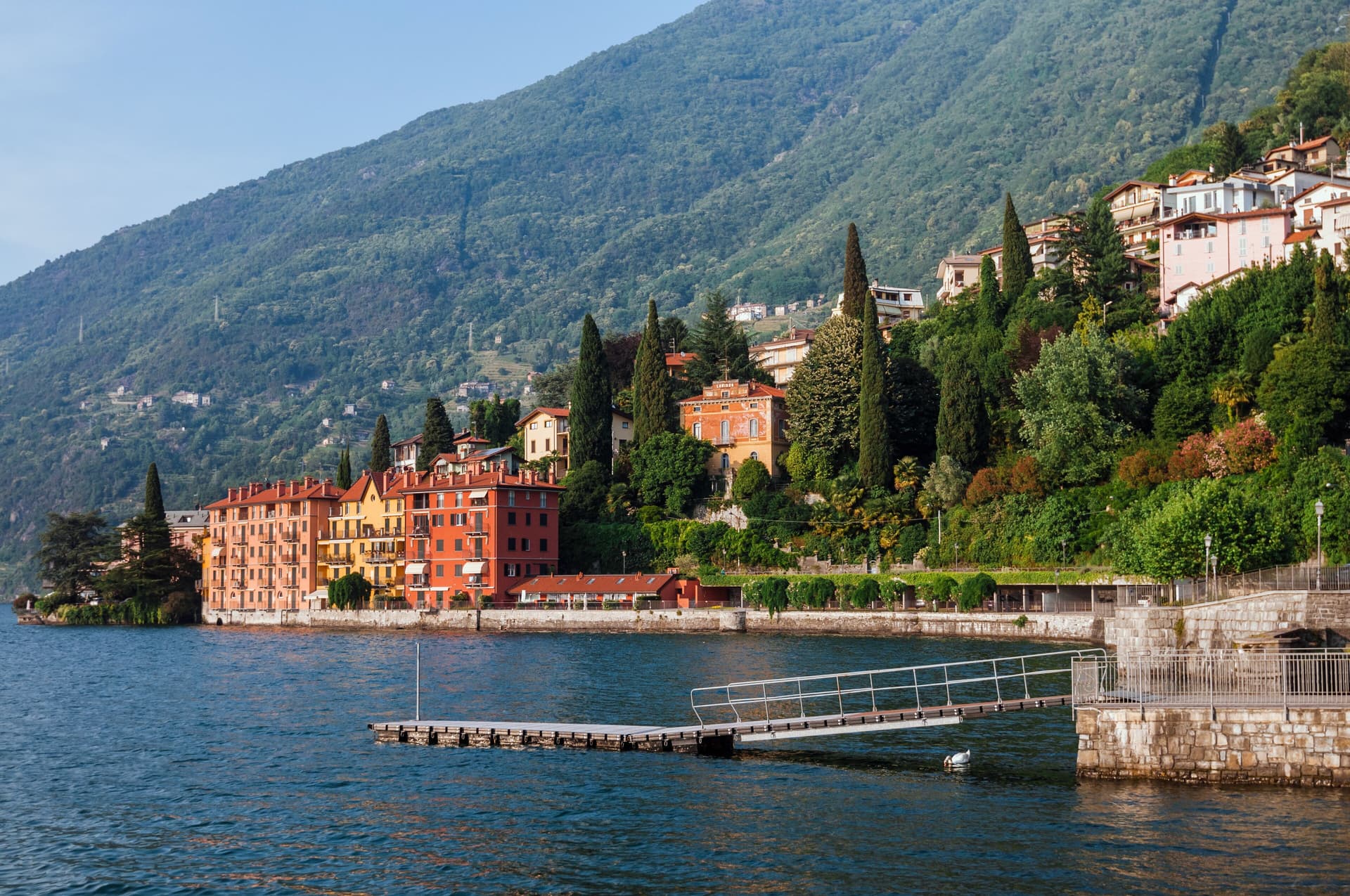
Bellano sits at the outlet of the Valsassina, on the eastern shore of Lake Como, the point where a inland valley meets the water. By 905 the town was under the Archdiocese of Milan; the Torriani and then the Visconti held it through the Middle Ages, long before the gorge became a destination or the mill brought industry.
The commune joined the Borghi più belli network in 2021, and in 2020 absorbed Vendrogno, a former commune higher up Monte Croce di Muggio, so the modern boundary reaches from the lakefront up into the mountain behind it. The town's identity comes from this stacking of inland and shore: a valley torrent cutting down through the rock, a medieval settlement governed from Milan, a nineteenth-century industrial mill at the gorge mouth, and a lake promenade with ferries to the far shore.
Each layer sits on the last without replacing it, which is why a walk from the pier to the gorge and up toward Vendrogno crosses centuries of the town's uses in a short distance.
The town sits on the water, at 202 metres.
What to see in Bellano
- Orrido di Bellano. A slot canyon a few hundred meters long, the catwalks bolted directly into the cliff face so the water runs beneath the visitor's feet on both sides at once.
- Chiesa dei Santi Nazaro e Celso. Fourteenth-century parish church on Piazza San Giorgio, with a rose window and façade in alternating black and white stone.
- Cotonificio Cantoni. The brick chimney still stands at the gorge mouth, the one surviving marker of the mill that once made this a working lakeside town rather than a resort.
How to get to Bellano
There is a railway station in the town, so you can arrive without a car and never need one while you are here. Monza is roughly 82 minutes away by road.
Our tip
April through June and September into October are the months Bellano works best. The lake light is sharp, the Orrido catwalks are open, and the ferry to Varenna and Menaggio runs every half hour. July and August fill the eastern shore with day-trippers from Milan and Bergamo, and the lakefront cafés take an hour to seat.
Bellagio
Why visit Bellagio
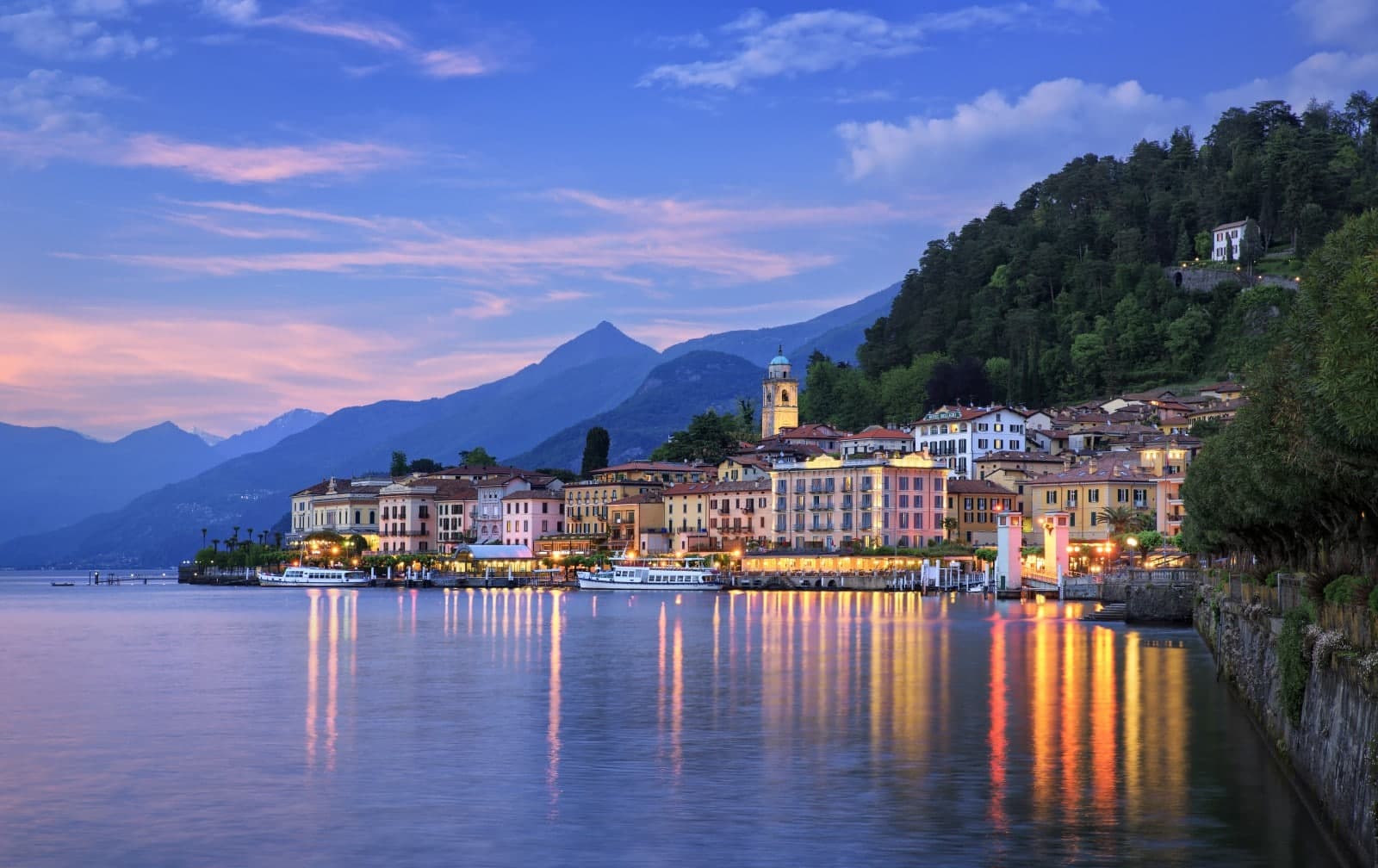
Bellagio sits on the promontory that divides Lake Como into its three arms, the Como branch to the west and the Lecco branch to the east, with the upper lake running north. Paleolithic settlement traces date back 30,000 years, and an Iron Age castellum stood on the high point around 600 BC.
From the late 13th century the Visconti incorporated Bellagio into the Duchy of Milan. Villa Serbelloni was built in the 15th century on the site of an old razed castle and rebuilt several times; in 1788 Alessandro Serbelloni filled it with 17th- and 18th-century art, and in 1959 the Rockefeller Foundation took ownership, turning the villa into an international conference center.
Villa Melzi, built on the western shore by Francesco Melzi d'Eril (Vice President of Napoleon's Cisalpine Republic), made the village a fashionable summer station for Milanese nobility in the early 1800s.
The town sits on the water, at 229 metres.
What to see in Bellagio
- Villa Serbelloni. Fifteenth-century villa on the high promontory, owned by the Rockefeller Foundation since 1959, with gardens open by guided tour only.
- Villa Melzi. Early 19th-century neoclassical villa built by Francesco Melzi d'Eril on the western shore at Loppia, with public botanical gardens along the lake.
- Punta Spartivento. Northern tip of the promontory where the lake splits in three, with a park, marina, and panoramic view up the Bellagio branch.
How to get to Bellagio
Monza is roughly 55 minutes away by road.
Our tip
April through October is the season. April and May bring camellias and rhododendrons at Villa Melzi, the lake is mild but not warm, and the ferries run a partial timetable. June through August fills the village with day-trippers, the Salita Serbelloni packs by ten in the morning, and the lakeside trattorie reserve weeks ahead.
Tremezzina
Why visit Tremezzina
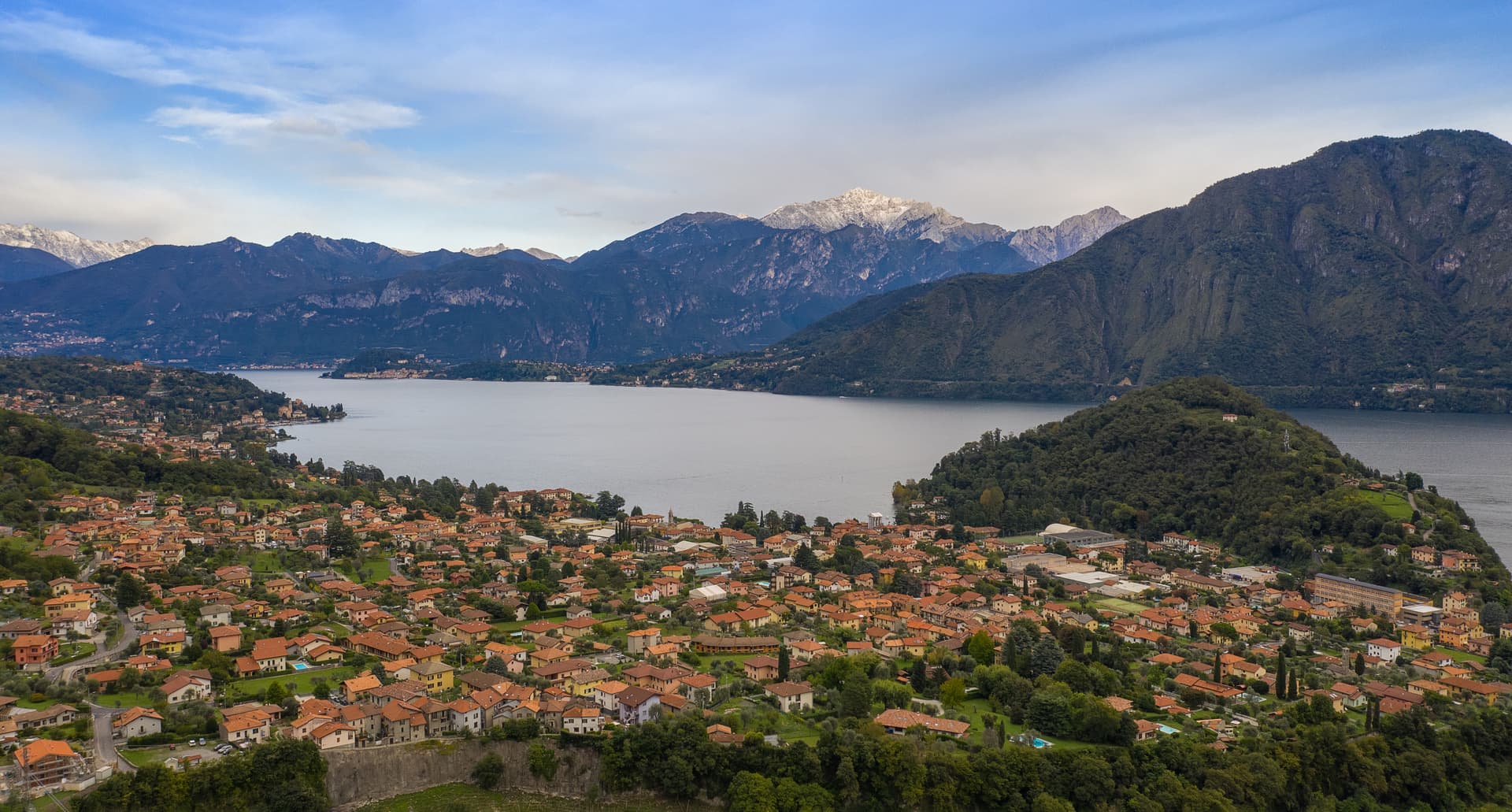
Tremezzina was created on 25 May 2014 from the merger of Lenno, Mezzegra, Ossuccio and Tremezzo, four villages along the central western shore of Lake Como facing Bellagio. The new comune holds Villa Carlotta, built in the late 1600s for the Marquis Giorgio Clerici and later named for Princess Carlotta who received it in 1850, with seventeen acres of gardens and one of the great rhododendron collections in Italy.
Isola Comacina, the lake's only island, was the wealthiest place on the lake before Como's destruction of it in 1169; nothing has been built there since, and it is now an archaeological site. The Sacro Monte di Ossuccio is one of nine Lombard and Piedmontese Sacri Monti inscribed by UNESCO in 2003: fourteen Baroque chapels built between 1635 and 1710, climbing the prealpine slope two hundred meters above the lake to a sanctuary of 1532.
Mussolini was captured in Dongo north of here and shot in Giulino di Mezzegra on 28 April 1945; the black cross by the road still marks the spot.
The town sits on the water, at 209 metres.
What to see in Tremezzina
- Villa Carlotta. Late seventeenth-century villa built for the Marquis Giorgio Clerici, with seventeen acres of gardens, more than 150 rhododendron and azalea species, and a sculpture collection.
- Isola Comacina. Lake Como's only island, the wealthiest medieval settlement on the lake until its destruction by Como in 1169, now an archaeological site.
- Sacro Monte di Ossuccio. UNESCO site of fourteen Baroque chapels built 1635-1710, climbing two hundred meters above the lake to the Beata Vergine del Soccorso sanctuary of 1532.
How to get to Tremezzina
Monza is roughly 83 minutes away by road.
Our tip
April through October is the working season on the central lake. April, May and September into October are the strongest: the rhododendrons and azaleas of Villa Carlotta peak in late April, the lake holds afternoon warmth without humidity, the Greenway is open and dry. July and August are full: ferries between Bellagio and Tremezzo run at capacity, parking near Villa Carlotta is gone by ten, and the Sacro Monte climb sits in the afternoon shade.
Cernobbio
Why visit Cernobbio
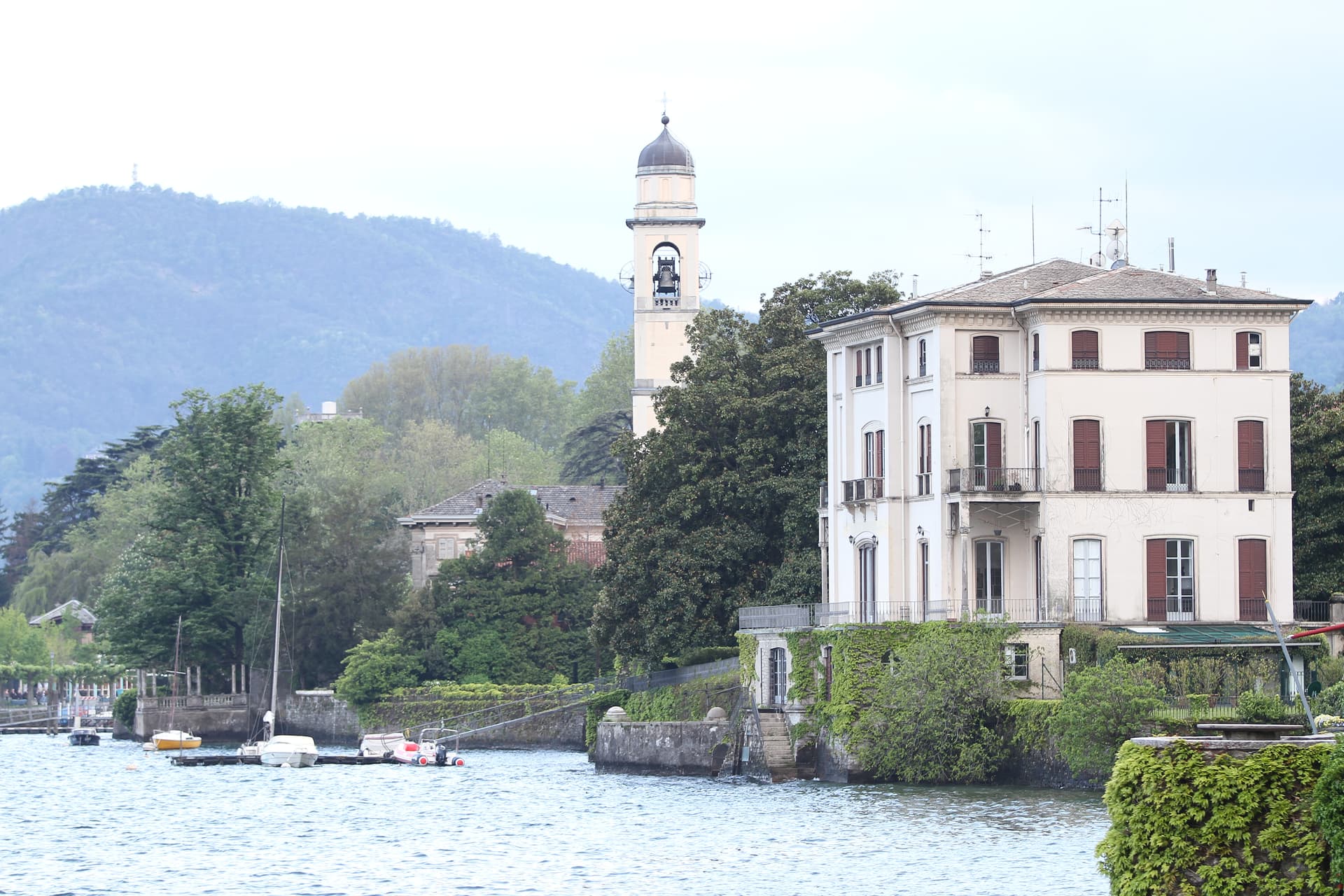
Cernobbio sits at 201 meters on the western shore of the lake, two kilometers north of the city of Como, at the foot of the ridge that rises behind it. The village grew up around a 12th-century Benedictine convent called Coenobium, from which the name derives.
The 19th century brought silk mills and lakeside villas, and two of these sit close together inland from the water: Villa Erba, built in the 1890s by the Erba pharmaceutical family on the old monastery site and later inherited by Luchino Visconti's mother, and Villa Bernasconi, an Alfredo Campanini Liberty house from before 1905, now a municipal museum. The lakefront itself, with its ferry pier and promenade, marks the entry point to the western shore for anyone arriving from the city.
The town's layout, then, traces its own history: a monastic name at the center, silk-era villas set back from the water, and the shoreline still working as the gateway it has been since the village first grew.
The town sits on the water, at 201 metres.
What to see in Cernobbio
- Villa d'Este. Built for Cardinal Gallio, the villa's gardens and lakefront wings now house the hotel guests and, each September, the delegations arriving for the Ambrosetti Forum.
- Villa Erba. Nineteenth-century villa built by the Erba pharmaceutical family on the site of a Benedictine monastery, later inherited by Luchino Visconti's family.
- Villa Bernasconi. Pre-1905 Liberty villa by Alfredo Campanini, built for silk industrialist Davide Bernasconi, now a municipal museum of Art Nouveau.
How to get to Cernobbio
Monza is roughly 61 minutes away by road.
Our tip
April through October is the long Como season. The lake stays mild from late spring, the villas open their gardens, and the ferries run on full timetable. July and August bring crowds and traffic on the lakeside road, and Villa d'Este fills with the Ambrosetti pre-summit.
More from Anywhere Italy
- The best small lake towns that eat well in Lombardia
- The 8 best small towns worth staying overnight in Lombardia
- The best hidden lake towns you can reach by train in Lombardia
- The best small lake towns you can reach by train in Lombardia
 The 10 best small towns you can reach by train in Lombardia
 The best small towns with a serious restaurant in Lombardia