
The 9 best towns you can get around without steps in Liguria
Liguria is built on a slope, which is exactly why the level places matter. Along the Riviera the railway and the old coast road hold a narrow shelf of flat ground, and on it sit long asphalt promenades, wide beach boardwalks, seafront squares paved in slate, and lanes where the tall painted houses lean over you without a stair in sight. It is a coast of focaccia eaten warm out of paper at nine in the morning, anchovies from Monterosso's neighbours, trofie with pesto, olives from the Ponente hills and white Vermentino and Pigato. Spring and early autumn are the good months, when the water is still warm, the passeggiata fills up at dusk and the sea is calm enough for the flat coastal paths to feel like the point of the trip rather than the way to it.
Most people who come to the Ligurian coast go to the Cinque Terre. It is spectacular and it is also the least level ground in the region: the villages are stacked staircases, the station platforms feed into tunnels and ramps, the trail between them climbs steeply, and in summer the crowds off the trains and the cruise tenders make even the main street of Vernazza slow going. Genoa's old town, for all its grandeur, is a similar proposition, a lattice of dark alleys, kerbs and stepped vicoli. None of that is a reason to skip either place, but neither is designed for anyone pushing a wheelchair, a walker or a pram.
The same coast keeps going in both directions, and much of it is flat. West of Genoa the Riviera di Ponente runs through wide-set resort towns with continuous seafront promenades and adapted beach access; east of the headlands there are river-mouth towns with level historic centres and a Lunigiana hinterland reached on the plain. The towns below all hold the national award for accessible tourism, given for step-free routes, adapted bathing and services that are actually maintained rather than announced. Fewer visitors treat them as the reason to come to Liguria, which is their own argument.
Of the 54 communes we have mapped in Liguria, 9 qualify as towns you can get around without steps: each holds the national accessibility award for step-free routes and adapted services. The smallest, Camogli, has 4,977 residents.
Elsewhere in the catalogue: The best beach towns in the province of Savona and The best hidden beach towns in Liguria.
Levanto
Why visit Levanto
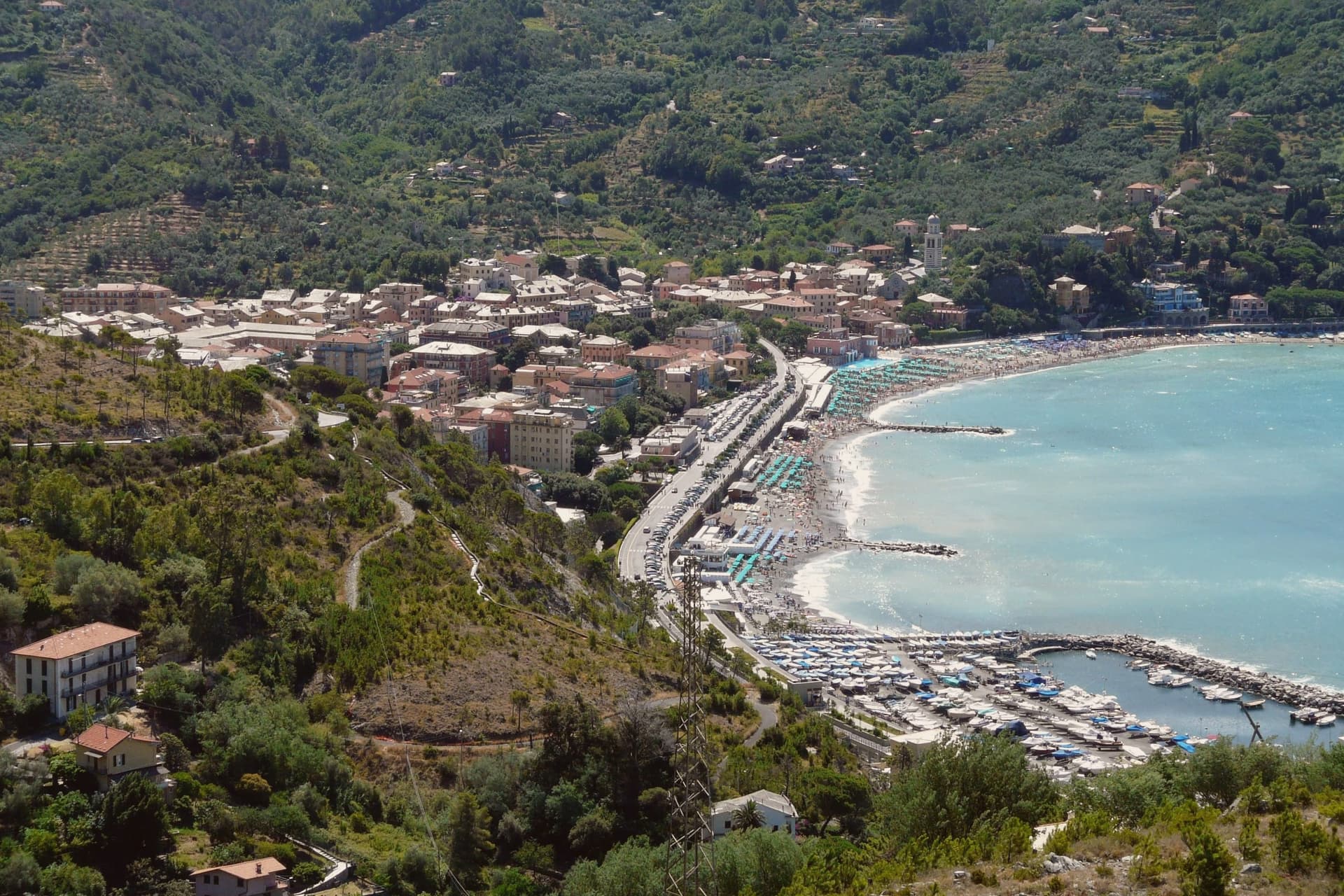
Levanto sits at sea level on the Ligurian coast, twenty kilometers northwest of La Spezia and just outside the Cinque Terre National Park. The Cinque Terre Express train stops here every half hour on its way to the five villages, but Levanto has the things they do not: a long sand-and-gravel beach with Bandiera Blu status, a flat centro storico, and a surf break that local guides classify as one of the few big-wave spots in Italy.
The Chiesa di Sant'Andrea, built in 1222, fronts the old town with horizontal bands of black and white marble and a large rose window. The thirteenth-century Loggia Comunale, on the same piazza, was awarded a UNESCO peace and culture title in 2007.
Casa Restani, on Via Grillo, is a surviving medieval merchant house with the ground floor where goods from the harbor were stored. Levanto holds Cittaslow, Bandiera Blu, Parco Nazionale, and Città dell'Olio at once.
What to see in Levanto
- Chiesa di Sant'Andrea. Parish church built in 1222 in Ligurian Gothic style, with horizontal bands of black and white marble and a large rose window over the main door.
- Castello di Levanto. Thirteenth-century defensive castle on the hillside, still intact but privately owned and closed to the public.
- Loggia Comunale. Thirteenth-century arcaded loggia on the main piazza, awarded a UNESCO title in 2007 as a monument of culture and peace.
How to get to Levanto
There is a railway station in the town, so you can arrive without a car and never need one while you are here. Genova is roughly 72 minutes away by road.
Our tip
April through June and September into October are the dry months. The sea warms enough for swimming by late May. The surf builds in autumn and winter when Atlantic systems push swell into the gulf.
Diano
Why visit Diano
The hilltop and the coast were one commune until the seaside half was made independent in 1923, and the two still read as a single place split in two: a fortified settlement set back from the water, and the town it produced at sea level once the shoreline could be settled safely. The name of the upper town traces to the Latin Dianum, a temple to Diana, which places the site's origin well before the medieval walls that now define it.
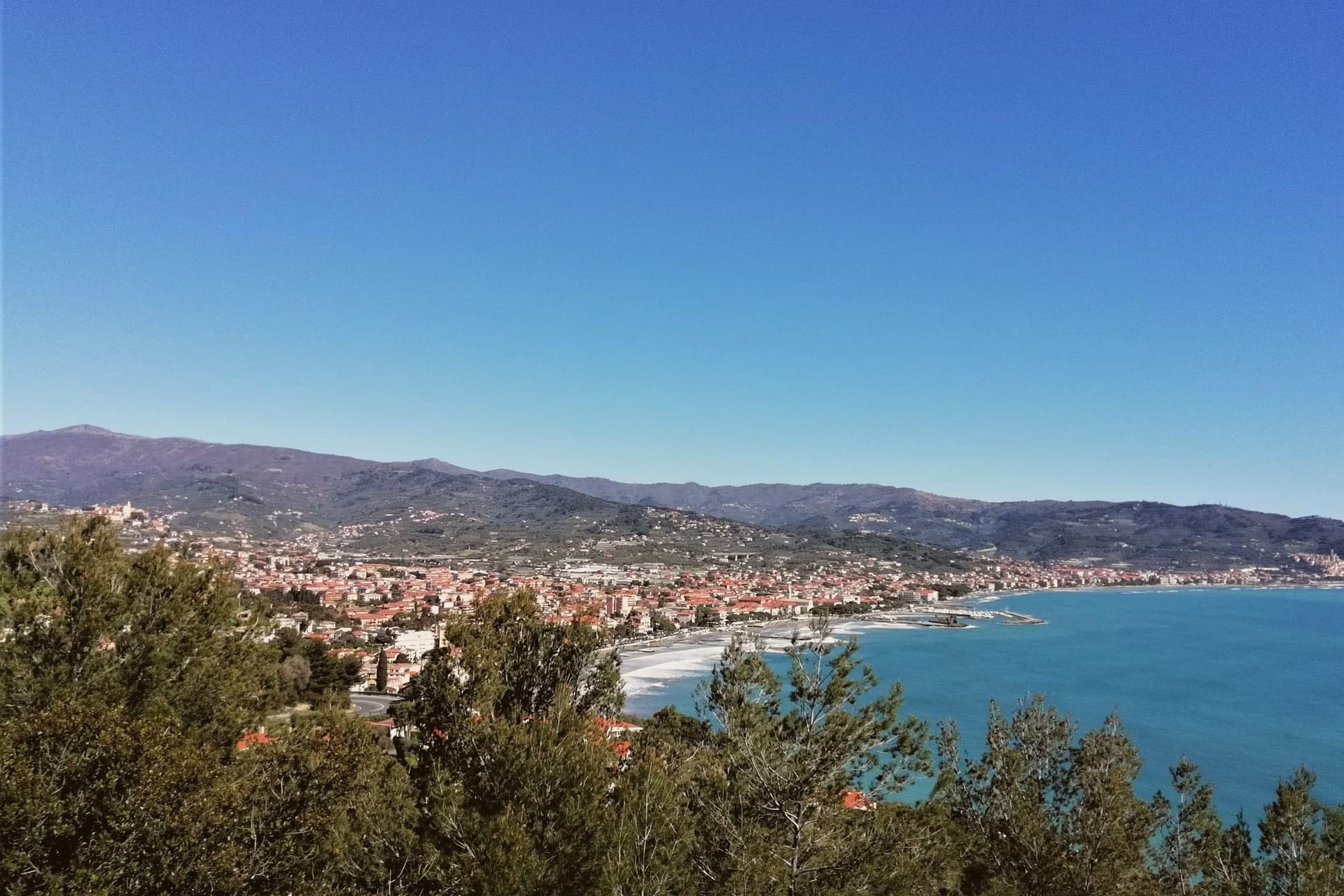
Both halves sit on the same bay and draw on the same valley behind them, where the Taggiasca olive has been grown long enough to anchor the local Città dell'Olio membership shared by both. The bay itself is sheltered and south-facing, which gives the coastal half one of the milder climates on the Italian Riviera and explains why the beach resort grew where it did, directly below the older settlement rather than at any distance from it.
What Diano amounts to, then, is a single valley economy, olives above, sand below, that split administratively in the twentieth century without ever splitting geographically.
What to see in Diano
- Diano Castello — centro storico. Vaulted alleys and stone staircases climb through the old town to the parish church of San Nicola di Bari. The walls that ring the settlement still trace their full course, and the streets keep the tight, defensive layout of a hill settlement built for lookout rather than commerce.
- Diano Marina — Bandiera Blu beach. The seafront runs the length of the resort under a line of palms, with the flat, easy sand that makes it a family destination. Summer markets fill the promenade, and the town's calendar turns on the mid-August Madonna del Rosario procession.
- Museo dell'Olivo (Diano Marina). The exhibits move from Roman amphorae through medieval monastic cultivation to present-day production, tracing the Taggiasca olive's long presence in the valley. The museum was founded by the Carli oil family.
How to get to Diano
There is a railway station in the town, so you can arrive without a car and never need one while you are here. Genova is roughly 94 minutes away by road.
Our tip
April through October is the open season for both Dianos — warm coastal days, calm Mediterranean sea by late spring, and the Diano Marina beach packed from mid-June through August. The Sant'Antonio procession runs the second week of August. Diano Castello stays alive year-round (the medieval old town is residential) but the most pleasant months for the hilltop are May-June and September-October.
Pietra Ligure
Why visit Pietra Ligure
Pietra Ligure sits between Loano and Borgio Verezzi on the Riviera di Ponente, twenty kilometers southwest of Savona. Neolithic finds on Monte Trabocchetto and Roman artifacts in the centro storico place settlement here back across millennia, long before the town took its present name and shape.
That name comes from the Castrum et Oppidum Petrae, the fortress on the rock above the modern center, which became a summer residence from 1100 and was held until 1385, when it passed to the Republic of Genova. The old town has grown up around two poles: the rock with its castle at one end, and the Baroque basilica at the other, with the palazzi of the civic and religious elite filling the ground between.
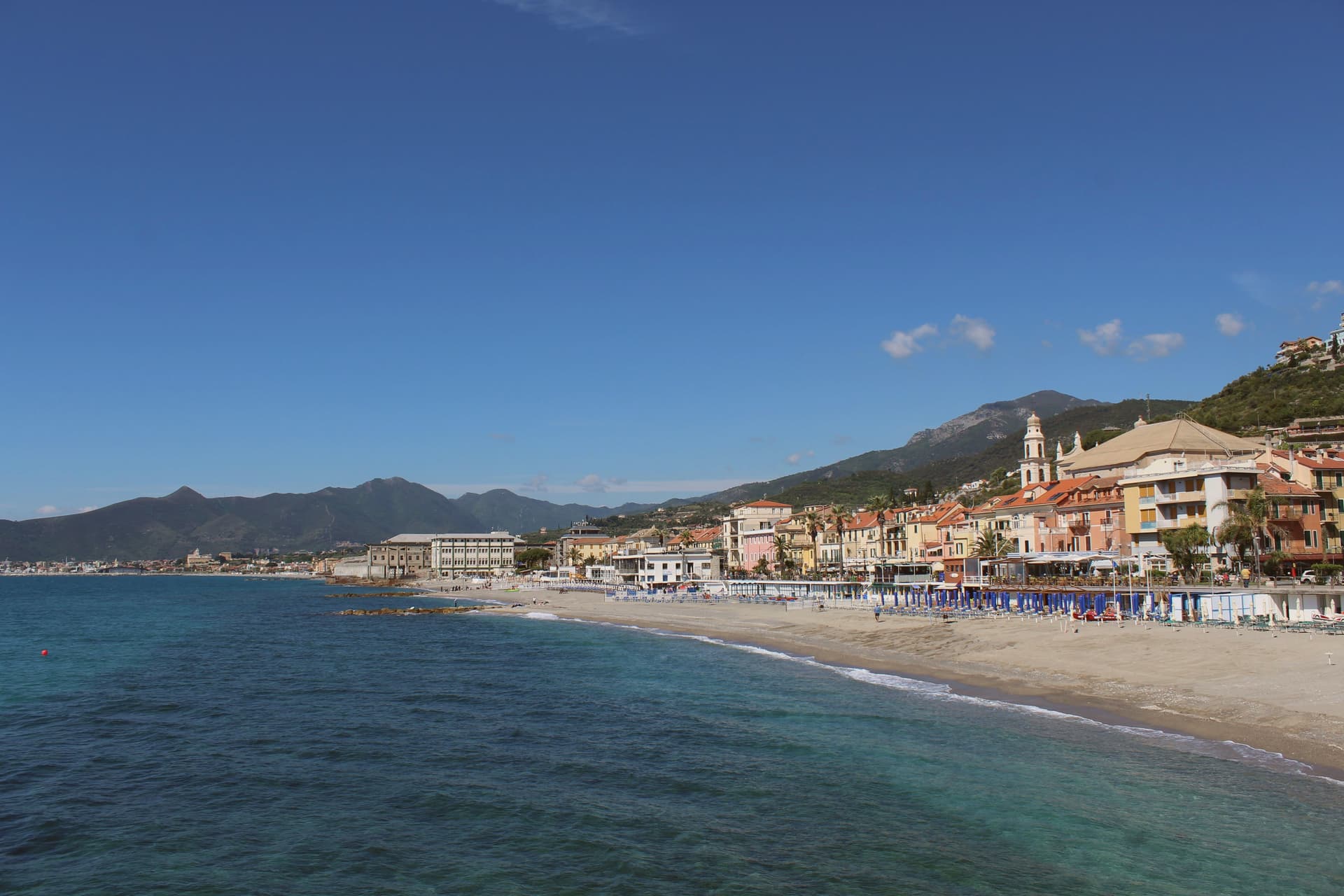
The promenade now traces that same line at sea level, joining the historic center to a sandy beach that runs south toward Loano. Every three years the space between these poles, the central squares of the old town, fills with the floral carpets of the Infiorata, while a smaller annual version continues in the frazione of Ranzi.
What the town shows a visitor, in effect, is a small stretch of coast where a medieval fortress, a plague-vow church and a modern floral tradition all sit within walking distance of one another.
What to see in Pietra Ligure
- Basilica di San Nicolò. Mid-eighteenth-century Baroque parish basilica standing at one end of the historic center, its facade the anchor of the town's central squares during the flower festival.
- Castello di Pietra Ligure. Defensive castle on the rock behind the centro storico, long held by the Bishops of Albenga, its walls visible above the rooftops of the old town.
- Palazzo Golli. Historic palace on Piazza Martiri della Libertà, now the municipal building, the civic anchor of the centro storico.
How to get to Pietra Ligure
There is a railway station in the town, so you can arrive without a car and never need one while you are here. Genova is roughly 67 minutes away by road.
Our tip
April through June and September into October are the strongest months on this stretch of Riviera. The Infiorata del Corpus Domini falls every three years in late May or early June, drawing 44 delegations of flower artists into the centro storico for a Saturday-into-Sunday display. July and August fill the lungomare and the centro storico empties in the early afternoon.
Camogli
Why visit Camogli
Camogli sits on the west side of the Portofino peninsula, twenty kilometers from Genova on the Golfo Paradiso. The earliest record dates to the tenth century, when it was already a tuna and shrimp fishing port.
By the nineteenth century, the town's fleet of merchant sailing ships ran to several hundred vessels and Camogli was called the city of a thousand white sails. After the naval defeat at Abukir against the British, the camogliesi shipowners reinvested in building merchant sailers under contract to the major European states.
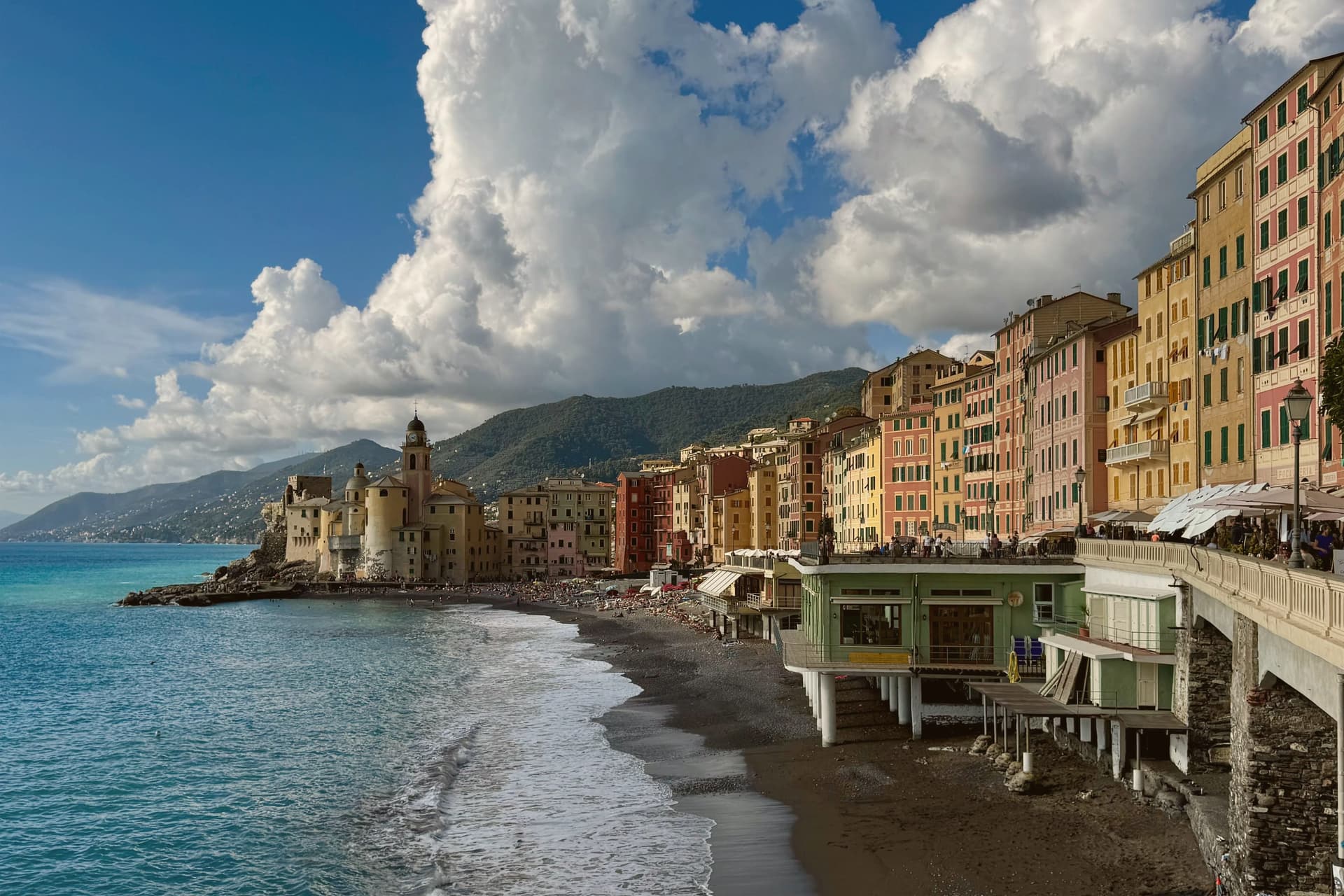
The painted façades of the seafront houses, with their false windows and trompe-l'oeil cornices, served the returning sailors as recognition marks from sea. The Castello della Dragonara, built in the thirteenth century, still guards the harbor.
Every second Sunday of May, the Sagra del Pesce fries thirty thousand portions of fish in a single giant pan on the wharf, in honor of San Fortunato. San Fruttuoso, the eleventh-century abbey reachable by boat or trail, sits in the next cove.
What to see in Camogli
- Castello della Dragonara. Thirteenth-century fortress guarding the harbor, used as municipal seat and now a venue for exhibitions and cultural events.
- Basilica di Santa Maria Assunta. Parish basilica next to the castle on the harbor, baroque interior with marble inlays and seventeenth-century paintings.
- Abbazia di San Fruttuoso. Eleventh-century Benedictine abbey in the next cove, reachable by boat or by the coastal trail across the Portofino peninsula.
How to get to Camogli
There is a railway station in the town, so you can arrive without a car and never need one while you are here. Genova is roughly 33 minutes away by road.
✷ We have written about Camogli
“A steep hill falls into the sea. The houses are crammed on the slope and painted in bright colors because they are old, packed tight, and need help. There is a small port if the cove allows it and a bigger port if the cove is generous. There is a small piazza around a small church, with maybe four restaurants, three bars, and a gelato place. There is no space for a grand square, because there is no space for grand anything in Liguria.”
Read our piece on Camogli →Tigullio Roadtrip | Four Versions of the Same Liguria
Our tip
April through June and September into October are the strongest months for the Camogli seafront, with mild evenings and clean water before the Genova weekend traffic peaks. The Sagra del Pesce on the second Sunday of May is the date that fills the wharf. July and August are warm, often 28 to 30 degrees, and the painted-façade harbor fills with day-trippers off the Genova trains. Sagra Del Pesce falls in May.
Sarzana
Why visit Sarzana
Sarzana sits on the Magra plain at the Liguria-Tuscany border, eighty kilometers from Parma and thirteen from the sea at Portovenere. The town inherited the episcopal seat of Luni in 1204, when Pope Innocent III moved it here away from the malarial plain, and the cathedral built for that new seat still anchors the centro storico.
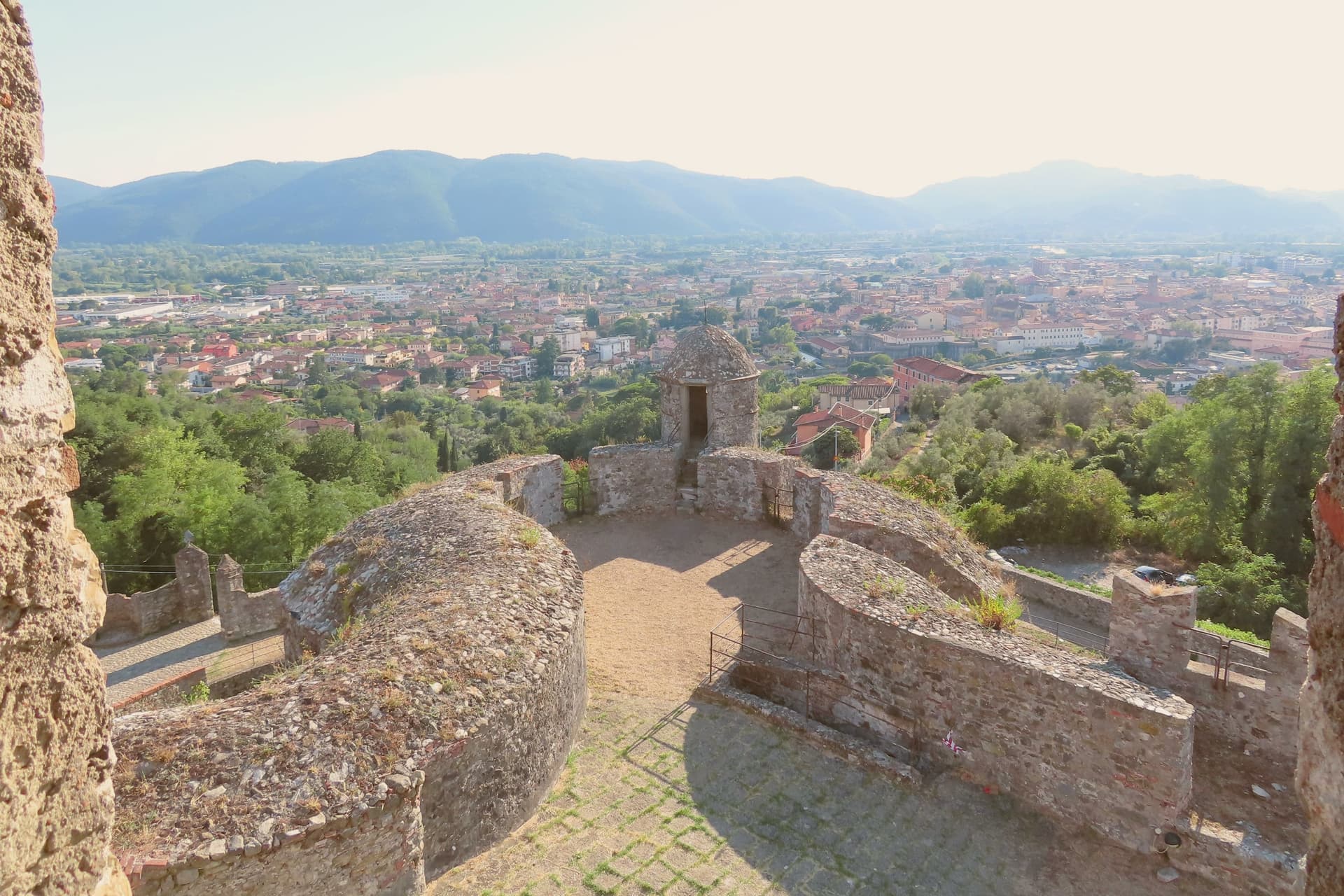
The walled center keeps its grid plan, with Via Mazzini and the cathedral square running through it and the Palazzo Roderio still doing duty as the town hall. Above the town, on a ridge, a second fortress with a triangular plan looks down on the plain and the older one below.
A future pope was born here in 1397. Between the hill fortress from the fourteenth century, the Renaissance rebuilding of the lower cittadella, and a cathedral that changed hands with a diocese, the town's layout reads as a record of who controlled the Magra plain and when.
What to see in Sarzana
- Fortezza Firmafede. The fortress replaced a medieval cittadella on the same ground. Giuliano da Sangallo's plan survives largely intact, with the bulk and angles of the walls still readable from the approach into town.
- Cattedrale di Santa Maria Assunta. Late Gothic Tuscan cathedral, elevated to minor basilica in 1947. A cardinal born in the town, half-brother to a native-born pope, left his mark on the later additions.
- Croce di Mastro Guglielmo. The cross hangs inside the cathedral it has occupied since the seat moved here. Signed by its maker, it is the object the town's Romanesque reputation rests on.
How to get to Sarzana
There is a railway station in the town, so you can arrive without a car and never need one while you are here. Pisa is roughly 54 minutes away by road.
✷ We have written about Sarzana
“It has the best panorama in Liguria, full stop, and I do not think it is close. The reasons are two. The first is the obvious one. You are 266 meters up, the cliff is high enough that there is no rocky beach below to draw a crowd, the sea on one side is the Gulf of La Spezia with Portovenere across the water and the Cinque Terre fading north, and the view on the other side is the Magra running into its delta with the white Apuane behind it and Tuscany beyond.”
Read our piece on Sarzana →Magra Delta Roadtrip | A Tagine, a Lighthouse, and a Dead Roman City
Our tip
April through June and September into October are the strongest months for the centro storico, with the Festival della Mente filling the squares at the end of August. July and August are hot on the Magra plain, often 32 to 35 degrees; the Fortezza Firmafede holds courtyard concerts in the evenings. The town stays open year-round because it is a working provincial center of 21,650 residents, with daily markets and trains to La Spezia, Pisa, and Parma. Marinella Fish Festival falls in August.
Santa Margherita Ligure
Why visit Santa Margherita Ligure
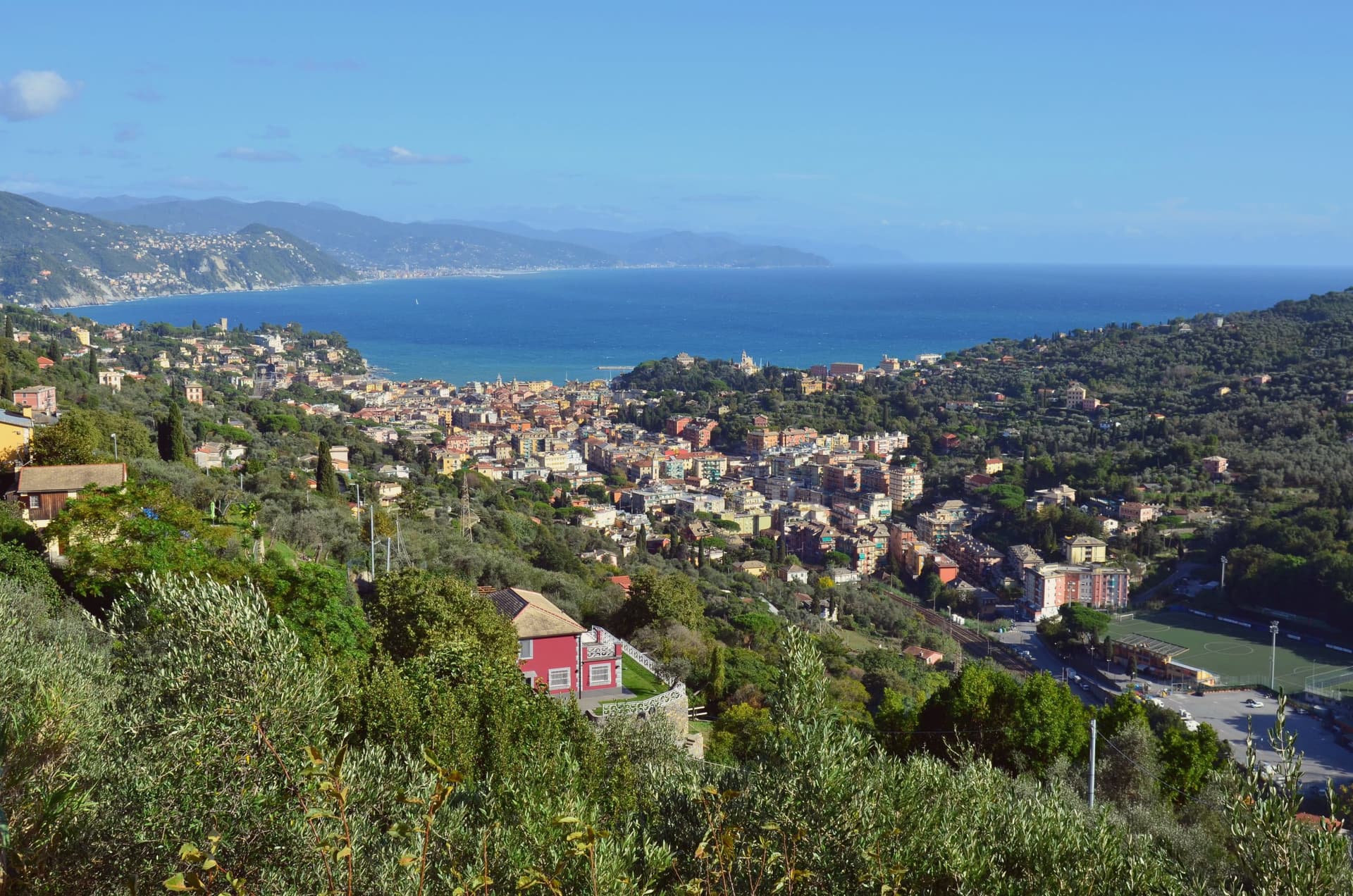
Santa Margherita Ligure sits on the inner curve of the Tigullio gulf, 35 kilometers southeast of Genova, between Camogli and Portofino. The two medieval burghs of Pescino and Corte were unified in 1813 under Napoleonic rule as Porto Napoleone, then renamed when the Kingdom of Sardinia took the coast back in 1815.
Genoese architecture survived the merger: trompe-l'oeil facades on the seafront, the 1658 Basilica of Santa Margherita d'Antiochia with its baroque interior of marble and crystal, the 1550 castle built against North African corsair raids by the architect who built Rapallo's. Villa Durazzo, raised in 1678 as a Genoese summer residence, holds three hectares of terraced gardens above the harbor.
The port still works fishing boats alongside the yachts. Most day-trippers continue to Portofino.
The ones who stop find a town that uses its seafront rather than performing it.
What to see in Santa Margherita Ligure
- Basilica di Santa Margherita d'Antiochia. Baroque parish basilica from 1658, crystal chandeliers and gilded statuary, dominating Piazza Caprera in the centro storico.
- Villa Durazzo-Centurione. Genoese summer villa from 1678 with frescoed Piano Nobile apartments and a three-hectare terraced park above the Tigullio gulf.
- Castello di Santa Margherita Ligure. Coastal fort raised by the Republic of Genoa in 1550 against Saracen and Barbary raids, designed by the architect of Rapallo's castle.
How to get to Santa Margherita Ligure
There is a railway station in the town, so you can arrive without a car and never need one while you are here. Genova is roughly 40 minutes away by road.
Our tip
April through June and September into October are the strongest months. The sea is warm enough from late May, the Tigullio quiets after September, and Villa Durazzo's gardens are at their best in shoulder season. July and August fill the seafront, the Portofino ferries run packed, and the inland streets keep a few degrees of shade.
Loano
Why visit Loano
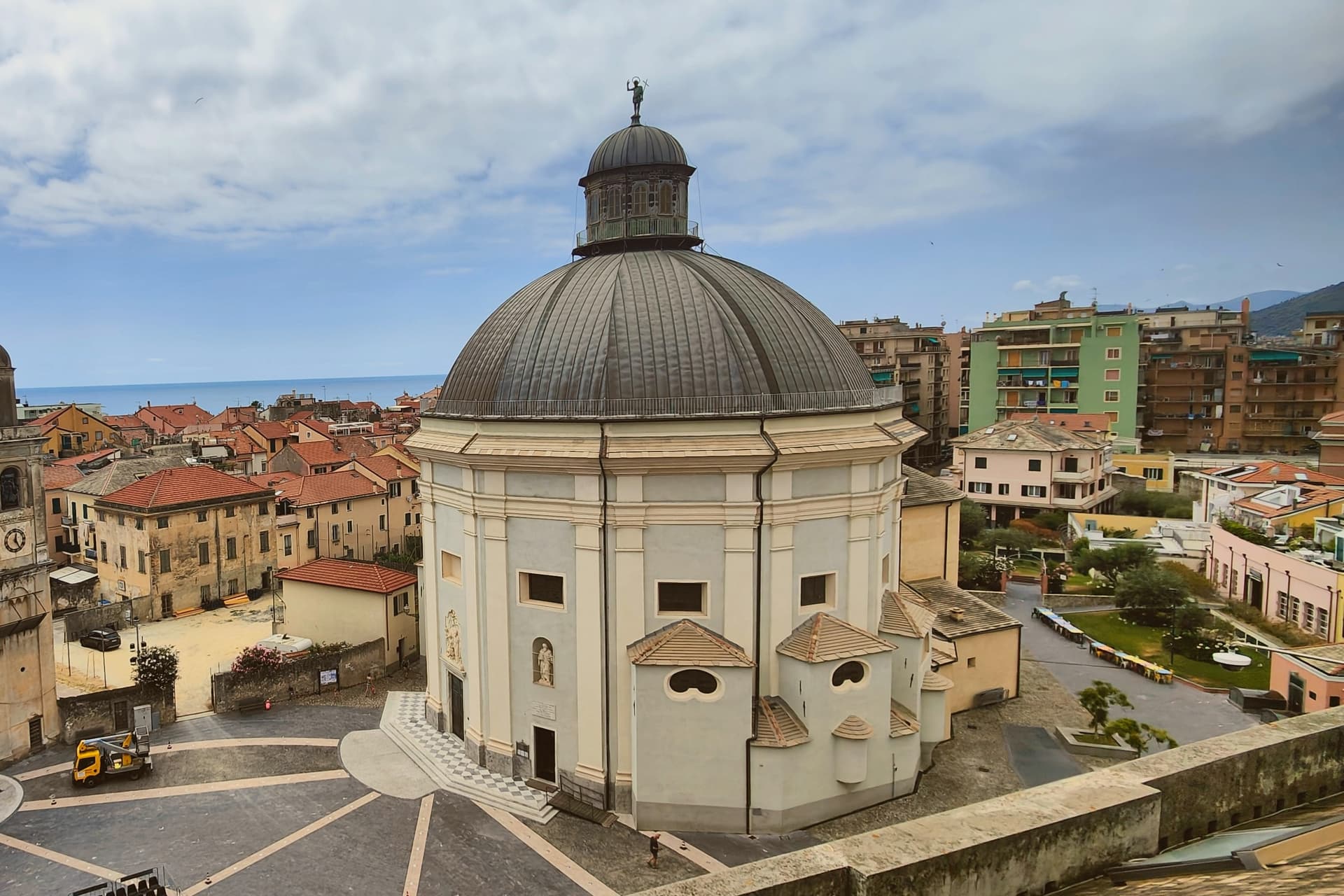
Loano lies sixty kilometers southwest of Genova, at the foot of the arc of mountains that shelters it from inland weather. The town was an imperial fief of the Doria family from the thirteenth century, and the family financed the major public buildings still in use today: the palace at the centro's heart, the loggia beside it where civic business was once conducted, and, indirectly, the church that stands nearer the harbor, built for the town's seafarers and still holding their votive offerings of brigantines and barques.
The old centro, with its palace, loggia and church, sits inland of the modern marina and the two kilometers of beach that run east from it. The mountain at Loano's back and the harbor at its front mark the two poles the town has always worked between: the Doria who governed from the hill and the sailors who prayed by the water.
What to see in Loano
- Palazzo Doria. Considered one of the most representative civil Renaissance palaces in Liguria, its rooms now house the town's administrative offices, and the mosaic floor remains open to view on the main level.
- Chiesa di Sant'Agostino. Founded 1582 by Zenobia Del Carretto, rebuilt 1588-98; called the Madonnetta, the seafarers' church, with votive ship models inside.
- Marina di Loano. The Yachting Pages ranking sits alongside a working harbor east of the centro, with the beach running two kilometers of sand and gravel toward it.
How to get to Loano
There is a railway station in the town, so you can arrive without a car and never need one while you are here. Genova is roughly 76 minutes away by road.
Our tip
April through June and September into October are the strongest months on the Loano front, with the marina full of boats and the beach manageable. July and August are warm, often 28 to 31 degrees, and the population doubles with families on long stays from Milano and Torino. November through March is the calmest stretch but the town stays open because 10,700 residents keep daily services running; the Madonnetta opens for the seafarers' mass on 8 December. Sagra di San Pio X e IX Run San Pio falls in August.
Finale Ligure
Why visit Finale Ligure
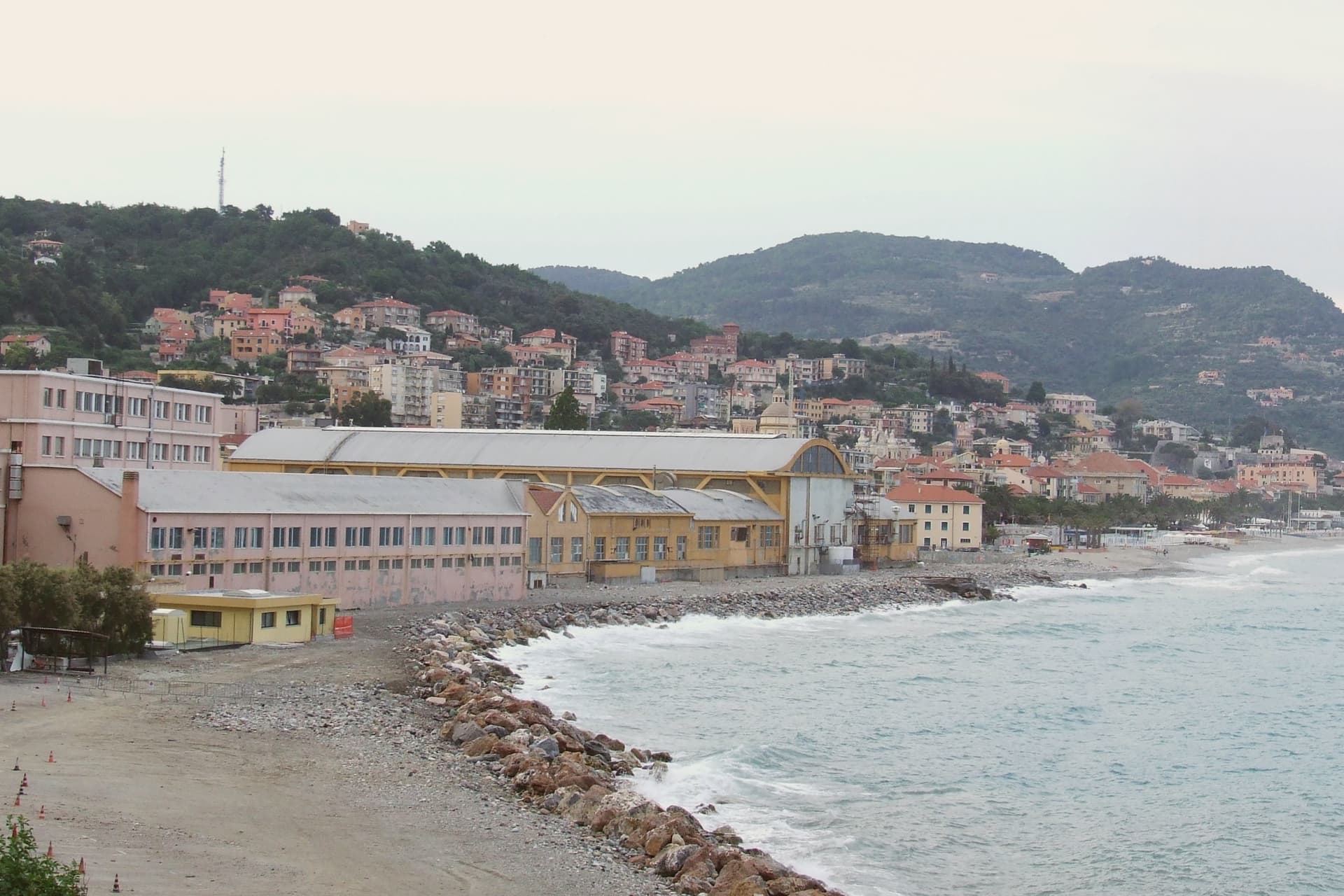
Finale Ligure spans three boroughs and the slope above them: Finalmarina and Finalpia on the coast, the walled inland borough set back at the junction of the Aquila and Pora streams. The two coastal quarters face the water and carry the beachfront trade; the inland borough, built as the seat of the marquisate under the Del Carretto from the late twelfth century onward, kept the family's fortifications and its street plan intact behind the walls rather than along the shore.
The stronghold above the borgo passed through building, wartime destruction, and rebuilding before the Genoese conquest left it largely dismantled in 1715, and the Spanish fort on the ridge above continued to ring the town after that conquest was complete. The coastal stretch below carries the Bandiera Blu and now serves as the starting point for the karst climbing and mountain-biking circuit that has drawn outdoor sport to Finale since the 1990s.
The arrangement is a working division rather than a coincidence: the fortified marquisate seat set inland and upslope, the modern leisure economy running along the water below it.
What to see in Finale Ligure
- Castel Gavone. Del Carretto stronghold built by Enrico II in 1181, destroyed in the wars with Genoa, rebuilt in 1451-52 and dismantled by the Genoese in 1715, leaving the diamond-faceted Torre dei Diamanti standing.
- Castel San Giovanni. Seventeenth-century Spanish fort on a higher ridge above Finalborgo, still ringing the walled town.
- Finalborgo. Walled medieval borough at the junction of the Aquila and Pora streams, listed among the Borghi più belli d'Italia.
How to get to Finale Ligure
There is a railway station in the town, so you can arrive without a car and never need one while you are here. Genova is roughly 71 minutes away by road.
Our tip
May through June and September through October are the easy months: warm sea, dry rock for climbing on the karst above the town, mild evenings in Finalborgo. July and August bring summer beach traffic; the coastal road clogs and Finalmarina fills, while Finalborgo two kilometers inland stays calmer. Winter is mild on this exposure and the climbing and mountain-biking seasons continue through it; many international visitors come specifically between November and March for the limestone routes. Ecosagra Delle Melanzane Ripiene falls in August.
Savona
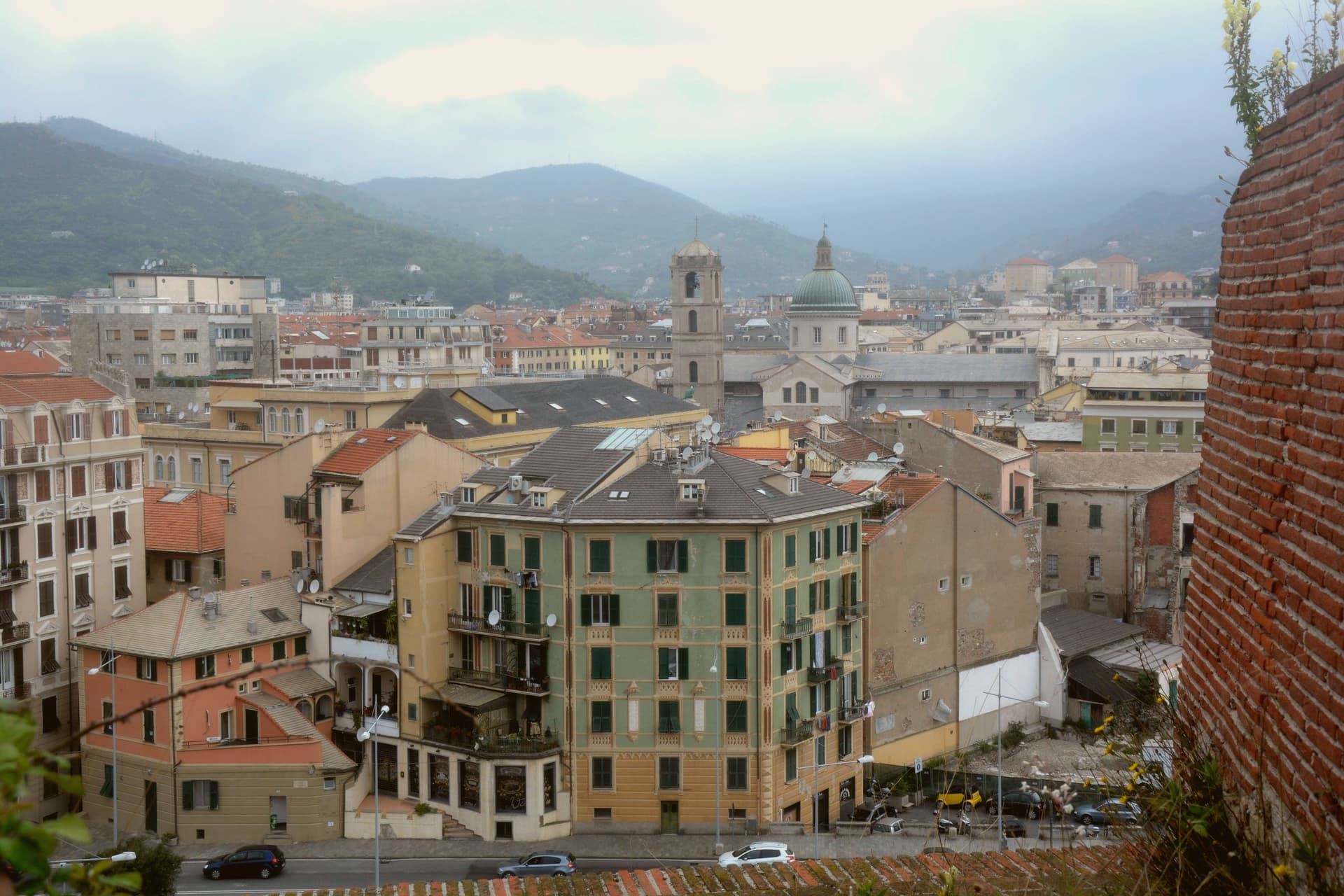
Why visit Savona
Savona is the seat of its province, 40 kilometers west of Genova, the largest port on the Riviera di Ponente. Ligurian tribes held the site before Rome took it around 180 BC after the Punic Wars, during which Savona had sided with Carthage.
The Lombards sacked it in 641. The Della Rovere family produced two popes from Savona: Sixtus IV, who ordered the Roman Sistine Chapel, and his nephew Julius II.
Sixtus IV also commissioned the smaller Sistine Chapel here in 1481 as a funeral chapel for his parents at the Franciscan convent. In 1542 the Republic of Genoa built the Priamar fortress on the medieval town center, destroying the old cathedral, bishop's palace and Dominican convent to clear ground for the bastions.
Pope Pius VII, kidnapped by Napoleon, was held in the fortress from 1809 to 1812. Giuseppe Mazzini was imprisoned there in 1830-31 while drafting the manifesto of Giovine Italia.
The Museo della Ceramica preserves six centuries of Savona and Albisola pottery.
What to see in Savona
- Fortezza del Priamar. Sixteenth-century fortress built by the Republic of Genoa in 1542 on the medieval city core, prison of Pius VII and Mazzini in the nineteenth century.
- Cappella Sistina. Funeral chapel commissioned by Pope Sixtus IV in 1481 for his parents, predating the Roman Sistine Chapel he ordered three years later.
- Cattedrale di Nostra Signora Assunta. Sixteenth-century cathedral with the Della Rovere polyptych remnants, beside the Cappella Sistina and the Bishop's Palace.
How to get to Savona
There is a railway station in the town, so you can arrive without a car and never need one while you are here. Genova is roughly 59 minutes away by road.
Our tip
April through June and September into October are the best months in Savona. The Priamar's outdoor spaces fill with concerts and the Cappella Sistina stays cool. July and August are warm and crowded, with cruise traffic peaking and the centro storico emptying in the early afternoon.
More from Anywhere Italy
 The best beach towns in the province of Savona
 The best hidden beach towns in Liguria
- The best coastal towns inside a nature park in Liguria
- The 10 best hidden beach towns with a food festival in Liguria
 The best towns inside a nature park that eat well in Liguria
 The 10 best towns with a food festival that have a serious restaurant in Liguria