
The best towns you can reach by train within an hour of Florence
Tuscany reads better from a regional train window than from a hire car stuck behind a tractor on a white road. The line out of Florence runs through olive terraces and vine rows, past farmhouses of pietra serena and warm rendered brick, past station bars where the cappuccino is served before you have finished asking. In autumn the platforms smell of woodsmoke and, in the towns along the Arno, of white truffle. In summer the same trains carry swimmers, market bags and people going to eat somewhere cooler than the city.
Most visitors with a spare day book the coach to San Gimignano, and the towers are worth seeing once. The consequence is a single main street moving at the pace of a queue, gelato shops advertising their awards, and coach parks full by mid-morning. Siena on a festival weekend behaves much the same way. These are great places, poorly timed, and the crowd is concentrated into a handful of streets that everyone has been told to walk.
The same hills, the same Romanesque churches and the same kitchens carry on well past those addresses, and they carry on along a railway line. Spa colonnades, a cathedral town with its own organ tradition, a ridge above the Arno known for truffles, terraces looking straight down at the Duomo, wine slopes east of Lucca: all of them have a station you can get off at. Fewer people go, and the ones who do tend to be Italians on a Sunday. This list is the towns where we have confirmed you can arrive by train and leave the car behind.
Of the 11 communes we have mapped in a one-hour drive of Florence, 6 qualify as towns you can reach by train: we confirmed a station you can arrive at. The smallest, Montecarlo, has 4,389 residents.
Elsewhere in the catalogue: The best towns that eat well within an hour of Florence and The best hill towns within an hour of Florence.
Montecarlo
Why visit Montecarlo
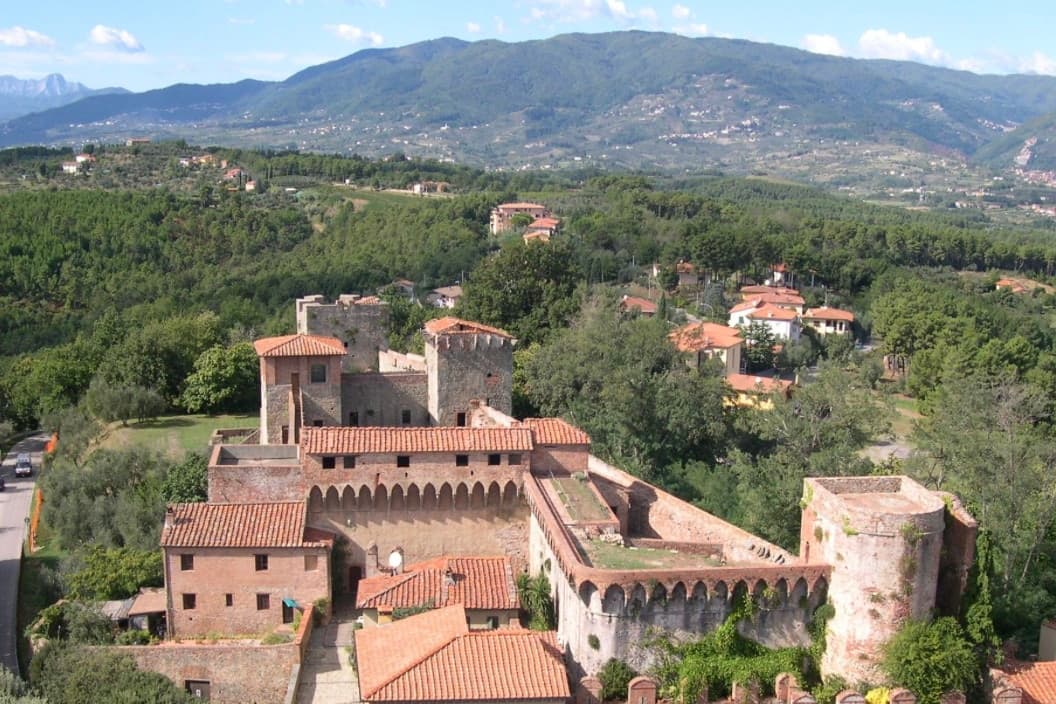
Montecarlo sits at 163 meters on an isolated hill above the Lucca plain, looking south toward the Valdinievole. Holy Roman Emperor Charles IV founded it in 1333 after liberating Lucca from Pisan rule, on a site previously called Vivinaia for the wine roads that crossed the hill.
The name Monte di Carlo, Charles's mountain, has held since. The walled centro storico is still ringed by its fourteenth-century defensive walls, with the Fortezza del Cerruglio rising above the highest point.
Wine production has been documented here since Roman times; the first tavern keepers selling Trebbiano in barrels appear in records in 1371. The Montecarlo DOC was established in 1969, the white blends Trebbiano with French varieties including Sémillon and Pinot Gris, and roughly twenty wineries operate within the commune, a notable density for a population under 4,500.
We confirmed you can reach this one by train.
What to see in Montecarlo
- Fortezza del Cerruglio. Fourteenth-century fortress on the highest point of the hill, expanded by Castruccio Castracani and the Florentines in the fifteenth century.
- Centro storico. Walled medieval village founded by Charles IV in 1333, still inside its original defensive perimeter along Via Roma.
- Teatro dei Rassicurati. Small eighteenth-century theatre with 95 seats and a horseshoe plan, inaugurated in 1795 and still used for the autumn season.
How to get to Montecarlo
There is a railway station in the town, so you can arrive without a car and never need one while you are here. Prato is roughly 38 minutes away by road.
Our tip
April through June and September through October bracket the year here. April brings the vines into leaf, May the first whites of the new vintage onto cellar tables, and September the harvest. The Festa del Vino runs in early September on the streets inside the walls. Festa del Vino Montecarlo di Toscana falls in August.
Fiesole
Why visit Fiesole
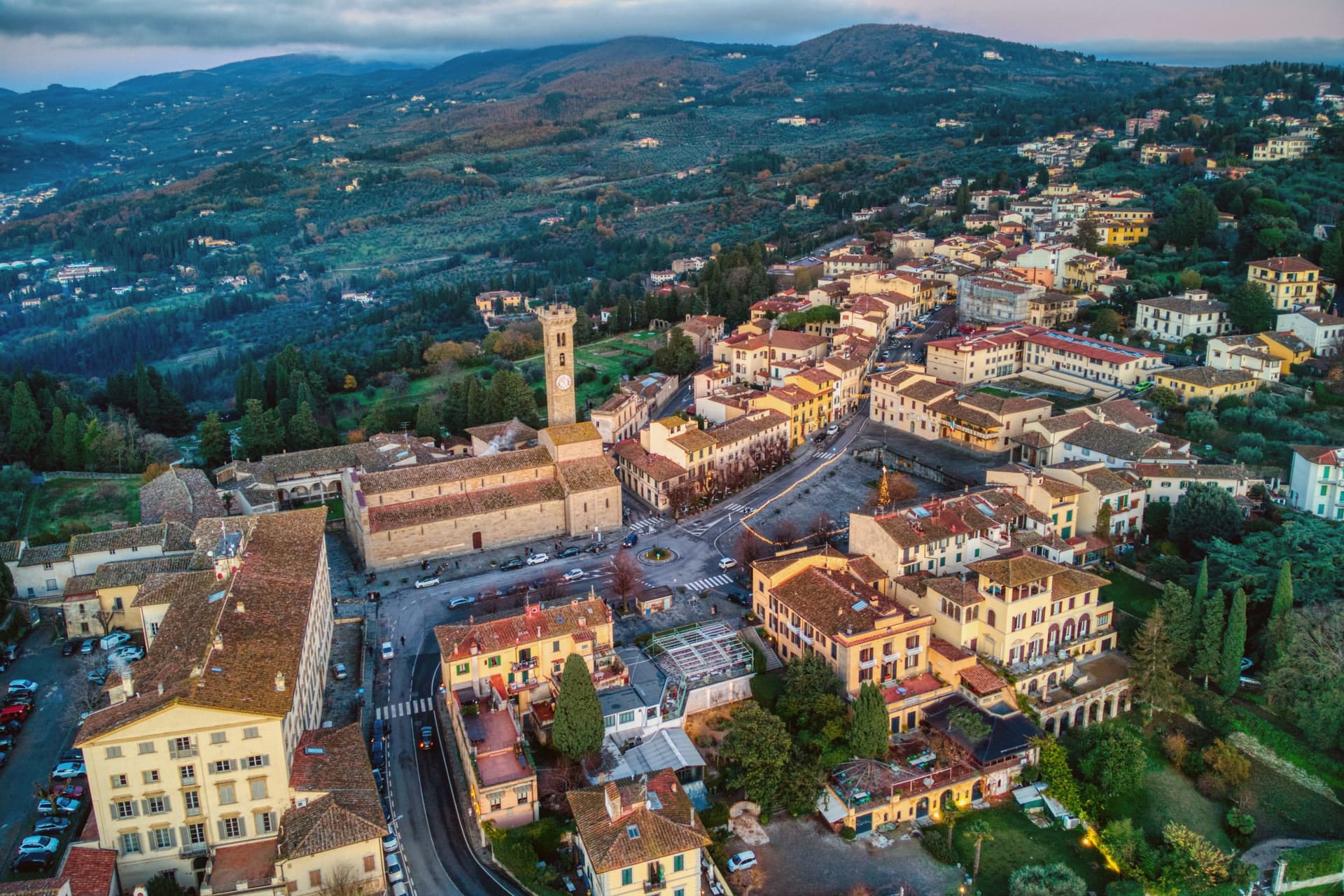
Fiesole was Viesul to the Etruscans and Faesulae to the Romans, who took it in 283 BC. Florence claimed it in 1125 and never let it go, which is the reverse of the usual order: the hill town came first, the valley city second, and the ridge has watched its own successor grow across the centuries since.
The convent that crowns the highest point, at 345 meters, sits at the same height Boccaccio gave the brigata in the Decameron's frame story, a detail that ties the summit to the plague-fleeing storytellers rather than to any building fact already given. Today the town functions as the hill seat of Florentine villas, the Villa Medici among them, so the relationship between Fiesole and Florence is not just historical but residential: those with means built upward, toward the older settlement, to look down on the newer one.
The panorama from the piazza is the view that supplies the standard image of Florence from above, which means the town that Rome conquered has ended up owning the picture of the city that conquered it back.
We confirmed you can reach this one by train.
What to see in Fiesole
- Teatro Romano. Stone tiers set into the hillside below the cathedral, still used each summer for the Estate Fiesolana, so the seats fill for performances the way they once did in antiquity.
- Cattedrale di San Romolo. Romanesque cathedral founded in 1028, flanked by a 42-meter bell tower, with a marble altar from 1273 and two Pietro Perugino frescoes.
- Convento di San Francesco. Romanesque-Gothic Franciscan convent at the ridge's highest point, 345 meters, with cloisters and a panoramic view back over Florence.
How to get to Fiesole
There is a railway station in the town, so you can arrive without a car and never need one while you are here. Firenze is roughly 24 minutes away by road.
Our tip
April through June and September through October are the months Fiesole was built for: the air cooler than Florence by three to five degrees, the cypress alleys clean of haze, and the Roman theatre season runs through July and early August with concerts under the open sky. July and August push the day temperature high enough that even the hilltop feels heavy at midday, though the evenings come back. November through March is quiet, light hits the cathedral late and low, and the wood-burning trattorias around Piazza Mino do their best work. Sagra del Tartufo falls in September.
Certaldo
Why visit Certaldo
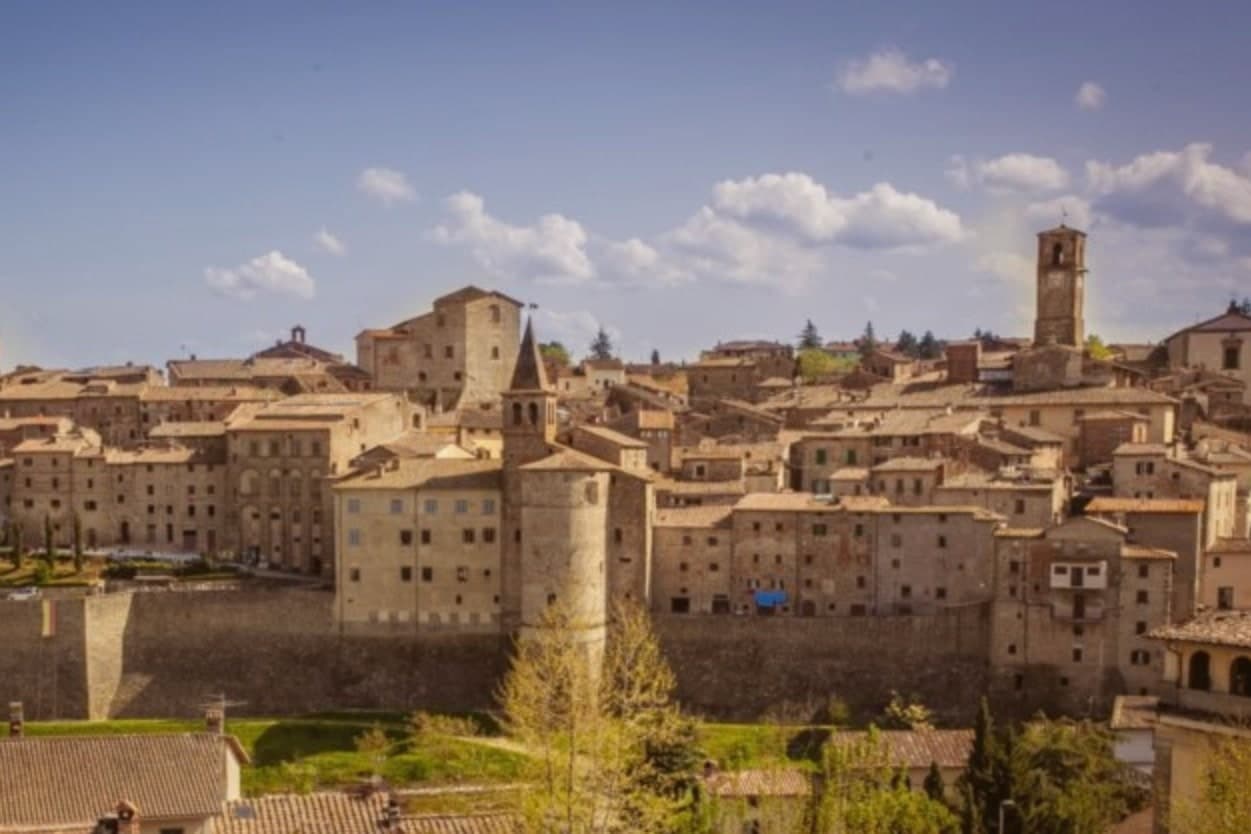
Certaldo sits in the Valdelsa twenty-five kilometers southwest of Florence, with a lower town on the plain at 67 meters and the medieval Certaldo Alto on the hill above, reached by a funicular. The upper town is built almost entirely of red brick rather than the usual Tuscan stone, an unusual visual signature for the region.
Giovanni Boccaccio lived his last years here, dying in 1375 in the house on Via Boccaccio that is now the Casa Boccaccio museum and study center. He is buried in the Chiesa dei Santi Michele e Jacopo across the street.
The Palazzo Pretorio, fifteenth-century seat of the Florentine vicar, holds frescoes by Pier Francesco Fiorentino and the courtyard coats of arms of seventy-four podestà. Mercantia, the street-theater festival that fills Certaldo Alto every July, has run since 1988 and turns the brick streets into stages for European companies.
The local plate is cipolla rossa di Certaldo, a sweet red onion grown on the Valdelsa hills since the fifteenth century.
We confirmed you can reach this one by train.
What to see in Certaldo
- Certaldo Alto. Medieval brick-built upper town on the hill above the plain, reached by funicular from the modern lower town.
- Casa Boccaccio. The house on Via Boccaccio where the poet lived his last years and died in 1375, now a museum and study center.
- Palazzo Pretorio. Fifteenth-century seat of the Florentine vicar, with frescoes by Pier Francesco Fiorentino and seventy-four podestà coats of arms in the courtyard.
How to get to Certaldo
There is a railway station in the town, so you can arrive without a car and never need one while you are here. Firenze is roughly 46 minutes away by road.
Our tip
April through June brings the Valdelsa hills green and the lower temperatures bearable. Mercantia runs five nights in mid-July, and the upper town becomes a single open-air theater between dusk and one in the morning. September and October are the second window, with the new oil from the surrounding hills and the start of the cipolla rossa season. Boccaccesca falls in October.
Montecatini-Terme
Why visit Montecatini-Terme
The spa town sits at 27 meters in the Valdinievole, forty kilometers west of Florence, at the foot of the hills that hold its older twin on the height above. That older settlement predates the town below it: the springs were exploited later, and the modern spa grew up on the flat ground beneath the hill village rather than around it.
The two remain connected by the red funicular, so a visitor moves between them in minutes rather than by road. Each of the four named waters treats a different complaint, drawn from the same eleven springs but separated by mineral content once they reach the surface.
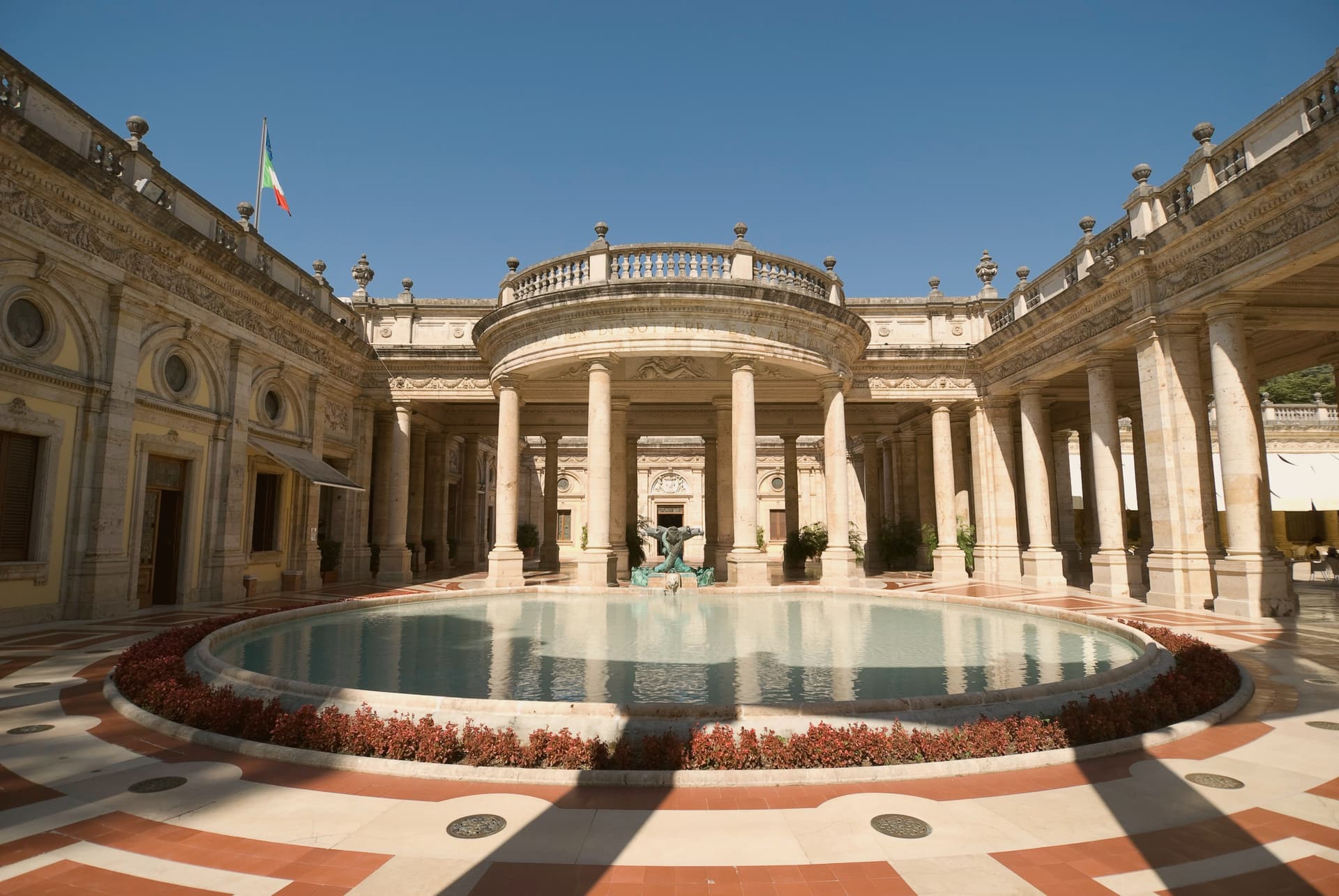
The Thermal Park gathers the pavilions that were built to house this water cure, Liberty and neo-Renaissance architecture arranged as a single walled enclave rather than scattered through the town. In 2021 the UNESCO listing grouped the town with other spa towns built for the same purpose, Bath, Vichy, Baden-Baden and Karlovy Vary among them, recognition of a model of spa town that produced this particular layout: springs, park, pavilions, and a hill town kept deliberately apart from the cure below.
We confirmed you can reach this one by train.
What to see in Montecatini-Terme
- Terme Tettuccio. The most famous of the thermal establishments, designed by Ugo Giovannozzi, with Liberty interiors built on the concept of the Roman baths.
- Parco Termale. Walled thermal park holding the major spa pavilions, laid out around the eleven springs that surface in the lower town.
- Funicolare di Montecatini. The two red cars carry passengers up the hill on rails laid in 1898, the ride lasting eight and a half minutes.
How to get to Montecatini-Terme
There is a railway station in the town, so you can arrive without a car and never need one while you are here. Prato is roughly 31 minutes away by road.
✷ We have written about Montecatini-Terme
“I grew up around water that smells. In Budapest, you do not think of this as a flaw. The thermal water comes up out of the ground carrying its minerals with it, iron and sulfur, and whatever else the limestone has been holding for ten thousand years, and it announces itself before you see it.”
Read our piece on Montecatini-Terme →Montecatini Terme | The Bath Without People
Our tip
The thermal park works as a year-round destination, but the seasons feel different. April through June and September through October are the comfortable months: pavilions open, hotels staffed, walking the park or the funicular pleasant. July and August are hot in the Valdinievole and busy with package tourism.
San Miniato
Why visit San Miniato
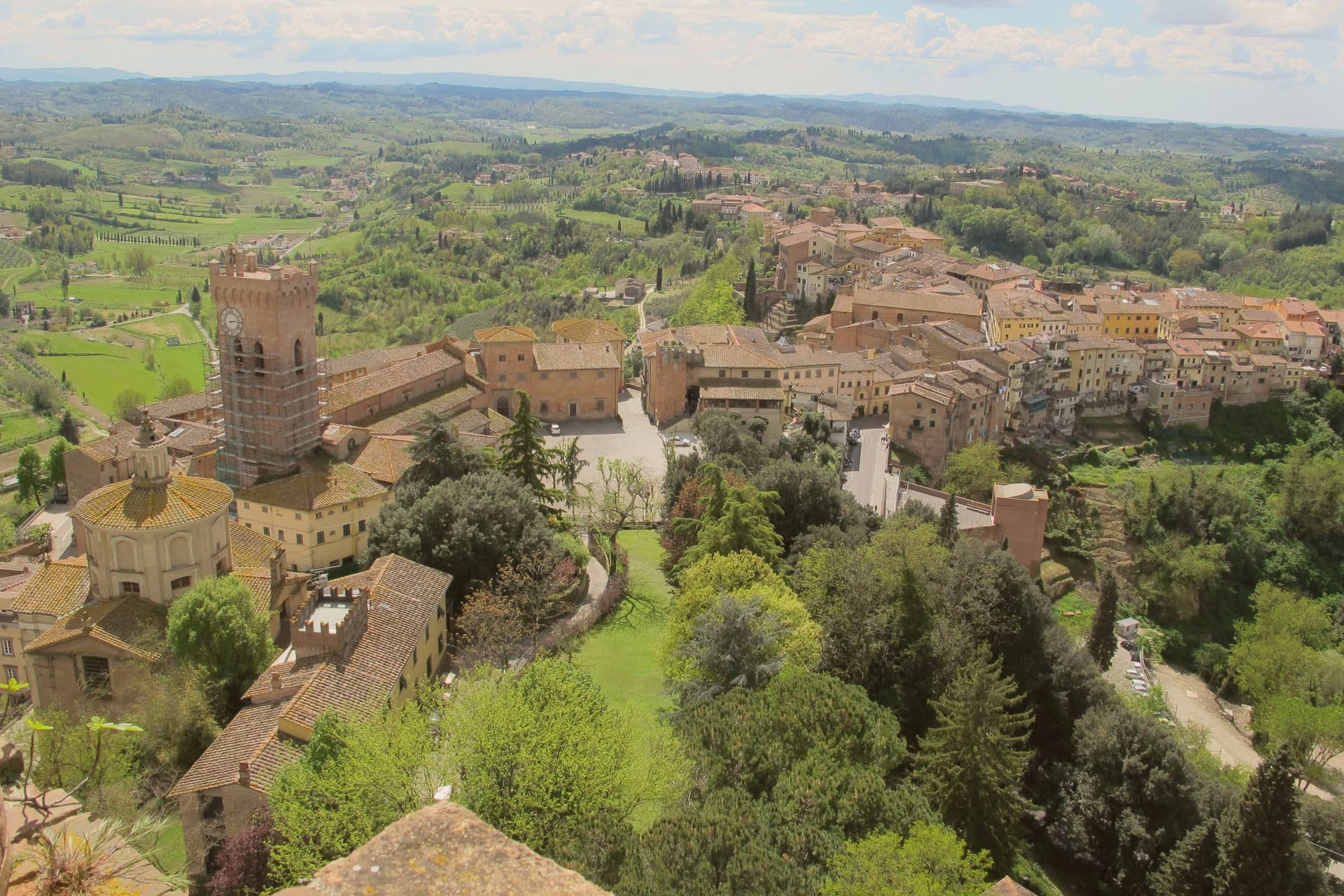
San Miniato runs along three hills at 150 meters above the lower Arno, halfway between Pisa and Florence. In 962, Otto I of Saxony made it one of the seats of imperial administration in central Italy; in 1218 Frederick II turned it into a tax collection point, and the brick tower he built between 1217 and 1223 still rises above the town, rebuilt in 1958 after the retreating Germans mined it in 1944.
The Via Francigena passes through. The Duomo, dedicated to Sant'Assunta and Santo Genesio, holds the asymmetrical clock tower called the Matilde.
What the town is mainly known for today comes from the woods around it. San Miniato produces roughly a quarter of Tuscany's white truffles, including a tuber of over two kilos found in 1954.
The National White Truffle Exhibition, running through the last three weekends of November, has been held in Piazza del Duomo since 1969.
We confirmed you can reach this one by train.
What to see in San Miniato
- Rocca di Federico II. Thirty-meter brick tower built by Frederick II between 1217 and 1223, destroyed by retreating Germans in 1944 and rebuilt in 1958.
- Duomo di Santa Maria Assunta e San Genesio. Originally Romanesque cathedral with Gothic and Renaissance additions, dedicated to two patrons, with the asymmetrical Matilde clock tower as campanile.
- Palazzo dei Vicari dell'Imperatore. Medieval palace of the imperial vicars who governed San Miniato when it was an imperial administrative seat.
How to get to San Miniato
There is a railway station in the town, so you can arrive without a car and never need one while you are here. Pisa is roughly 49 minutes away by road.
✷ We have written about San Miniato
“And then time passed, which is the part the town doesn’t tell you about, because the town only sees you on the day. The jars sat in the cupboard. We are not people who keep proper white truffle at home; almost nobody is. But we do buy black truffle now and then, and we don’t buy it on a hill behind a closed road. We buy it from a man named Marco who runs a food truck in a supermarket parking lot down on the Marina near us. He digs some of it himself and sells the rest for the farmers around him, and there is no shuttle bus.”
Read our piece on San Miniato →San Miniato | The Truffle I Couldn’t Taste
Our tip
April through June brings the long Tuscan spring, mild on the ridge with views clear to the Apennines. September and October are dry and gold, the same colors painters come for. November is the truffle month: the National White Truffle Exhibition fills Piazza del Duomo across three weekends, hotel rates double, restaurants book out weeks ahead. Fiera Mercato del Tartufo Bianco di Corazzano falls in the season.
Pistoia
Why visit Pistoia
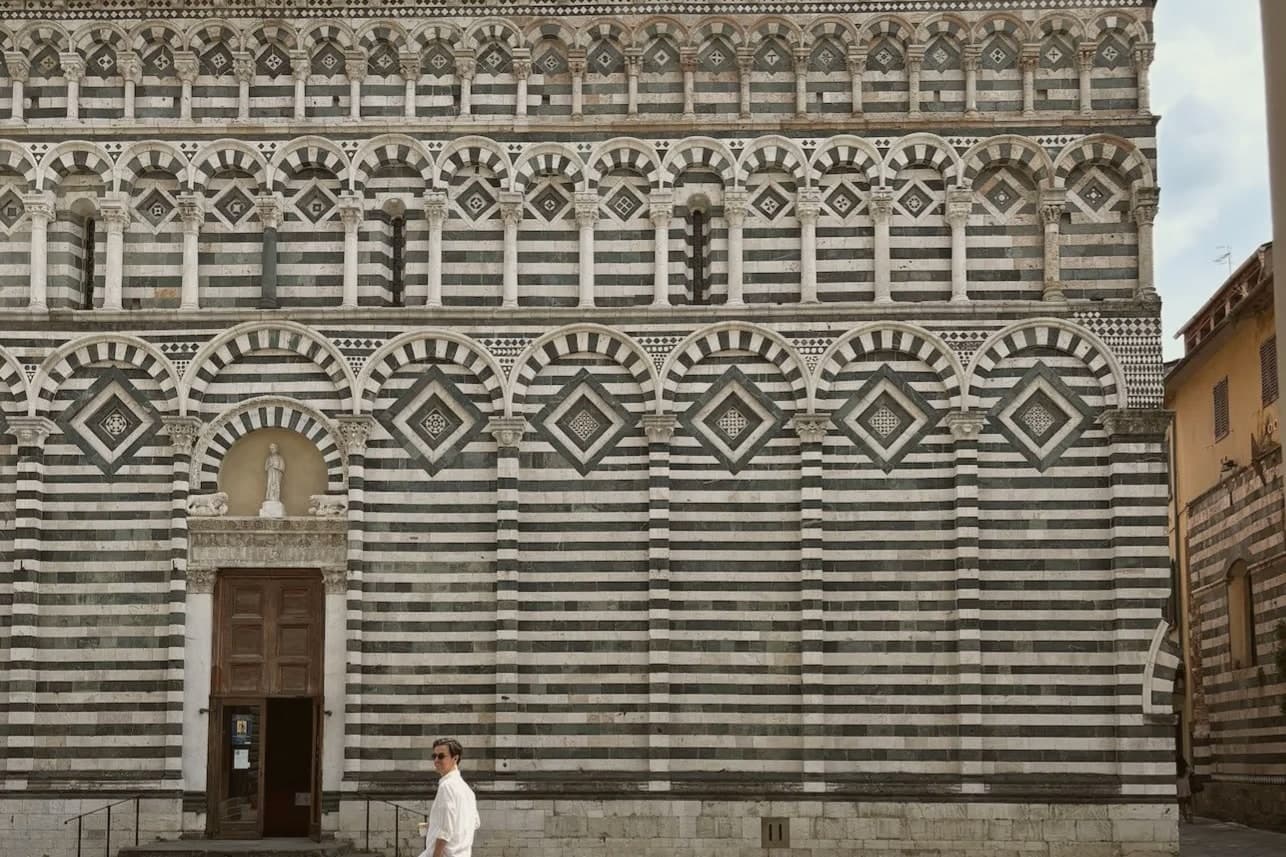
Pistoia is a Tuscan provincial capital of 89,000 residents that Florence's shadow has kept under the radar, with an exceptionally intact medieval-and-Romanesque centro storico. The Piazza del Duomo sits at its center: Cattedrale di San Zeno (12th-c) with Giovanni Pisano's silver altarpiece of St James, begun 1287 with additions over the next two centuries and counted among medieval Europe's most ambitious silver works, plus the Palazzo dei Vescovi and a Romanesque campanile that started life as a Lombard watchtower.
Five minutes' walk from the square stands the hospital, in continuous use since 1277 and carrying its famous loggia frieze along fifty metres of facade. The old center's density of Romanesque and Renaissance building sits inside a wider working landscape.
The surrounding plain is covered in nursery gardens, the economic engine behind the city walls, and the Apennines rise twenty minutes to the north, holding the Abetone ski station, the Padule di Fucecchio wetland, and beech forest in the Pistoia mountains. The local table follows the same Apennine logic: castagnaccio, necci, and farro from the Garfagnana, with anise wafers arriving from the neighbouring town of Lamporecchio.
A city this size holding a silver altarpiece, a fresco-covered chapel, a Renaissance-scale terracotta frieze, and Europe's largest plant-export zone in the same short walk is what makes the Capital of Culture designation legible on the ground rather than a line on a plaque.
We confirmed you can reach this one by train.
What to see in Pistoia
- Piazza del Duomo (Cattedrale + Battistero + Campanile). Set-piece Romanesque square, green-and-white striped octagonal Baptistery (1338), Cattedrale di San Zeno with Pisano's silver St James altarpiece, slender bell tower from a former Lombard watchtower.
- Ospedale del Ceppo + della Robbia frieze. Working hospital since 1277. Andrea della Robbia's terracotta frieze depicting the Seven Works of Mercy runs the entire loggia, one of the great public artworks of the Renaissance.
- Cappella del Tau. Deconsecrated 14th-c church with a complete cycle of frescoes by Niccolò di Tommaso (1370s) on the Old and New Testaments. Tiny, quiet, free.
How to get to Pistoia
There is a railway station in the town, so you can arrive without a car and never need one while you are here. Prato is roughly 24 minutes away by road.
✷ We have written about Pistoia
“What I can say with confidence, because we were there and we saw it, is that the Pistoiese cafés are not Italian cafés, in the way that almost every other café in Tuscany is. They are closer to the cafés you walk into in Vienna or in a French provincial town, where the savory tradition runs as deep as the sweet one, the cases are stocked accordingly, and the sandwiches are real food.”
Read our piece on Pistoia →Pistoia | Mini-Florence with Better Pastry
Our tip
Pistoia is best April through June and September through October — hot Tuscan summers slow the centro and the nurseries close to visitors. The Pistoia Blues festival (early July) and the late-May Dialoghi sull'Uomo philosophy festival are worth planning around. Winter is foggy and quiet, with the indoor masterpieces (Pisano altarpiece, Cappella del Tau frescoes) at their most atmospheric. Chiazzano in Festa falls in September.
More from Anywhere Italy
- The best towns that eat well within an hour of Florence
- The best hill towns within an hour of Florence
 The best hill towns you can reach by train within 90 minutes of Firenze
 The best hill towns in the province of Firenze
- The 8 best towns you can reach by train in the province of Lucca
- The best hot-spring towns within 90 minutes of Florence