
The 9 best towns you can reach by train that eat well in Trentino-Alto Adige/Südtirol
This is a region where two kitchens sit at the same table. Barley soup, smoked speck cut thick, canederli in broth and apple strudel on the German side of the ledger; canederli giving way to polenta, trout from the Adige and Teroldego from the vineyards south of the Val d'Adige. The towns are built of pale stucco and painted arcades, with Gothic gables at one end of the region and Venetian-leaning porticoes at the other. Autumn is the season most people plan for, when the Törggelen tables open after the grape harvest and the larches go copper above the valley floors, but the Christmas market weeks and the long green evenings of early summer both hold up.
The railway helps. The Brenner line runs the length of the region and the branch lines climb into the side valleys, which is why the Dolomites are one of the few Alpine ranges you can properly eat your way through without driving. Most people funnel straight to Bolzano, then out to the high resorts and the shuttle queue for Lago di Braies, and by August the lake path has a timed entry system and the cable cars have a wait. It is a good day out. It is also the day everyone else has booked.
The valleys keep going past the coach park. The same speck cellars, the same Michelin and Gambero Rosso attention, the same platforms served by regional trains every hour, only in towns where lunch is easier to get a seat at. These are the places along those lines where a dining guide has named a table and where we have confirmed you can arrive, eat and leave again on rails.
Of the 33 communes we have mapped in Trentino-Alto Adige/Südtirol, 9 qualify as towns you can reach by train that eat well: we have confirmed each is reachable without a car, and a dining guide has named a table in each. The smallest, Glurns, has 937 residents.
Two more lists worth reading alongside this one: The 8 best hidden towns you can reach by train in Trentino-Alto Adige/Südtirol and The best mountain towns you can reach by train in Trentino-Alto Adige/Südtirol.
Glurns
Why visit Glurns
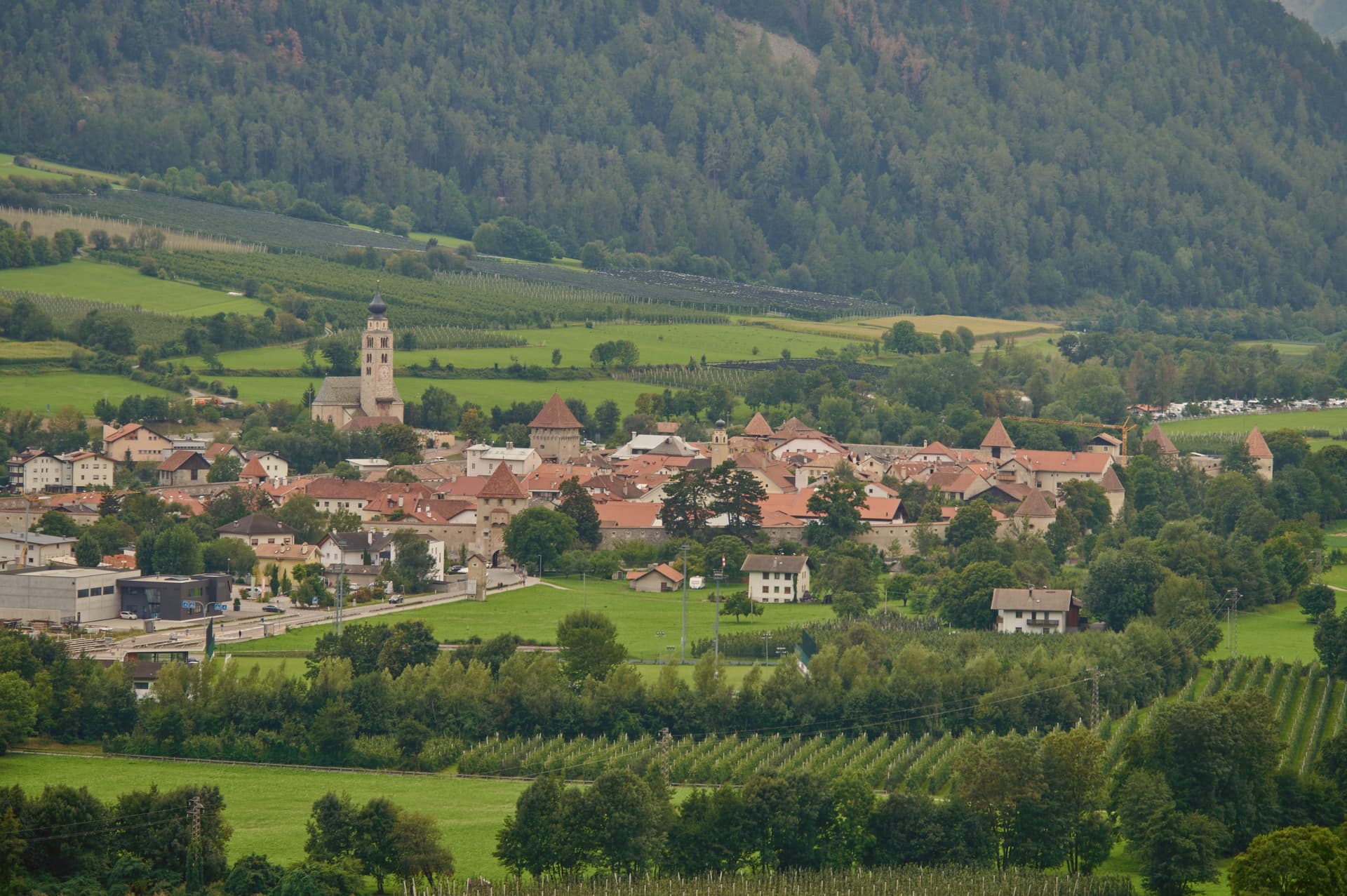
The town sits at 907 metres in the upper valley, twenty minutes by car from both the Austrian and Swiss borders, on the Adige river at the southern entrance to the national park. City status was awarded by Emperor Henry of Bohemia in 1304, an honor that has stayed attached to the place ever since even as the population inside the walls stayed under a thousand.
After the Battle of Calven in 1499, the Habsburgs under Emperor Maximilian I rebuilt the town as a bulwark against the forces of the Three Leagues of Graubünden, and it is that rebuilding which produced the fortification standing today. The walled core and the church outside it mark the two halves of the town: the streets and Lauben arcades, paved in cobble, enclosed within the ring of walls, and the parish church standing apart on the riverbank, holding its own late Gothic frescoes away from the defended center.
A city built for defense against the Three Leagues of Graubünden still reads, in its layout, as a place organized entirely around the line where the walls stand and the ground just beyond them: the guarded interior on one side, the river and the open approach to the mountains on the other.
Flurin have been named by a guide.
What to see in Glurns
- Mura cittadine. Walls built under Emperor Maximilian I after 1499, following the Battle of Calven, as a bulwark against the forces of the Three Leagues of Graubünden. The patrol path still runs continuous along the inside face.
- Centro storico. Walled core of unbroken three-storey Lauben arcades along the two main streets, paved in stone and listed on the Borghi più belli d'Italia.
- Chiesa di San Pancrazio. Parish church just outside the walls on the bank of the Adige, with a Gothic nave and a series of late medieval wall frescoes inside.
How to get to Glurns
There is a railway station in the town, so you can arrive without a car and never need one while you are here. Bolzano is roughly 102 minutes away by road.
Our tip
May through October is the open season in the upper Val Venosta. Late May brings green on the valley floor and the start of the Stelvio Park hiking calendar from Glorenza north. June through September is the busiest period, with the Stelvio passes open, the Adige cycle path running from Resia south, and Glorenza markets under the arcades on Tuesdays and Fridays.
Toblach
Why visit Toblach
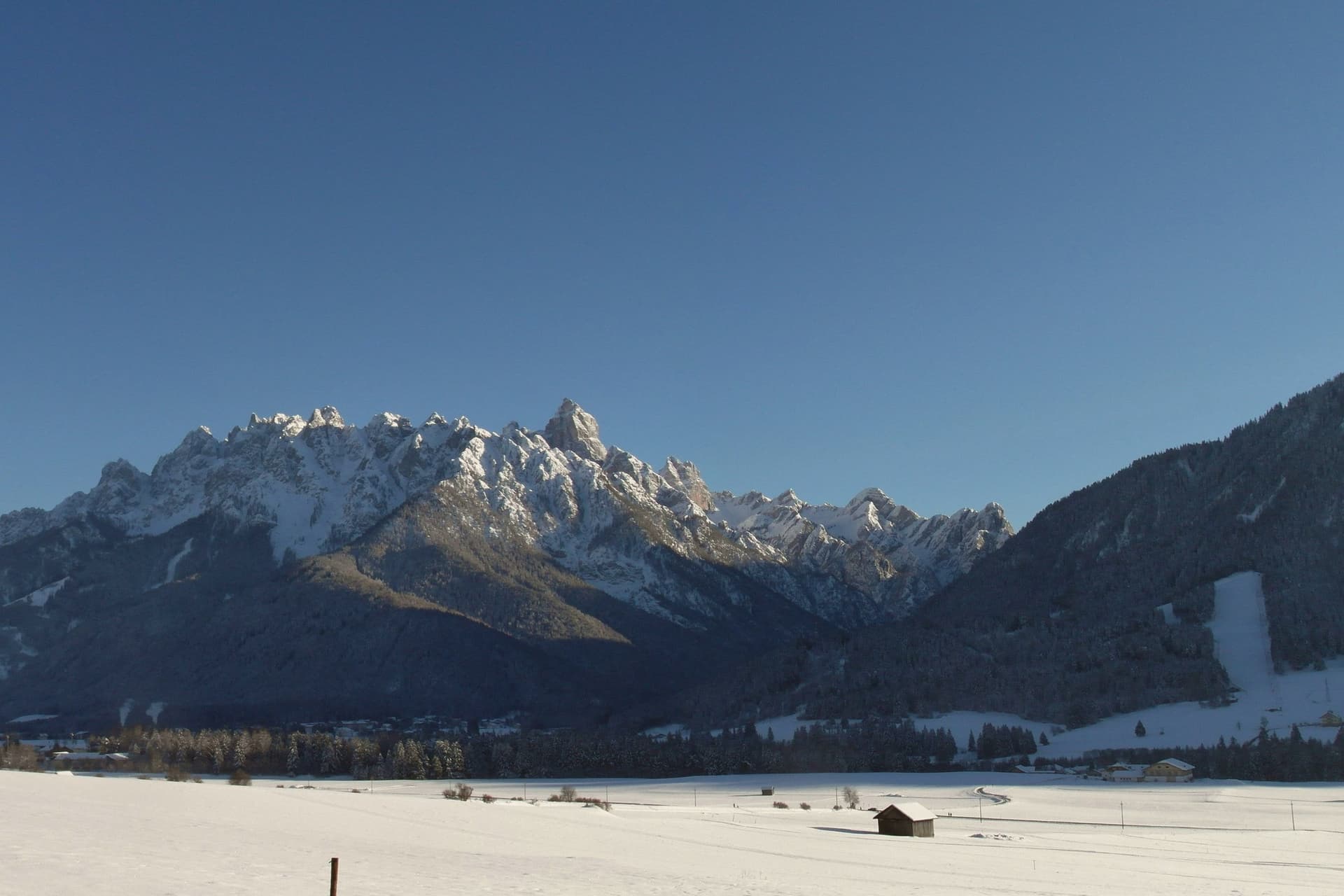
Dobbiaco sits at 1,256 metres in the upper Val Pusteria, on the Austrian border, its written record going back to 827. The old settlement, Alt-Toblach, grew around the parish church, while the newer part of town took shape lower down around the railway station built alongside the hotel that opened in 1877, which turned Dobbiaco into one of the first alpine resorts in the Habsburg empire.
Further out in the woods at Alt-Schluderbach stands the cabin where a composer once retreated each summer to write, apart from the hotel guests and the trains. South of the settlement the land opens into the Fanes-Sennes-Braies Nature Park, holding an alpine lake with a trail for walkers, and the old railbed continues in that direction as a route over Cimabanche pass toward Cortina d'Ampezzo.
Beyond all of it, reached by way of Val di Landro and Misurina, rise the three spires that anchor the eastern Dolomites. The Gustav Mahler Musikwochen festival fills the town each July and August with concerts named for the man who once needed its quiet.
Taken together, the town reads as three layers set one behind the other: a medieval nucleus, a Habsburg-era resort built on the railway, and beyond both, the mountains and woods that drew a composer to withdraw and now draw everyone else to pass through.
Tilia have been named by a guide.
What to see in Toblach
- Chiesa di San Giovanni Battista. Rebuilt 1764-1774 over the remains of a ninth-century Benedictine chapel, standing at the centre of the historic settlement of Alt-Toblach, the nucleus the rest of the town grew around.
- Grand Hotel Toblach. Built 1877-1878 beside the new railway station. The building now holds the nature park visitor centre and the Mahler Auditorium, where the composer's name is heard again each summer.
- Lago di Dobbiaco/Toblacher See. Alpine lake south of town in the Fanes-Sennes-Braies Nature Park, with a circular educational trail and observation platforms for waterfowl.
How to get to Toblach
There is a railway station in the town, so you can arrive without a car and never need one while you are here. Bolzano is roughly 93 minutes away by road.
Our tip
June through September is the summer Dolomite season, with cool evenings, the Mahler Musikwochen in July and August at the Grand Hotel auditorium, and the Tre Cime and Dobbiaco-Cortina cycle path at their busiest. December through March is the ski and Nordic season: the Dobbiaco-Cortina cross-country track replaces the cycle path, and the Tre Cime ski circuit runs from nearby Plan de Corones. April and May are quiet shoulder months, snow gone but many lifts and hotels closed.
Sterzing
Why visit Sterzing
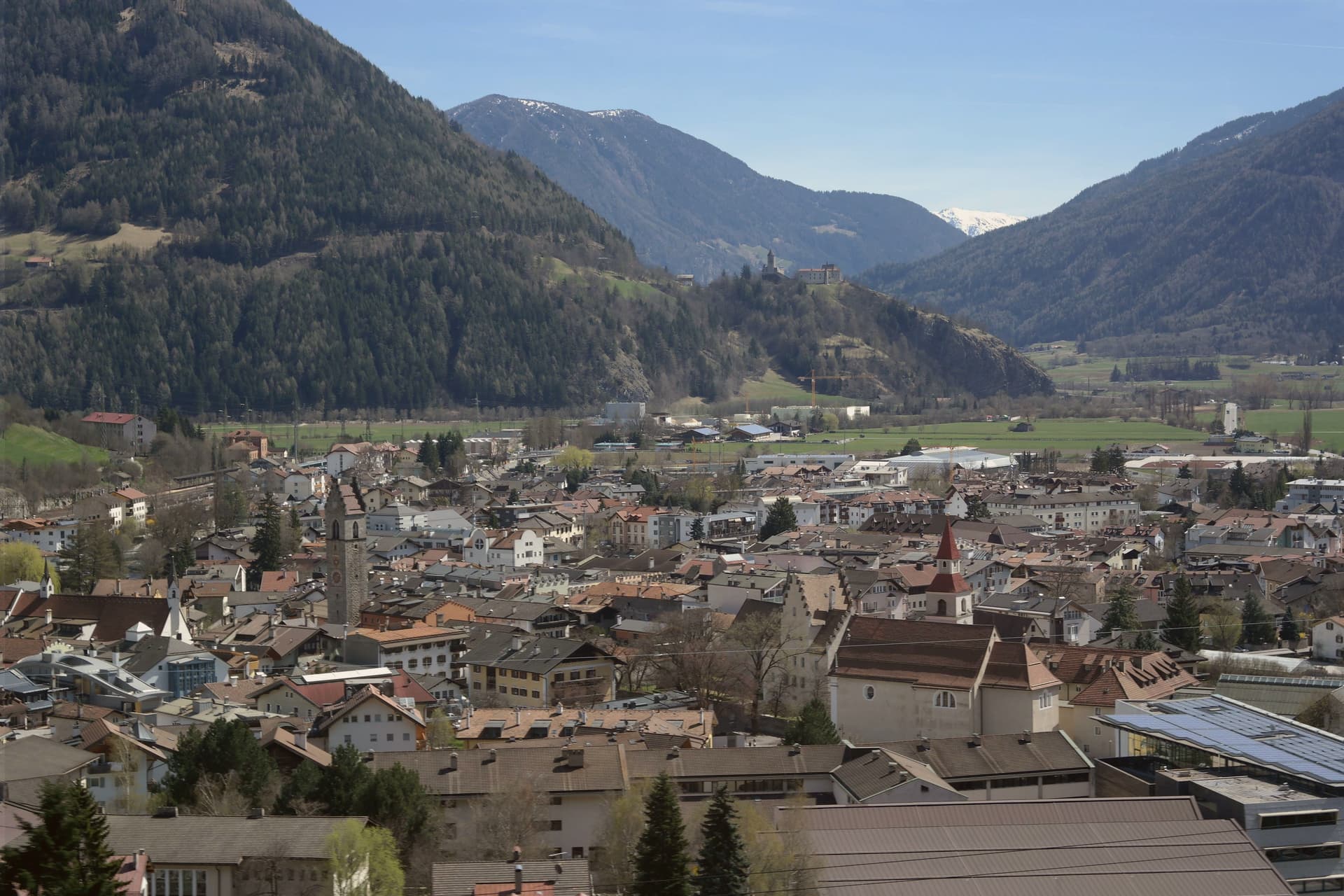
Vipiteno sits at 948 metres in the upper Wipptal, twelve kilometres south of the Brenner Pass and the Austrian border, with the Eisack river running through the medieval town and the Stubai Alps rising on three sides. The German-speaking population calls it Sterzing and outnumbers the Italian speakers by roughly three to one.
The town grew rich in the late fifteenth century from silver and lead mined in the Schneeberg deposits of the Ridnaun and Pflersch valleys to the west, and from its position on the Brenner trade route. The mines belonged to the Fuggers of Augsburg, the banking family who financed Habsburg emperors; Vipiteno is still sometimes called Fuggerstadt.
The Zwölferturm, a forty-six metre tower built in 1472, stands at the centre of Piazza Città and divides the Altstadt from the Neustadt, the two halves of the medieval town. Both halves are lined with painted facades, oriel windows and stepped gables built when the silver flowed.
Kleine Flamme have been named by a guide.
What to see in Sterzing
- Zwölferturm. Forty-six metre tower built in 1472 at the centre of Piazza Città, dividing the Altstadt from the Neustadt and serving as the town's symbol.
- Altstadt and Neustadt. Two halves of the medieval town on either side of the Zwölferturm, lined with painted facades, oriel windows and stepped gables from the silver-mining century.
- Schneeberg mining museum. Provincial mining museum in the Ridnaun valley west of Vipiteno, on the site of the Fugger-era silver and lead workings that funded the town's wealth.
How to get to Sterzing
There is a railway station in the town, so you can arrive without a car and never need one while you are here. Bolzano is roughly 68 minutes away by road.
Our tip
May through October is the open season, with the Altstadt streets free of snow, hiking running from the town floor up into the Stubai Alps and the Brenner road clear. June and September are the most comfortable months, mid-twenties by day, cool nights at 948 metres. July and August are the busiest, with German and Austrian visitors stopping on the way south and the Vipiteno yoghurt festival drawing crowds in early July.
Levico Terme
Why visit Levico Terme
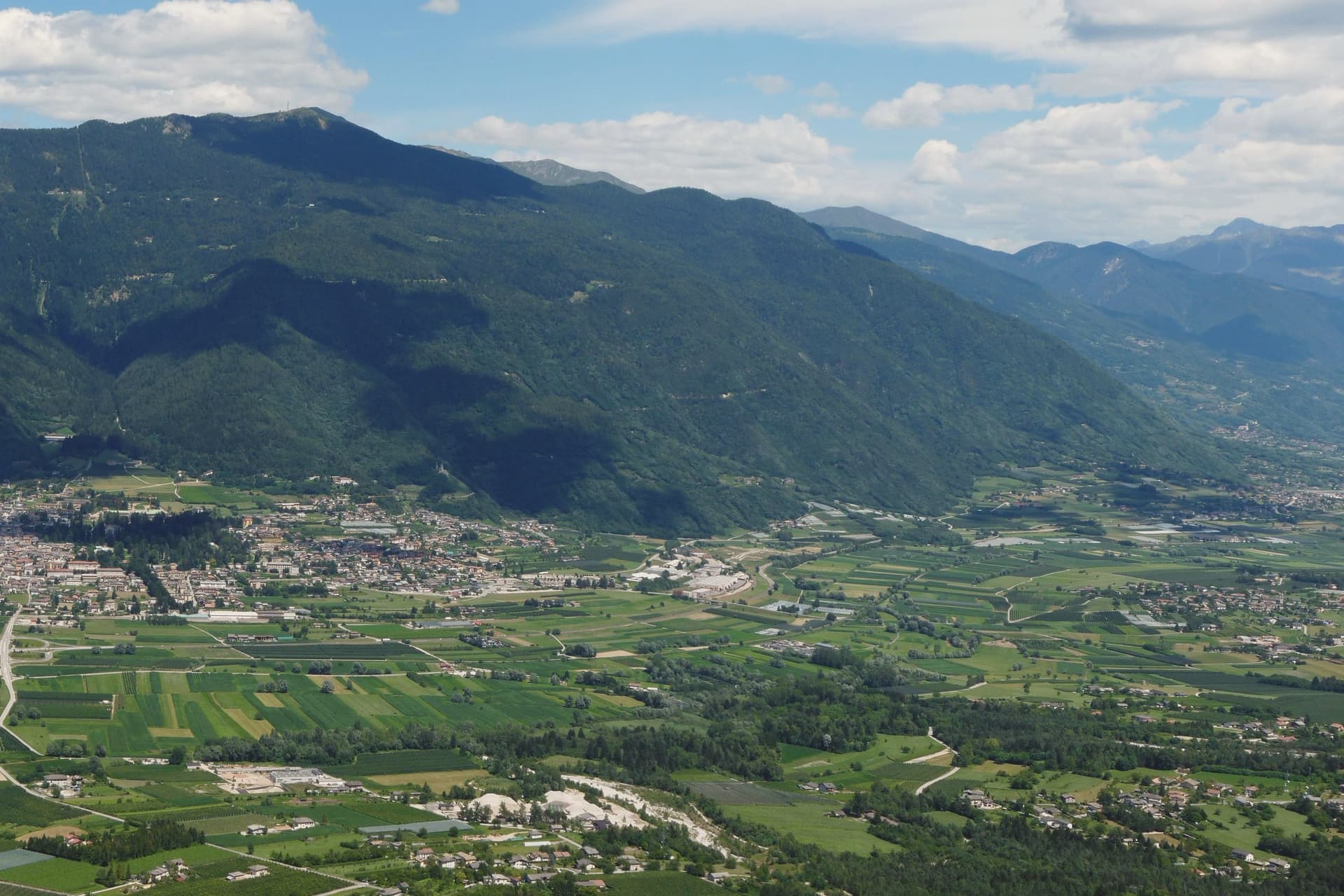
Levico Terme sits at 520 metres in the Valsugana, twenty kilometres east of Trento, between the Lagorai chain and the high plateaus of Folgaria and Lavarone. The settlement passed under Habsburg jurisdiction in 1779 and was elevated to city rank in 1894 by decree of Franz Joseph I.
The spa quarter, the park and the lake sit close together at the edge of the old centre, with the fort watching all three from the hill above. The historic centre, with its imperial-era villas and the parish church of Santissimo Redentore, grew up around the spa rather than the other way round: the streets follow the shape of a resort built in the space of a few decades under Austro-Hungarian rule, rather than a town that predates it.
What survives is a place whose entire layout, from park gate to lakeshore to the fort on the ridge, still reads as the imperial spa it was built to be.
Boivin have been named by a guide.
What to see in Levico Terme
- Parco delle Terme. Grounds laid out by Georg Ziehl around the spa buildings and the hotel, with paths shaded by mature planting where the Christmas market sets up each winter.
- Grand Hotel Imperial. Art Nouveau facade facing the park it anchors, the rooms where Empress Elisabeth stayed still forming the core of the working hotel.
- Terme di Levico. The spa buildings that gave the town its purpose, drawing on water piped down from the mountain springs and still run as a treatment centre today.
How to get to Levico Terme
There is a railway station in the town, so you can arrive without a car and never need one while you are here. Trento is roughly 30 minutes away by road.
Our tip
Levico runs year-round: the thermal cures operate from spring through autumn, the Christmas market fills the Habsburg park through December, and the spa hotels stay open through the cold months. May through October is the lake season, with the Bandiera Blu waters warm enough for swimming from mid-June and the sailing and windsurfing clubs open. June through August can hit thirty degrees in the valley floor; the park and the lakeside hold the heat better than the centro storico in the afternoon.
Brunico
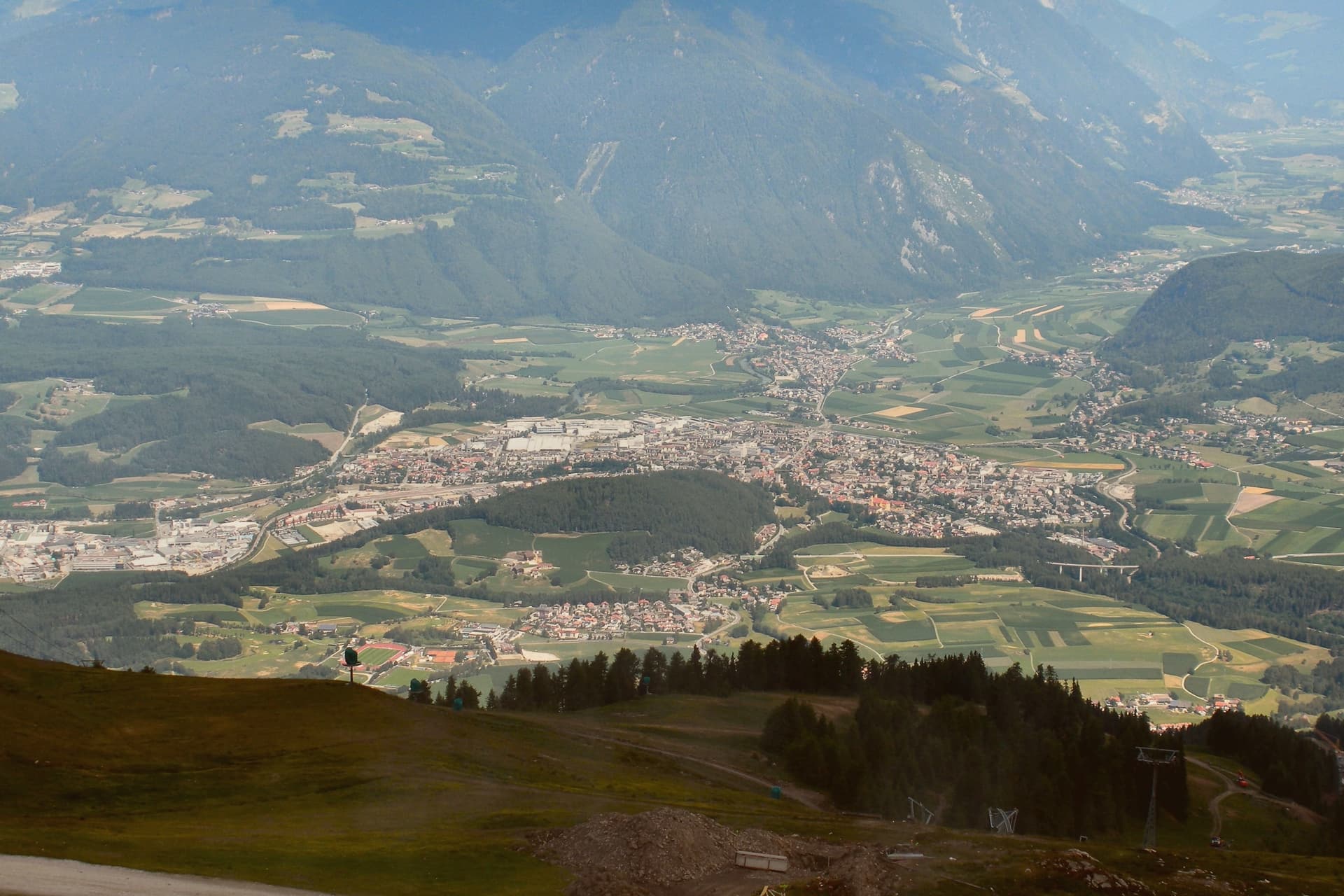
Why visit Brunico
Brunico, Bruneck in German, sits at 838 metres in the eastern Alto Adige, in the Val Pusteria. The name comes from the castle built above the settlement, and the town below grew up around it rather than the other way round.
First documented as Bruneke in 1256, it received weekly market rights and the privilege of high justice, and grew rich in the fourteenth and fifteenth centuries on the Augsburg-Venice trade that ran across the valley, the same trade that filled the Stadtgasse with merchant houses. The town has three distinct layers that sit close together but answer different purposes: the castle above holding the seat of the former prince-bishops, the walled Stadtgasse below as the commercial spine between the four gates, and Teodone at the edge of town, where the Mair am Hof Residence and its rebuilt farmhouses preserve a rural way of life that the town centre does not.
The mountain above the valley, reached from the town, adds a fourth register entirely, modern and built for a single striking structure rather than for defence or trade. Together these layers show a town shaped by three different economies in three different eras: episcopal power, alpine commerce, and now winter tourism, each leaving its own mark rather than replacing what came before.
Atelier Moessmer Norbert Niederkofler, AlpiNN by Norbert Niederkofler, b.local and 1 more have been named by a guide.
What to see in Brunico
- Castello di Brunico. The castle sits above the town as the former summer residence of the Brixen bishops. The museum inside occupies rooms that still read as a bishop's seat rather than a purpose-built gallery.
- Stadtgasse. Pedestrian street between the four gates, its townhouses carrying bay windows and ornate shop signs at close range, the kind of detail that only shows up on foot.
- Museo Etnografico Sudtirolese. South Tyrolean Folklore Museum in the Mair am Hof Residence at Teodone, built 1690-1700, with twenty-four rebuilt farmhouses from across the province in its open-air section.
How to get to Brunico
There is a railway station in the town, so you can arrive without a car and never need one while you are here. Bolzano is roughly 69 minutes away by road.
Our tip
May through October brings the warm months in the Pustertal, with the Stadtgasse and the castle terrace usable from early afternoon and Plan de Corones open for hiking and biking from late June. June and July are the cool alpine months, with long evenings in the historic centre and the cable cars running up from the south side of town. September and October bring the autumn colours and the start of Törggelen, the South Tyrolean chestnut-and-new-wine season. Festa dello Speck Alto Adige - Speckfest falls in September.
Bressanone
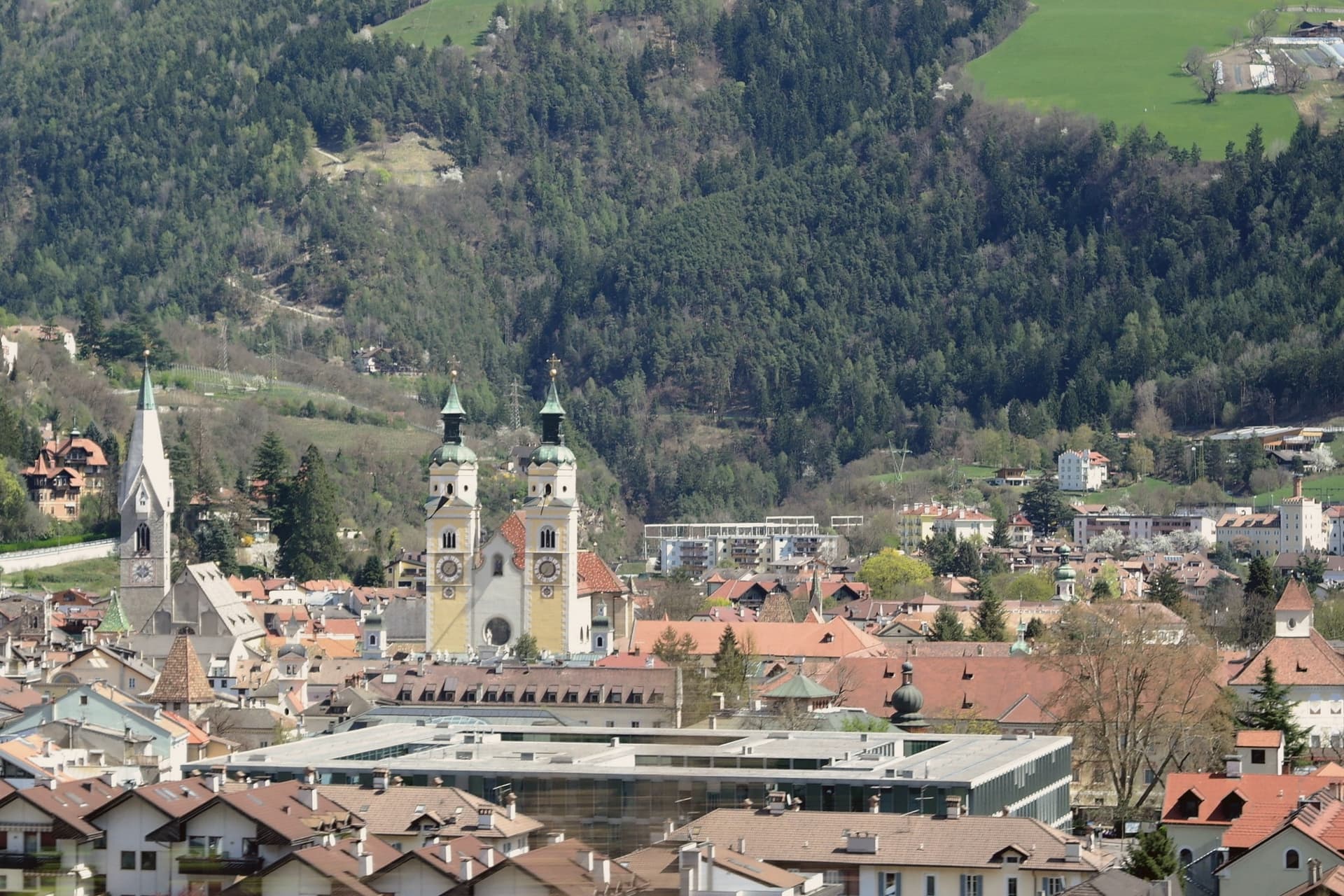
Why visit Bressanone
Bressanone, Brixen in German, is the third-largest town and the oldest urban settlement in South Tyrol, founded in the sixth century at the confluence of the Eisack and Rienz rivers at 560 metres, forty kilometres north of Bolzano. The bishopric was established here in the early Middle Ages and received imperial immediacy in 1027; in 1179 Frederick Barbarossa granted the bishop the title of prince of the Holy Roman Empire, and Brixen remained a prince-bishopric until secularisation in 1803.
The Hofburg, the bishops' palace, served as the seat of that power from the thirteenth century, with Renaissance courtyards, Baroque state rooms and the Diocesan Museum of religious art and historic nativity scenes inside. The Romanesque cathedral was rebuilt in Baroque form between 1745 and 1754, faced with thirty-three different types of marble and joined to the older cloister.
The Stufles district, across the Eisack bridge, is the oldest neighbourhood in the city. The Augustinian Abbey of Novacella, founded in 1142 by Bishop Hartmann four kilometres north, runs South Tyrol's northernmost winery, producing Müller-Thurgau, Kerner and Sylvaner.
Apostelstube, Vitis, Alpenrose and 3 more have been named by a guide.
What to see in Bressanone
- Duomo di Bressanone. Cathedral on the site of a tenth-century church, rebuilt as a Romanesque basilica in 1174 and reworked between 1745 and 1754 in Baroque form with thirty-three types of marble.
- Hofburg. Bishops' palace and seat of the prince-bishops from the thirteenth century to 1803, with Renaissance courtyard, Baroque state rooms and the Diocesan Museum.
- Torre Bianca / Weißer Turm. Seventy-eight metre bell tower of the parish church of San Michele, named for its bright tiled roof, with the present shape dating to 1459 and now a museum.
How to get to Bressanone
There is a railway station in the town, so you can arrive without a car and never need one while you are here. Bolzano is roughly 51 minutes away by road.
Our tip
April through June brings mild weather in the Eisack valley, with the cloister gardens of the Duomo and the courtyards of the Hofburg in shade and the high paths above the Plose opening from late May. September and October are dry and cool, with apple harvest across the orchards north of the city and the Törggelen season starting in early autumn. July and August can hit thirty degrees at 560 metres, with the Plose cable car carrying day-trippers up to cooler ridges. Mercato del Pane e dello Strudel falls in October.
Rovereto
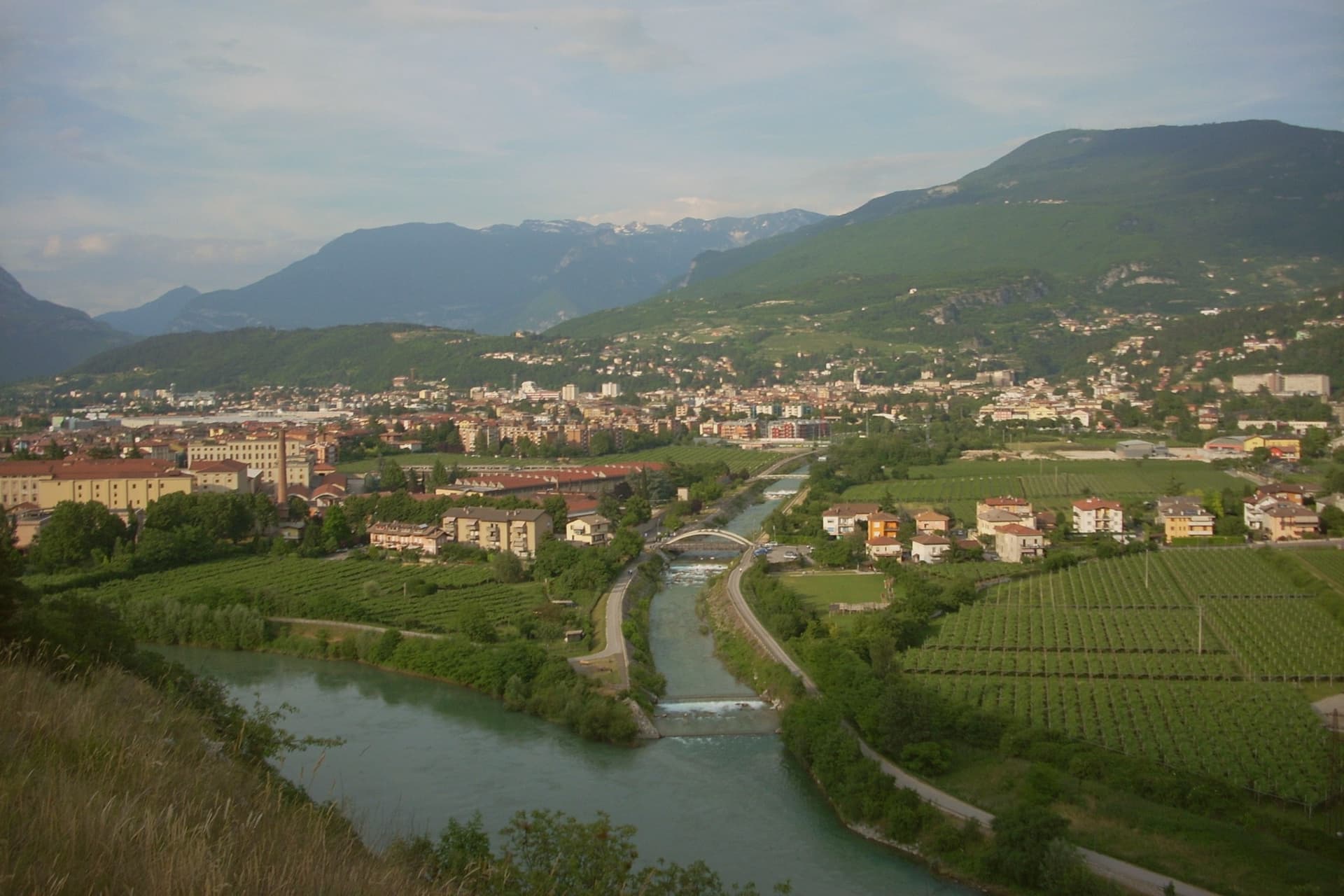
Why visit Rovereto
Rovereto sits at 204 metres in the Vallagarina, halfway between Trento and Verona on the Adige plain. The castle rises above the Leno torrent at the southern edge of the centre, built by the Castelbarco, expanded into a four-bastioned fortress by the Venetians from 1416, and handed to the Habsburgs in 1509 after the Venetian defeat at Agnadello.
That handover is the hinge of the town's layout: the porticoed streets of the centro storico still carry Venetian facades alongside Habsburg ones, running from Piazza Rosmini to the castle walls, with the Borgo Sacco quarter and the old silk-trade palazzi marking where the town's merchant wealth once sat. Above the centre, on the hill of Miravalle, the war made its own monument, cast from the bronze of cannons gathered from both sides of a conflict that had run through these mountains.
Depero, who lived and worked in Rovereto, gave the town a second, later claim, and the museum built around his work in 2002 sits inside a domed building at the opposite end of the town's story from the castle: one structure built for defence and passed between powers, the other built for a single collection and opened once, in peacetime. Between the fortress, the bell, and the museum, the town reads as a place shaped twice by the same war, first as ground fought over, later as ground that chose to remember it.
Osteria del Pettirosso have been named by a guide.
What to see in Rovereto
- Castello di Rovereto. Rises above the Leno torrent at the southern edge of the centre, four bastions facing the town, the line where Venetian masonry gives way to the additions made after the handover to Austria.
- MART. The circular building by Mario Botta centres on a glass-and-steel dome over the entrance plaza. Inside, the permanent collection runs from Depero through Morandi, de Chirico and Carrà.
- Museo Storico Italiano della Guerra. Inside the castle, the collection of uniforms, trench artefacts, prints and personal testimonies tells the war from the Italian-Austrian front, the fighting that ran through the mountains around the town.
How to get to Rovereto
There is a railway station in the town, so you can arrive without a car and never need one while you are here. Trento is roughly 31 minutes away by road.
Our tip
April through June and September through October are the working months for Rovereto, with the Vallagarina mild and the MART, the war museum and the Campana all on full schedule. May brings the Festival Mozart and the spring concert season. September is festival month, with the Oriente Occidente contemporary dance programme and the wine harvest across the surrounding slopes.
Meran
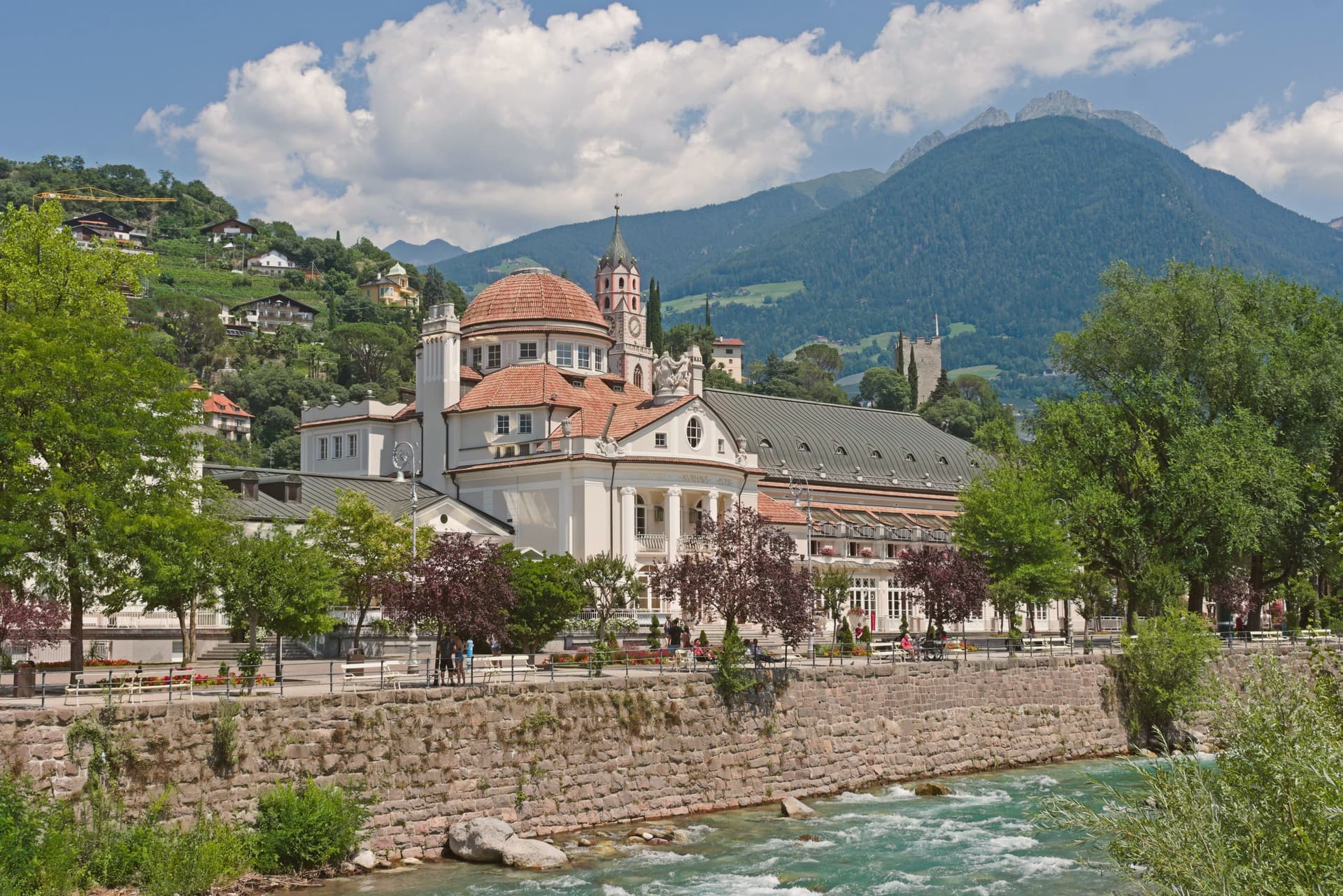
Why visit Meran
Merano sits at 324 metres in the basin where the Passer river meets the Adige, at the entrance to the Passeier and Vinschgau valleys, with mountains rising to 3,335 metres around it. The town was the capital of the County of Tyrol from the thirteenth century until 1420, when the Habsburgs moved the residence to Innsbruck.
Empress Elisabeth of Austria began wintering here in 1870 for the climate and the mild basin air; her stays turned Merano into a late-Habsburg spa destination, drawing Kafka, Rilke and Richard Strauss. The Kurhaus, an Art Nouveau pavilion on the Passer promenade, and Castel Trauttmansdorff, where Sissi stayed and which now holds twelve hectares of botanical gardens and the Touriseum, anchor the imperial layer of the city.
Merano was annexed to Italy in 1919 under the Treaty of Saint-Germain. The bilingual city today is the centre of South Tyrolean wine and apple farming, host of the Merano WineFestival each November at the Kurhaus.
In Viaggio - Claudio Melis Ristorante dell'Hotel Villa Irma, Prezioso del Castel Fragsburg, Sissi have been named by a guide.
What to see in Meran
- Giardini di Castel Trauttmansdorff. Twelve hectares of botanical gardens around the castle where Empress Elisabeth wintered, with eighty landscapes over a hundred-metre slope and the Touriseum tourism museum.
- Kurhaus. Art Nouveau pavilion on the Passer promenade, the spa-town centrepiece of nineteenth-century Merano and venue of the Merano WineFestival each November.
- Passeggiata Lungo Passirio. Spa promenade along the Passer river through the centre of the city, lined with palms, flowers and the Wandelhalle, the covered Art Nouveau walking gallery.
How to get to Meran
There is a railway station in the town, so you can arrive without a car and never need one while you are here. Bolzano is roughly 29 minutes away by road.
Our tip
April through October is the long season in the Merano basin: the Trauttmansdorff gardens open from March to November with the spring bloom and the autumn colours, the Passer promenades fill with walkers, and the apple orchards above the city move from blossom to harvest. June through August can hit thirty degrees on the valley floor; the covered Wandelhalle and the shaded lungo Passirio keep the city walkable in the afternoon. November brings the Merano WineFestival at the Kurhaus and the Christmas markets that follow. Festa dell'Uva a Merano falls in August.
Trento
Why visit Trento
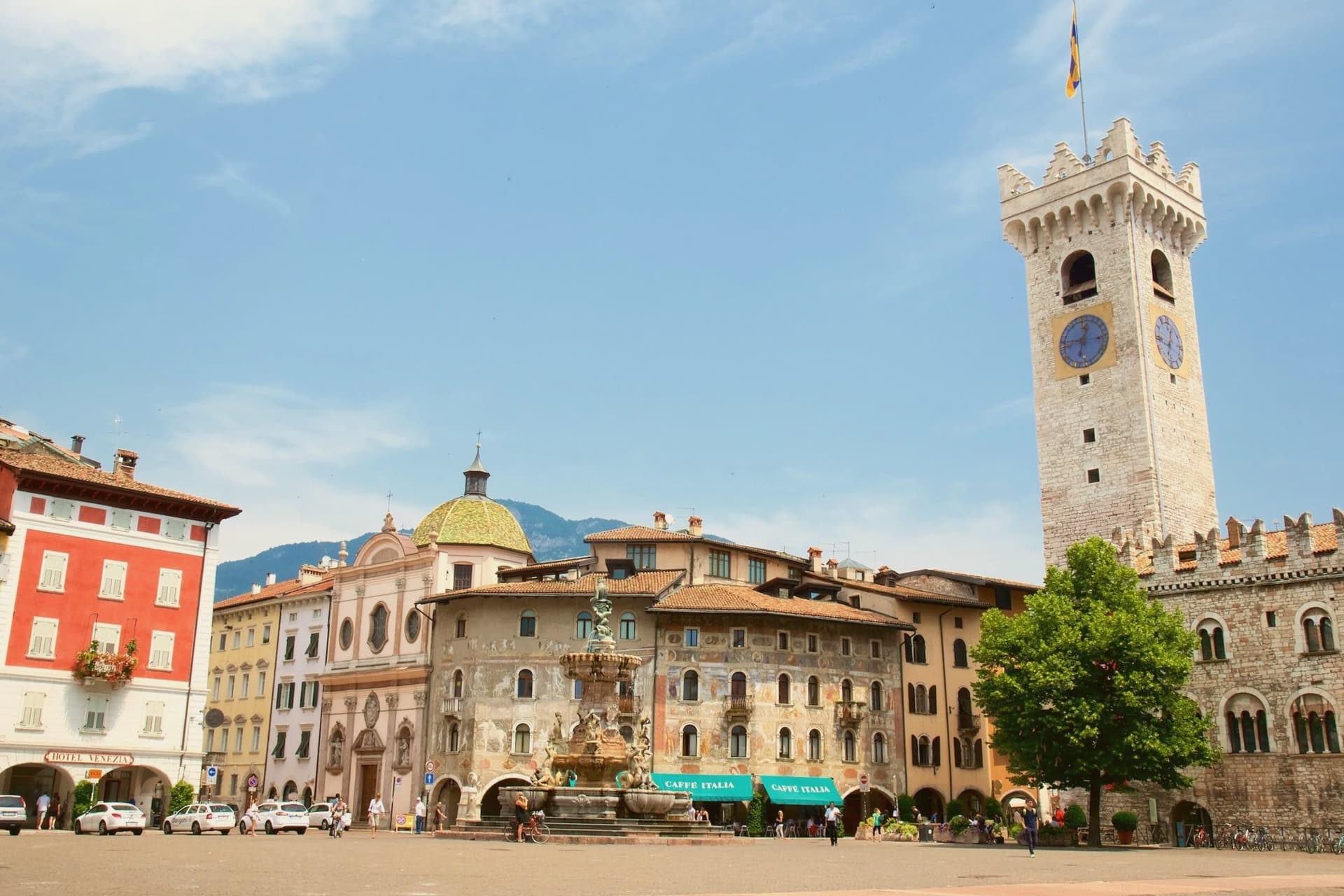
Trento sits at 194 metres on the Adige, the city Italy chose as the seat of one of its two northern autonomous provinces and the regional capital of Trentino-Alto Adige. Monte Bondone rises to two thousand metres directly above the western edge; the Brenta Dolomites are an hour west.
Between 1545 and 1563, the Council of Trent met here in twenty-five sessions across the Duomo di San Vigilio and the Castello del Buonconsiglio, formulating the Catholic response to the Protestant Reformation and shaping the next four centuries of European Christianity. The Duomo, begun in 1212 on the foundations of a late-Roman basilica, still stands at the centre of Piazza Duomo.
The Buonconsiglio, built 1239 to 1255 as the residence of the prince-bishops, is now the city's main museum. In 2013 Renzo Piano completed MUSE, the natural science museum on the south edge of town, with a six-storey jagged roofline that imitates the Dolomites.
Locanda Margon, Augurio, Lo Scrigno del Duomo and 1 more have been named by a guide.
What to see in Trento
- Castello del Buonconsiglio. Thirteenth-century residence of the prince-bishops of Trento, host to sessions of the Council of Trent and now the city's main museum, with Gothic frescoes in the Torre Aquila.
- Duomo di San Vigilio. Romanesque-Gothic cathedral begun in 1212 on the remains of a late-Roman basilica, where most public sessions of the Council of Trent were held between 1545 and 1563.
- MUSE. Museum of natural science by Renzo Piano, opened 2013, with a 130-metre roofline that rises and falls in imitation of the Dolomites visible to the east.
How to get to Trento
There is a railway station in the town, so you can arrive without a car and never need one while you are here. Trento is roughly 4 minutes away by road.
Our tip
April through June brings green slopes on Monte Bondone, mild evenings in Piazza Duomo and the start of the open-air concert season. September and October are dry and clear, with the Trento Film Festival of mountain cinema and the start of the autumn wine sagre in the Vallagarina to the south. July and August can hit thirty-three degrees in the city centre at 194 metres; the air cools sharply if you climb Monte Bondone, and locals spend afternoons on the mountain or at the lake. Trento Busker Food falls in September.
More from Anywhere Italy
- The 8 best hidden towns you can reach by train in Trentino-Alto Adige/Südtirol
- The best mountain towns you can reach by train in Trentino-Alto Adige/Südtirol
- The best towns you can reach by train in the province of Bolzano/Bozen
 The best hill towns in Trentino-Alto Adige/Südtirol
 The 9 best small high-altitude villages that eat well in Trentino-Alto Adige/Südtirol
 The best ski towns with a serious restaurant in Trentino-Alto Adige/Südtirol