
The 9 best small towns you can reach by train that eat well within 90 minutes of Genova
Liguria is a thin strip of coast pressed between mountain and sea, and the railway runs the length of it, in and out of tunnels, with the water appearing and vanishing at the window. The towns strung along it are built of tall painted houses, slate roofs and green shutters, with dried salt on the balcony railings. The food follows the same narrow geography: anchovies salted in Noli, basil for pesto grown on terraces above the tracks, farinata baked in copper pans, focaccia sold by weight from morning until it runs out. Spring and early autumn are the good months, when the sea is warm enough and the trattorie still keep proper lunch hours.
Most people arriving in Genova head straight for Portofino, which means a ferry or a bus down the peninsula and then a harbour ringed with tables at prices set by the yachts moored in front of them. It is a beautiful place and it knows it. From late morning through the afternoon the single square is at capacity, and the restaurants there are cooking for people who will not return. The queue for the bus back is its own small ordeal.
The same coast and the same kitchens continue north and south of the famous stretch, and the railway keeps stopping. These are the smaller places along that line: fishing harbours, hill towns behind the coast road, villages where the station is a short walk from the sea and from lunch. Fewer travellers get off at these stops, which is mostly a matter of habit rather than merit. Each town here has been checked as reachable without a car, and each has a table a dining guide has thought worth naming.
Of the 39 communes we have mapped within 90 minutes of Genova, 23 qualify as towns you can reach by train that eat well: we have confirmed each is reachable without a car, and a dining guide has named a table in each. This list is the small ones, 9 in all, ordered smallest first. The smallest, Framura, has 577 residents.
Elsewhere in the catalogue: The best small towns with a food festival that eat well within 90 minutes of Genova and The best small towns with a serious restaurant that eat well within 90 minutes of Genova.
Framura
Why visit Framura
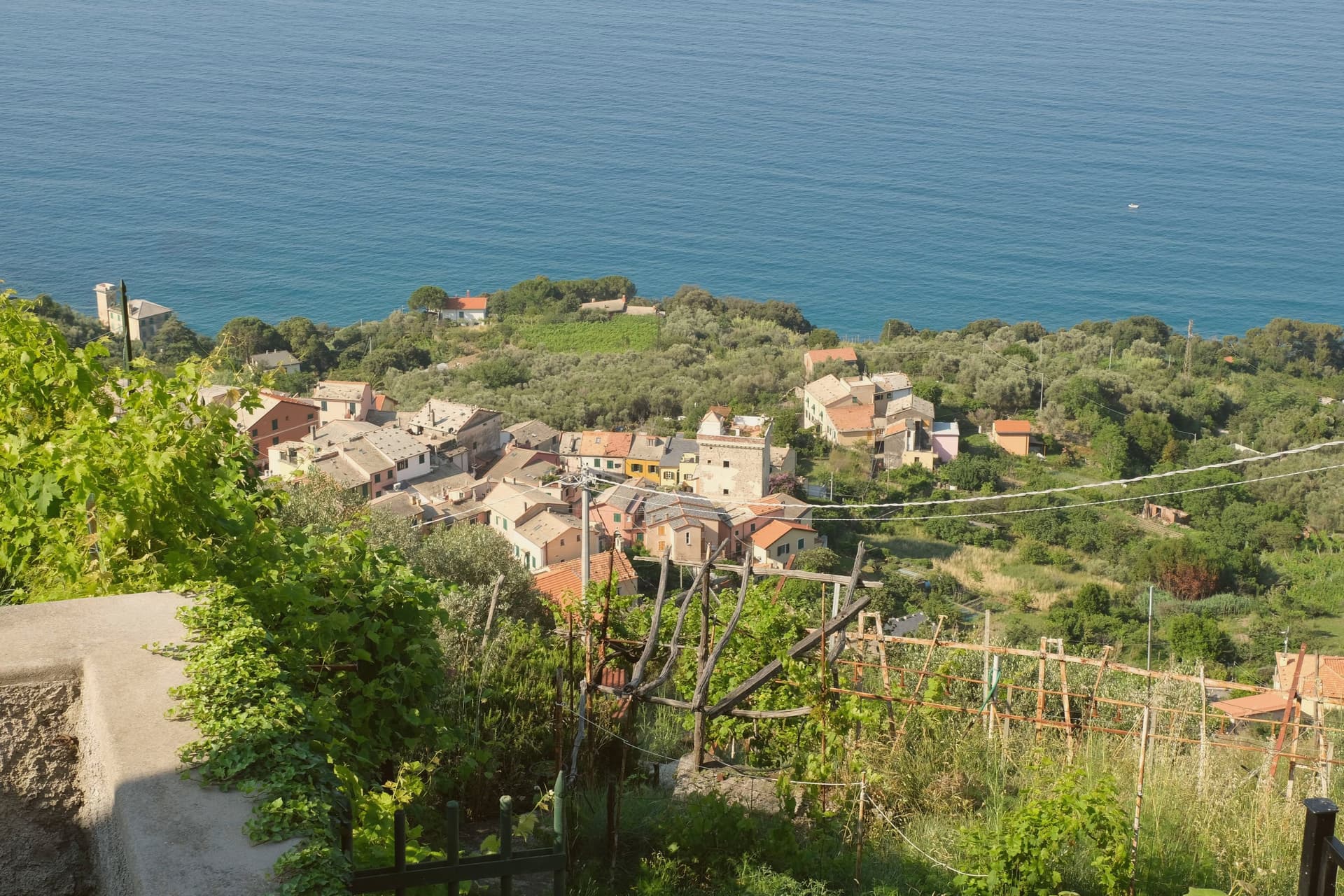
Framura is not one village but five: Anzo on the water, Setta and Ravecca on the slope, Costa above them, and Castagnola at roughly 300 meters with views back down to the coast. The commune spans from the rocky shoreline to 845 meters inland on the ridge that separates the Cinque Terre coast from the Vara valley.
Byzantine settlers built the original circular watchtowers here against Saracen raids, three of them still standing on the coast and inland. The hamlets remained agricultural until the Genova-La Spezia railway tunneled through in the late nineteenth century, opening the commune to summer visitors.
The seafront below Anzo, reached by a converted railway tunnel turned cycle path, carries the Bandiera Blu, and the same path runs north toward Bonassola and Levanto. Framura is the quiet outlier on this coast: the closest Borghi più belli village to Monterosso al Mare without being in the Cinque Terre national park.
L'Agave have been named by a guide.
What to see in Framura
- Torri bizantine. Three surviving Byzantine watchtowers on the coast and ridge, built to defend the village from Saracen incursions.
- Castagnola. Highest of the five hamlets at around 300 meters, with views over the lower frazioni and the Riviera di Levante.
- Anzo waterfront. Coastal hamlet at sea level with the Bandiera Blu beach access, the lowest of Framura's five settlements.
How to get to Framura
There is a railway station in the town, so you can arrive without a car and never need one while you are here. Genova is roughly 59 minutes away by road.
Our tip
April through October fits Framura, with the cycle path open and the coast walkable in any direction. May, June and September are the best for combining sea and hiking; mid-summer brings the strongest beach traffic but the upper hamlets stay calm. The Bandiera Blu beachfront below Anzo is small and fills early on August weekends.
Laigueglia
Why visit Laigueglia
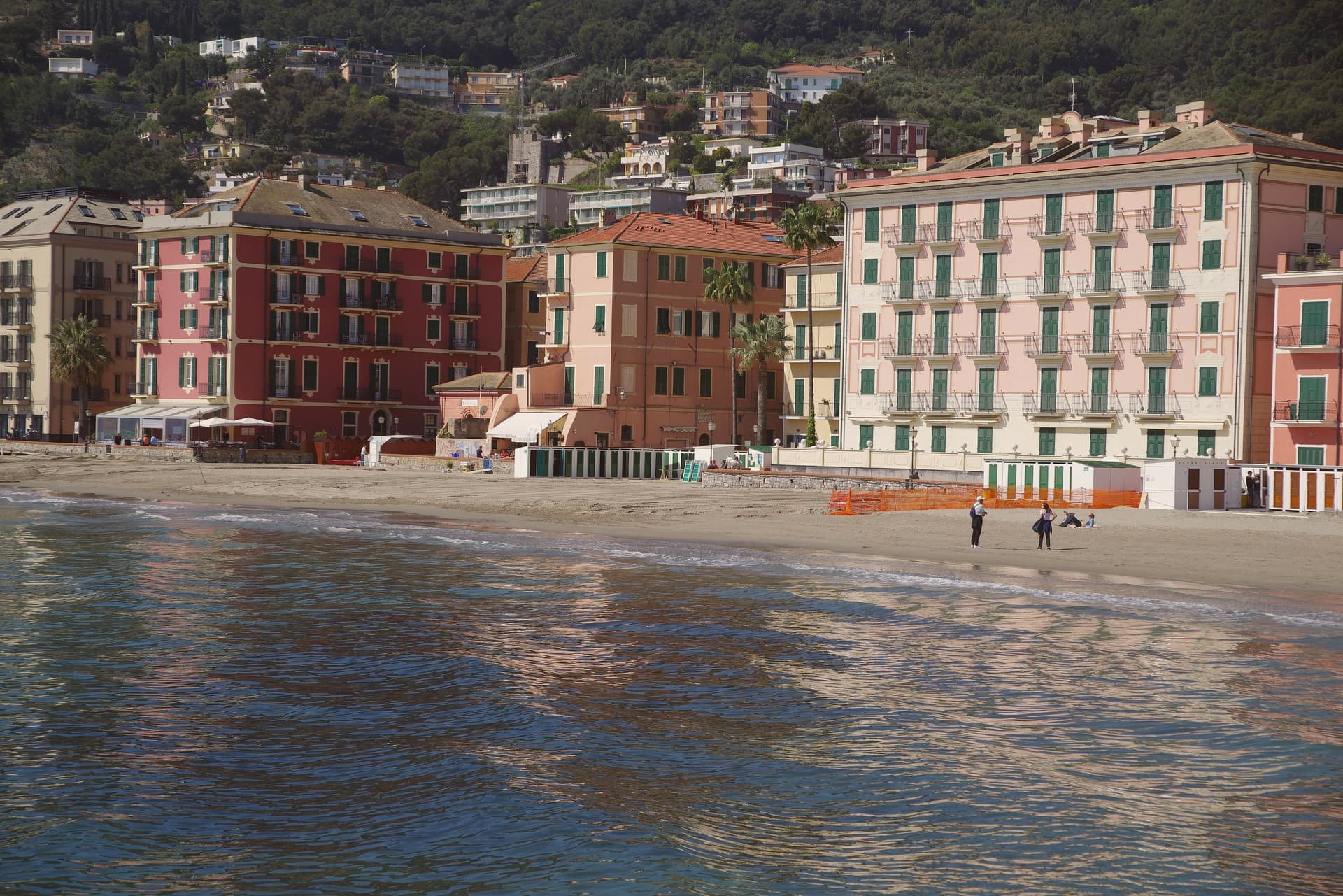
Laigueglia sits at six meters on the Riviera di Ponente, sheltered between the two headlands that frame the bay. The name comes from Aquilia, a reference to the Roman eagle standards, and the village grew from a settlement of fishermen who came over from neighboring Andora.
Genoa bought the borough in 1609. Through the seventeenth century the economy ran on shipbuilding and the coral trade, which drew Catalan fishermen to settle in numbers and left behind the Baroque churches that anchor the centro storico today: the parish church with its curved front, and the confraternity oratory with its carved choir and Piola altarpiece.
Behind the beach, the fishermen's grid still reads as caruggi, small squares opening to the sea, houses in pale violet and ochre, the seafront watchtowers standing at the edge where the town once kept watch for raiders by sea. What the coral money built, the town has simply gone on living inside.
Savô have been named by a guide.
What to see in Laigueglia
- Chiesa di San Matteo. The curved façade fronts a Baroque interior where the three altarpieces hang alongside furnishings paid for in the coral years, when the parish stood as the visible return on the fishery's money.
- Oratorio di Santa Maria Maddalena. 1616 oratory of the Confraternita dei Disciplinanti, with a carved wooden choir and an altarpiece by Domenico Piola.
- Centro storico. Fishermen's grid of caruggi behind the beachfront, with houses painted in the pale lilac and ochre traditional to the Ponente coast.
How to get to Laigueglia
There is a railway station in the town, so you can arrive without a car and never need one while you are here. Genova is roughly 85 minutes away by road.
Our tip
May through June and September through October are the calmer summer-edge months on this coast. The Bandiera Blu beach is open, the sea is warm enough from June onward, and the centro storico is not yet packed. July and August bring crowds, especially from Piedmont and Lombardy, and the litoraneo fills shoulder-to-shoulder. Il Salto Dell'Acciuga falls in October.
Borgio Verezzi
Why visit Borgio Verezzi
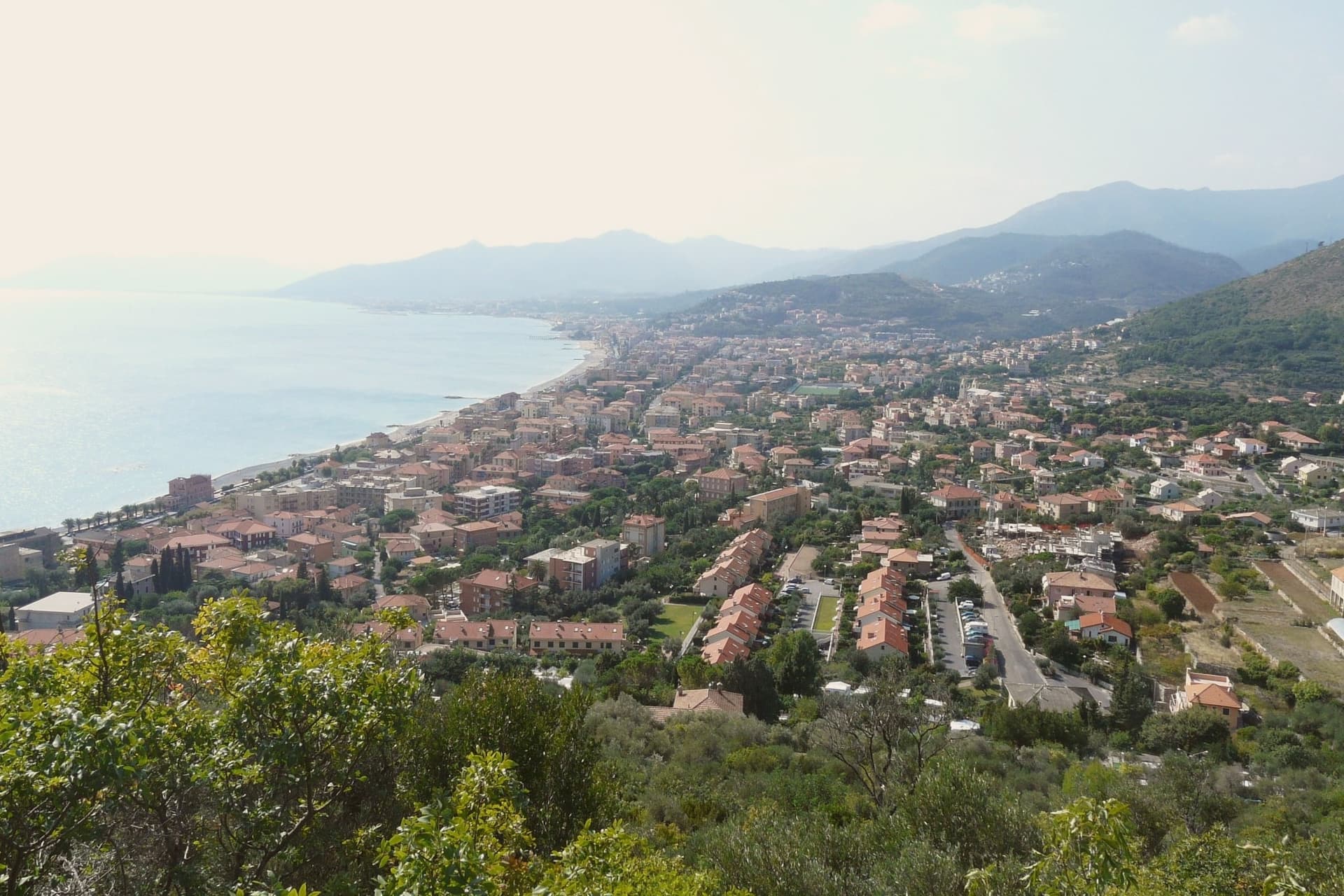
Borgio Verezzi is two settlements stitched together in 1933 under a single comune in the province of Savona. Borgio sits on the coast at the mouth of the Bottassano stream.
Verezzi rises 200 meters up the Orera hill above it, four old boroughs of stone houses in the warm-pink local rock: Piazza, Roccaro, Crosa, and Poggio, each a cluster rather than a single center. The beach below has held the Bandiera Blu without interruption since 1989.
The two halves of the town read as coast and height rather than old and new: the lower village handles the shoreline and the flag it has kept for decades, the upper village keeps its stone streets and its square turned toward the sea view. What the pairing adds up to is a comune built from two working parts, a beach town below and a hill village above, joined by administration in 1933 but still legible as separate places.
Doc have been named by a guide.
What to see in Borgio Verezzi
- Grotte di Valdemino. Dated to 1933, the caves run through chambers where small underground lakes sit beneath the karst rock, the route winding through passages carved out over time.
- Piazza Sant'Agostino. Main square of Verezzi, framed by pink-stone houses with a view down to the sea. The village skyline serves as backdrop for the festival's summer stage.
- Chiesa di San Pietro Apostolo. Neoclassical parish church built in 1789 on the foundations of the medieval Burgum Albinganeum castle, with a white façade and two bell towers.
How to get to Borgio Verezzi
There is a railway station in the town, so you can arrive without a car and never need one while you are here. Genova is roughly 69 minutes away by road.
Our tip
April through June and September into October are the dry months on this stretch of the Riviera di Ponente. The beach at Borgio holds Bandiera Blu and the water warms into May. July and August are full: the coast road slows, the spiaggia fills with weekenders from Genova and Torino, and the theater festival runs in Piazza Sant'Agostino from early July to mid-August. Sagra della Lumaca falls in August.
Monterosso al Mare
Why visit Monterosso al Mare
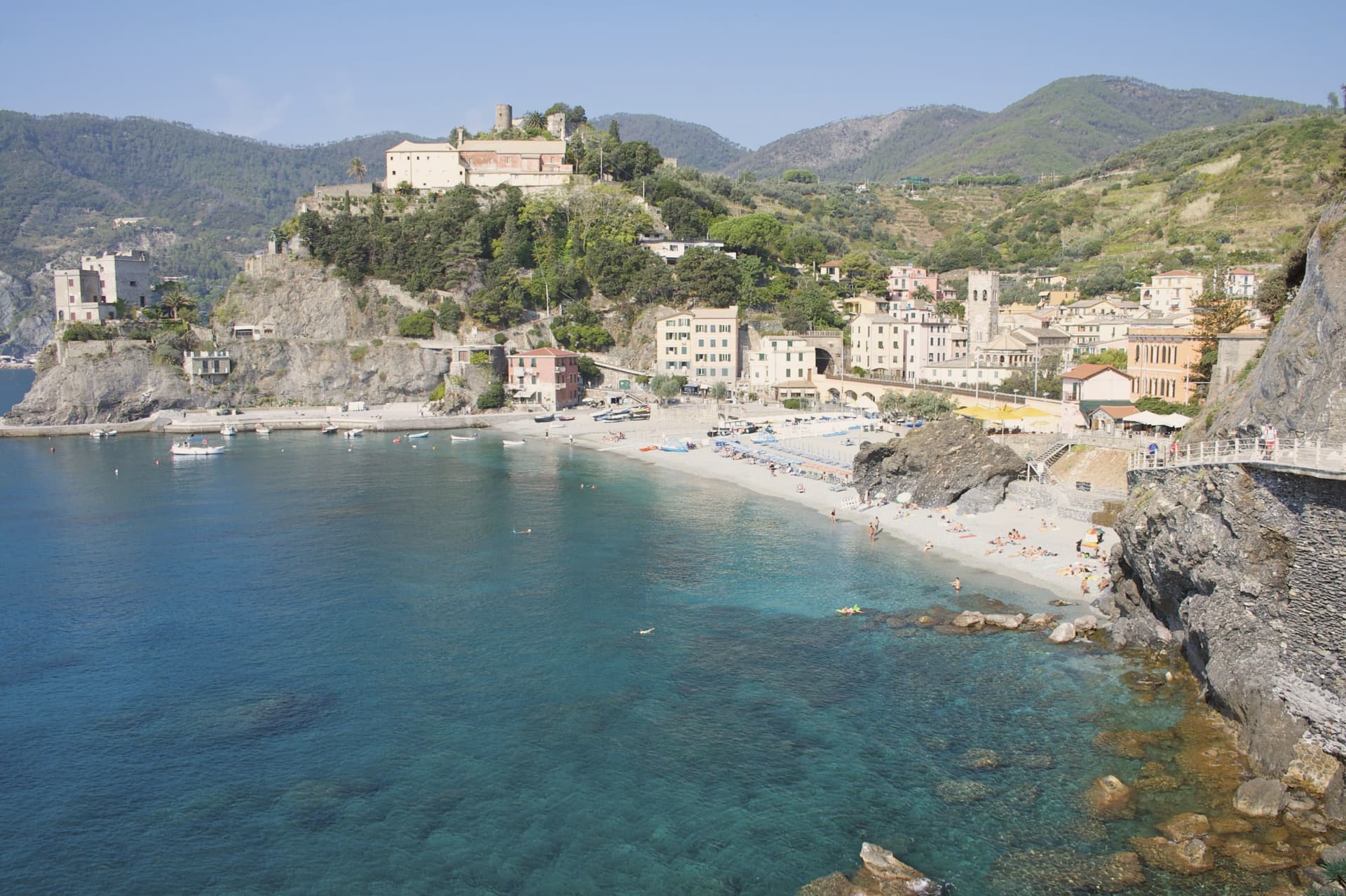
The village splits into two halves on either side of a headland: the older centro storico and, on the other side, the Fegina seafront where the railway runs behind the sand. The Capuchin convent looks out over both sides from that same headland, the hinge on which the whole layout turns.
Above the rooftops, at 464 meters, a hilltop sanctuary has stood on the same ground since 740, older than the village below it and the oldest Marian site in Liguria. The parish church down in the old town, banded in black and white marble, was built centuries later, so the two put a long stretch of the coast's religious history on display within sight of each other.
Montale's villa stood in Fegina, and the rocks and cliffs he carried into Ossi di seppia are the same ones visible from either half of the village. The geography here is the story: a headland dividing old from new, and a hillside holding the older of the two by several centuries.
Da Miky, L'Ancora della Tortuga, Buranco have been named by a guide.
What to see in Monterosso al Mare
- Chiesa di San Giovanni Battista. Parish church built 1282-1307 with a black-and-white-banded marble façade and a fresco of the baptism of Christ over the main portal.
- Santuario di Nostra Signora di Soviore. Hilltop sanctuary at 464 meters above the village, occupied by a church since 740, the oldest Marian site in Liguria.
- Convento dei Cappuccini. Seventeenth-century Capuchin convent on the San Cristoforo headland, separating the centro storico from Fegina.
How to get to Monterosso al Mare
There is a railway station in the town, so you can arrive without a car and never need one while you are here. Genova is roughly 78 minutes away by road.
✷ We have written about Monterosso al Mare
“The Cinque Terre are five towns with a national park around them and a marketing name that adds up to five. The copies without the name are a few miles away in either direction, and the experience they sell is the same experience, with the crowd divided by a hundred.”
Read our piece on Monterosso al Mare →Cinque Terre | How To Do It Right
Our tip
April through June and September through October are the workable months. The Sentiero Azzurro is open, the sea warms from late May, and the village still moves at a manageable pace. July and August are difficult: the Cinque Terre regional system caps walking-path tickets but the centro storico still saturates, and trains arrive standing-room from La Spezia. Festa del Limone falls in May.
Camogli
Why visit Camogli
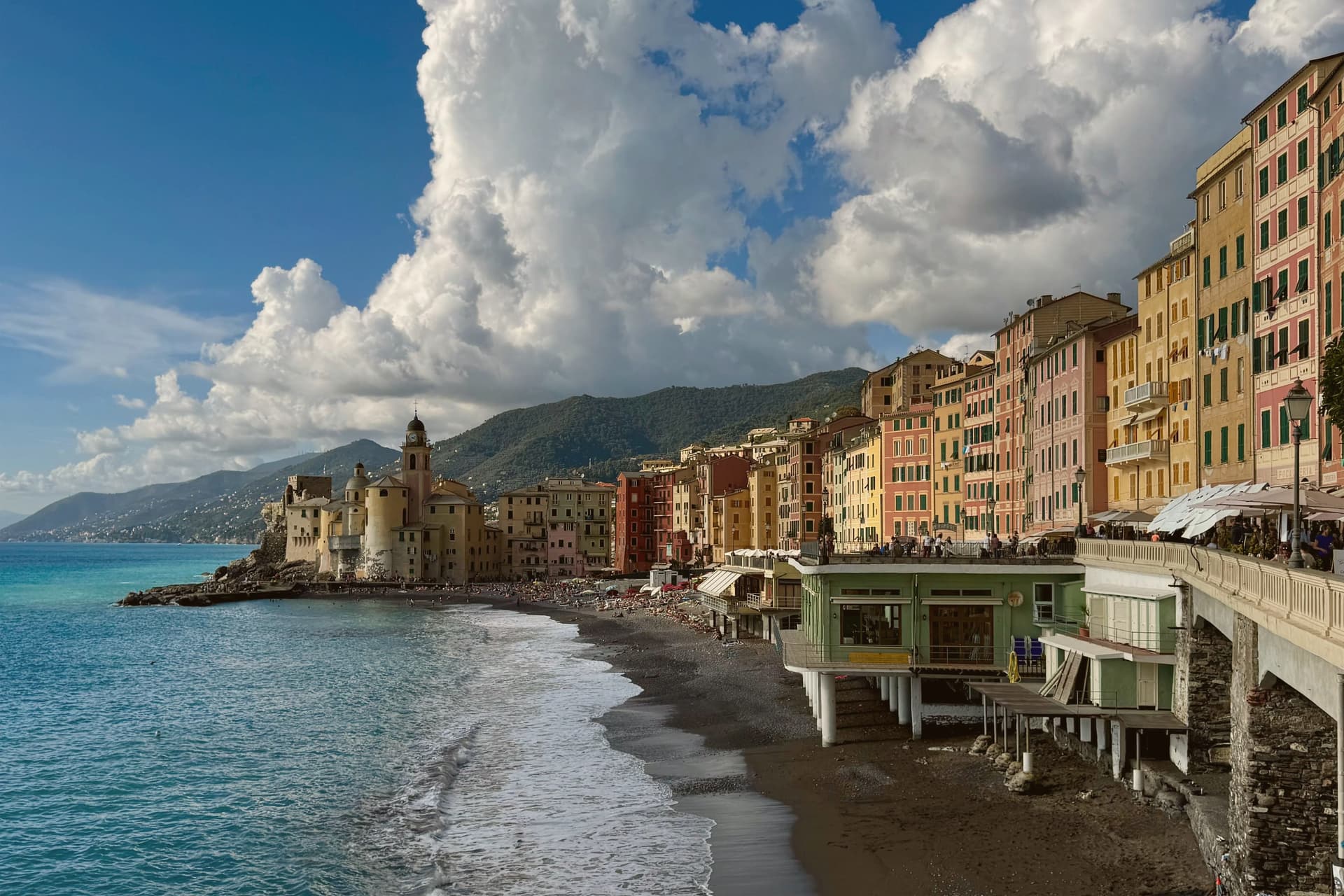
Camogli sits on the west side of the Portofino peninsula, twenty kilometers from Genova on the Golfo Paradiso. The earliest record dates to the tenth century, when it was already a tuna and shrimp fishing port.
By the nineteenth century, the town's fleet of merchant sailing ships ran to several hundred vessels and Camogli was called the city of a thousand white sails. After the naval defeat at Abukir against the British, the camogliesi shipowners reinvested in building merchant sailers under contract to the major European states.
The painted façades of the seafront houses, with their false windows and trompe-l'oeil cornices, served the returning sailors as recognition marks from sea. The Castello della Dragonara, built in the thirteenth century, still guards the harbor.
Every second Sunday of May, the Sagra del Pesce fries thirty thousand portions of fish in a single giant pan on the wharf, in honor of San Fortunato. San Fruttuoso, the eleventh-century abbey reachable by boat or trail, sits in the next cove.
La Loggia have been named by a guide.
What to see in Camogli
- Castello della Dragonara. Thirteenth-century fortress guarding the harbor, used as municipal seat and now a venue for exhibitions and cultural events.
- Basilica di Santa Maria Assunta. Parish basilica next to the castle on the harbor, baroque interior with marble inlays and seventeenth-century paintings.
- Abbazia di San Fruttuoso. Eleventh-century Benedictine abbey in the next cove, reachable by boat or by the coastal trail across the Portofino peninsula.
How to get to Camogli
There is a railway station in the town, so you can arrive without a car and never need one while you are here. Genova is roughly 33 minutes away by road.
✷ We have written about Camogli
“A steep hill falls into the sea. The houses are crammed on the slope and painted in bright colors because they are old, packed tight, and need help. There is a small port if the cove allows it and a bigger port if the cove is generous. There is a small piazza around a small church, with maybe four restaurants, three bars, and a gelato place. There is no space for a grand square, because there is no space for grand anything in Liguria.”
Read our piece on Camogli →Tigullio Roadtrip | Four Versions of the Same Liguria
Our tip
April through June and September into October are the strongest months for the Camogli seafront, with mild evenings and clean water before the Genova weekend traffic peaks. The Sagra del Pesce on the second Sunday of May is the date that fills the wharf. July and August are warm, often 28 to 30 degrees, and the painted-façade harbor fills with day-trippers off the Genova trains. Sagra Del Pesce falls in May.
Noli
Why visit Noli
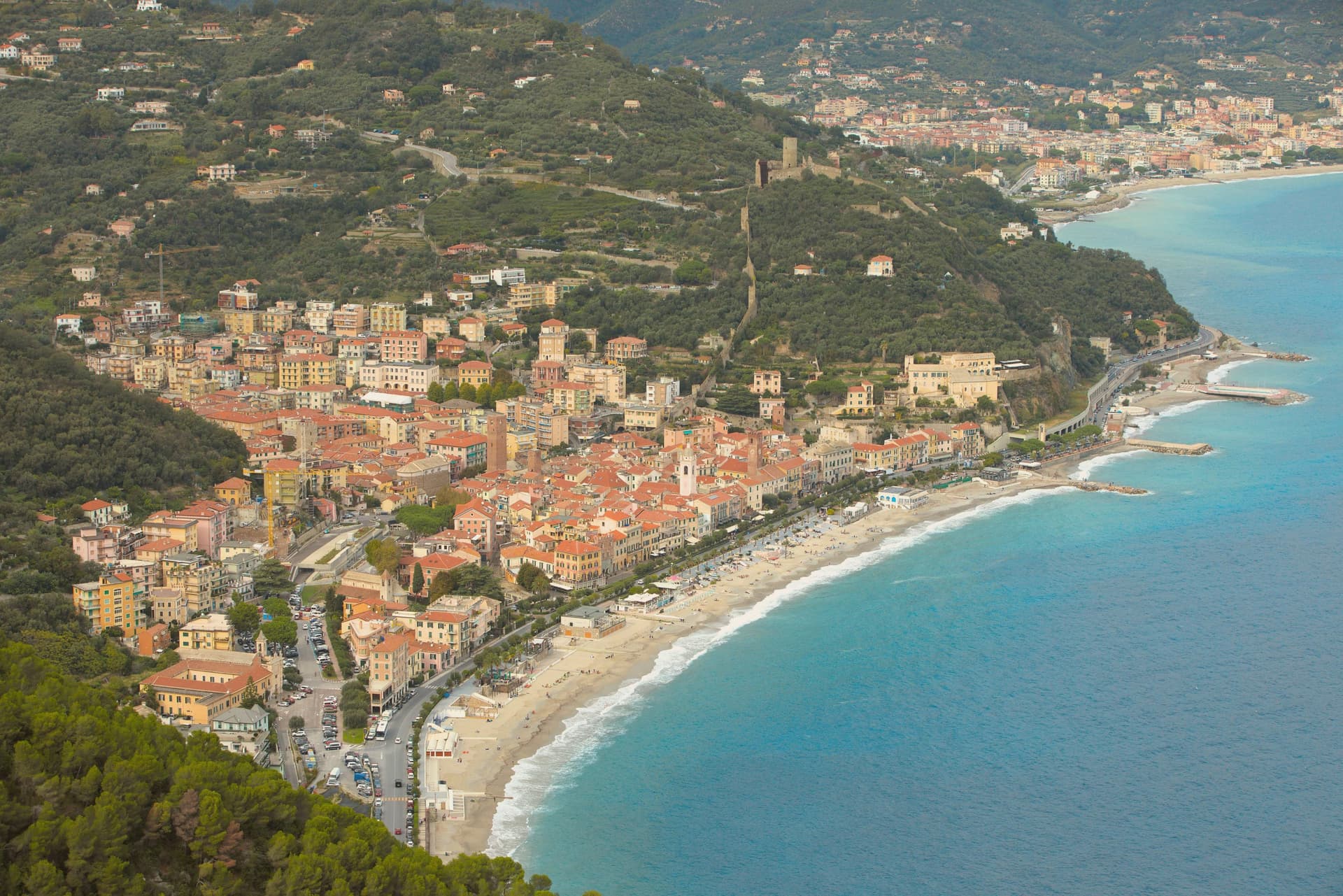
Noli sits at four meters on the Riviera di Ponente, fifty kilometers southwest of Genoa. From 1192 to 1797 it was an independent maritime republic, the fifth alongside Genova, Pisa, Venezia and Amalfi, holding the Capo Noli headland and a stretch of coast under its own flag and protected by alliance with Genoa.
The medieval walls still ring the centro storico, and the survivors of an original eight defensive towers still rise above the rooftops, including the Torre dei Quattro Canti and the Torre Papone. Outside the walls stands the Basilica di San Paragorio, an eleventh-century Romanesque church and one of the most important early medieval buildings in Liguria, with a wooden crucifix from the twelfth century and a bishop's throne carved into a single block of stone.
The Capo Noli cliffs end the bay to the south, with footpaths leading to grottos and a hermitage in the rock. The litoraneo carries the Bandiera Blu.
Vescovado, Il Vescovado have been named by a guide.
What to see in Noli
- Basilica di San Paragorio. Eleventh-century Romanesque church outside the walls, with a twelfth-century wooden crucifix and a bishop's throne carved from a single block.
- Torre dei Quattro Canti. Surviving medieval defensive tower inside the walled centro storico, one of eight that originally ringed the maritime republic.
- Torre Papone. Second medieval tower of the original defensive ring, still standing above the rooftops of the centro storico.
How to get to Noli
There is a railway station in the town, so you can arrive without a car and never need one while you are here. Genova is roughly 58 minutes away by road.
Our tip
May through June and September through October are the right months for Noli. The sea is warm enough from late May, the walls of the centro storico keep the streets shaded, and the coastal path to Capo Noli is walkable without midday heat. July and August fill the beach and the limited parking on the coastal road; the rest of the village stays calmer than the Bandiera Blu litoraneo. La Repubblica del Gusto falls in June.
Campo Ligure
Why visit Campo Ligure
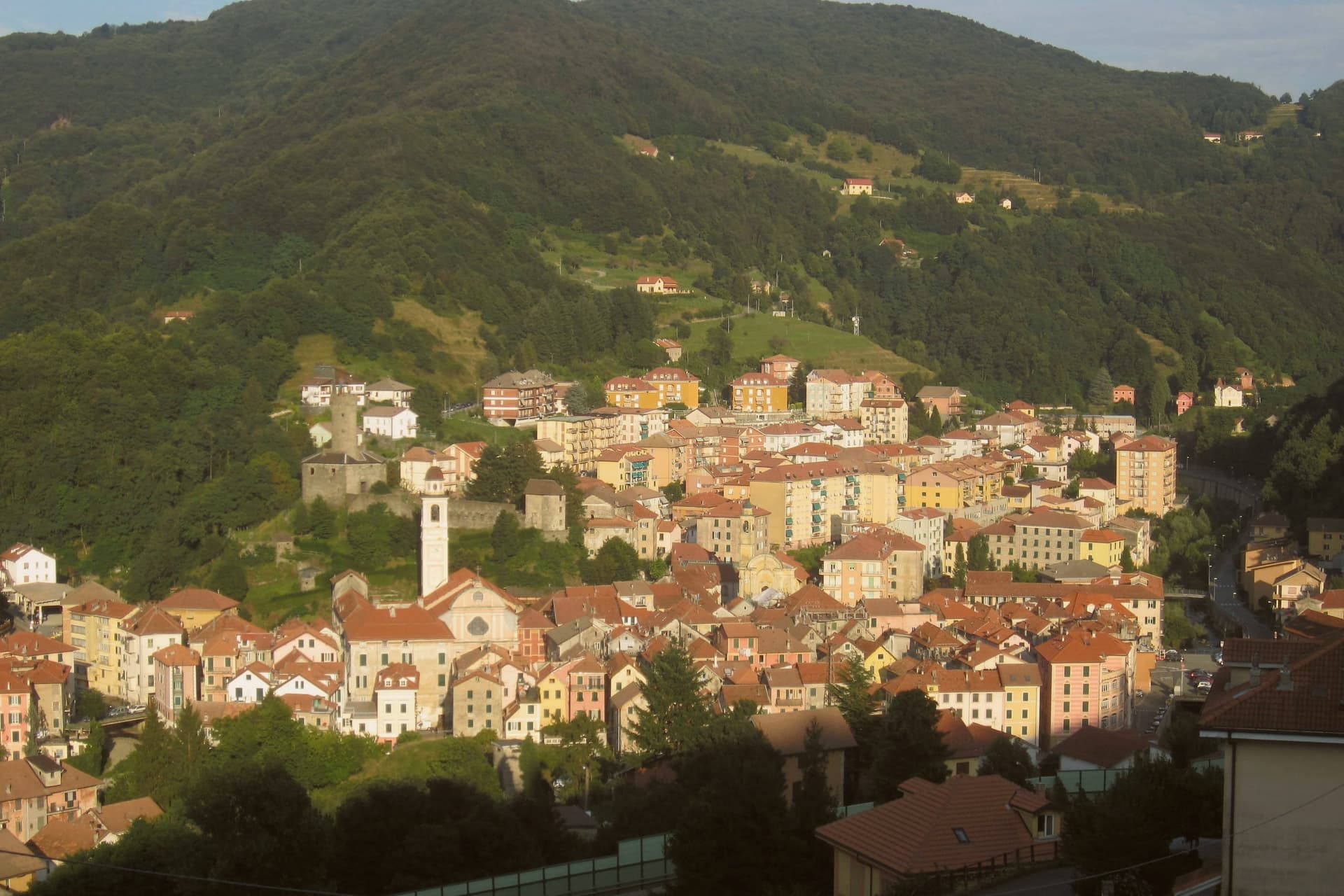
Campo Ligure sits on the right bank of the Stura at 342 meters, twenty-five kilometers north of Genoa where the Apennines start to climb. The Spinola family took the fief in the thirteenth century and built the hexagonal castle on the hill above the village; the cylindrical tower is more than twenty-two metres tall and six across.
The first filigree workshop opened in 1884. Within a generation Campo Ligure had become the national centre for the craft, fine gold and silver threads twisted with pliers called bruscelle and welded under a torch.
It remains the only working filigree centre in Italy. The Museo della Filigrana, founded in 1984 around the Pietro Carlo Bosio collection, holds filigree work from across the world.
A medieval stone bridge over the Stura, originally ninth-century and rebuilt several times from the eighteenth century onward, anchors the lower end of the borgo.
Caccia C’a Bugge, Caccia C'à Bugge have been named by a guide.
What to see in Campo Ligure
- Castello Spinola. Twelfth and thirteenth-century hexagonal fortress on the hill above the village, cylindrical tower 22 metres tall, residence of the Spinola fief.
- Museo della Filigrana Pietro Carlo Bosio. Founded 1984 around the Bosio collection, filigree work from across the world, the only museum of its kind in Italy.
- Ponte medievale sullo Stura. Stone bridge over the Stura with ninth-century origins, rebuilt several times from the eighteenth century, marks the southern entrance to the borgo.
How to get to Campo Ligure
There is a railway station in the town, so you can arrive without a car and never need one while you are here. Genova is roughly 41 minutes away by road.
Our tip
May through October is the working window: the Stura runs clear, the trail network up into the Parco del Beigua opens, the filigree workshops keep their doors open for visitors. The Mostra della Filigrana in late August is the year's main draw, three days of open studios and demonstrations. July and August can touch 30 degrees in the valley but the 342-metre elevation keeps evenings cool.
Bogliasco
Why visit Bogliasco
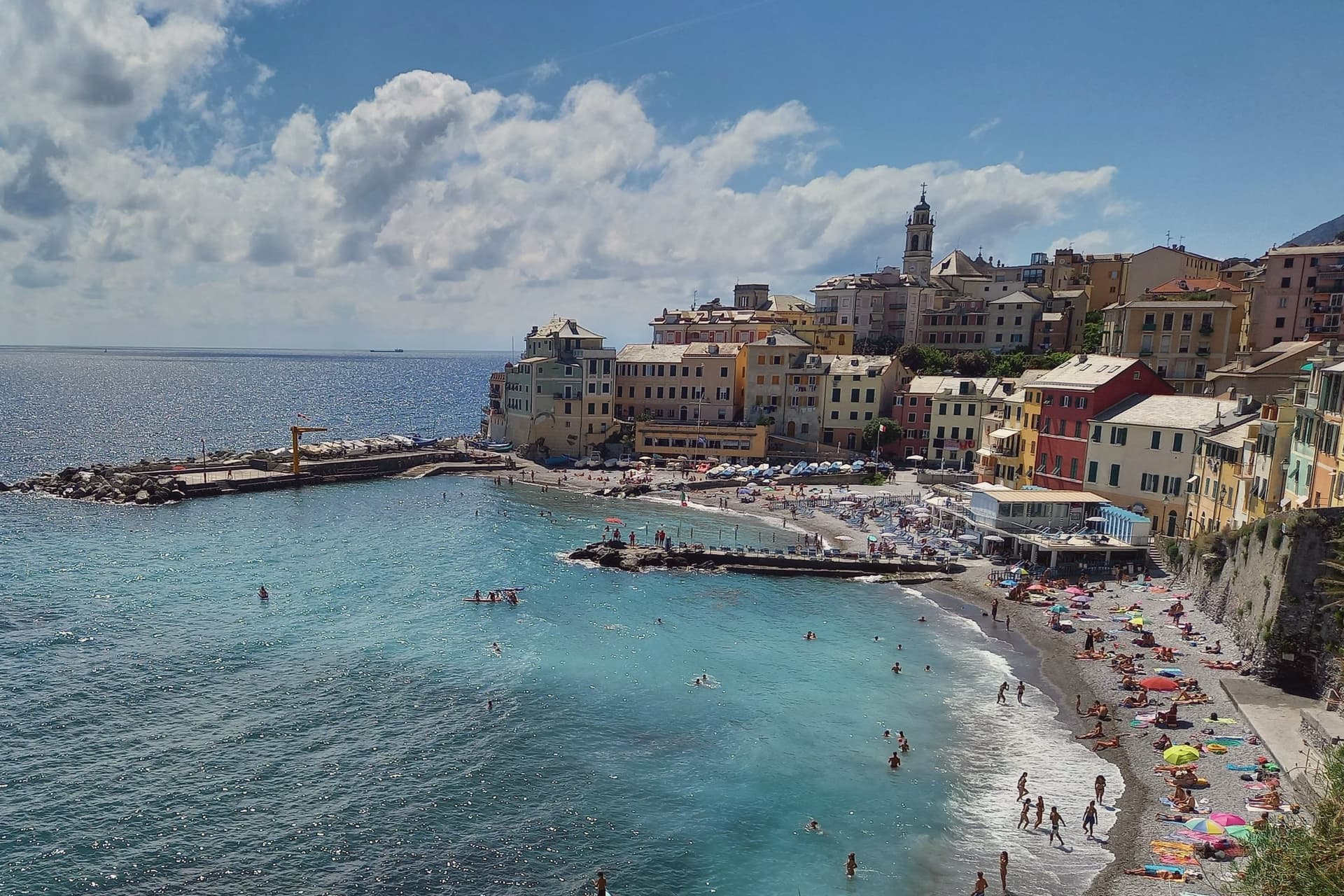
Bogliasco sits 15 kilometers east of Genoa on the Riviera di Levante, where the Bogliasco torrent meets the sea between two rocky headlands. Archaeological surveys on the slopes of Mount Cordona found stone tools from the Middle Paleolithic and Mesolithic, and Roman-era artefacts confirm that the corridor down from the Val Fontanabuona to the coast was a transit route for imperial troops.
The village's signature monument is the medieval bridge near the mouth of the torrent, traditionally called il ponte romano although the surviving structure is Romanesque, built in the 13th century and remodelled in the 17th. The historic centre tightens around the parish church of Natività di Maria Santissima — a baroque rebuild of an earlier Romanesque oratory — and a network of stepped alleys (creuze) climbing into the olive terraces above.
The cove below is small, pebbled, and clear enough that the village's ASD Bogliasco club has produced multiple Italian national water polo and synchronised swimming champions. The Genoa metropolitan train brings Bogliasco into Liguria's commuter belt — twenty minutes from Brignole — which is why the pastel houses are kept lived-in rather than picture-postcard.
Il Bistrotto have been named by a guide.
What to see in Bogliasco
- Ponte medievale (il "ponte romano"). 13th-century Romanesque stone bridge near the mouth of the Bogliasco torrent, remodelled in the 17th century. Named romano colloquially but architecturally Romanesque.
- Chiesa della Natività di Maria Santissima. Baroque parish church rebuilt on the footprint of an earlier Romanesque oratory, with a 17th-century facade overlooking the seafront.
- Spiaggia di Bogliasco. Small pebbled cove tucked between two rocky points, the home beach of the ASD Bogliasco water polo and synchronised swimming clubs.
How to get to Bogliasco
There is a railway station in the town, so you can arrive without a car and never need one while you are here. Genova is roughly 16 minutes away by road.
Our tip
April through October is the open season: warm coastal days, calm sea by late spring, and the cove gets busy from June through August. The water-polo club's home season runs October through April for those who plan a fixture around the visit. November through March is quiet — the seafront stays open and the train still runs every fifteen minutes — but most of the small terraces and ice-cream shops close until Easter.
Celle Ligure
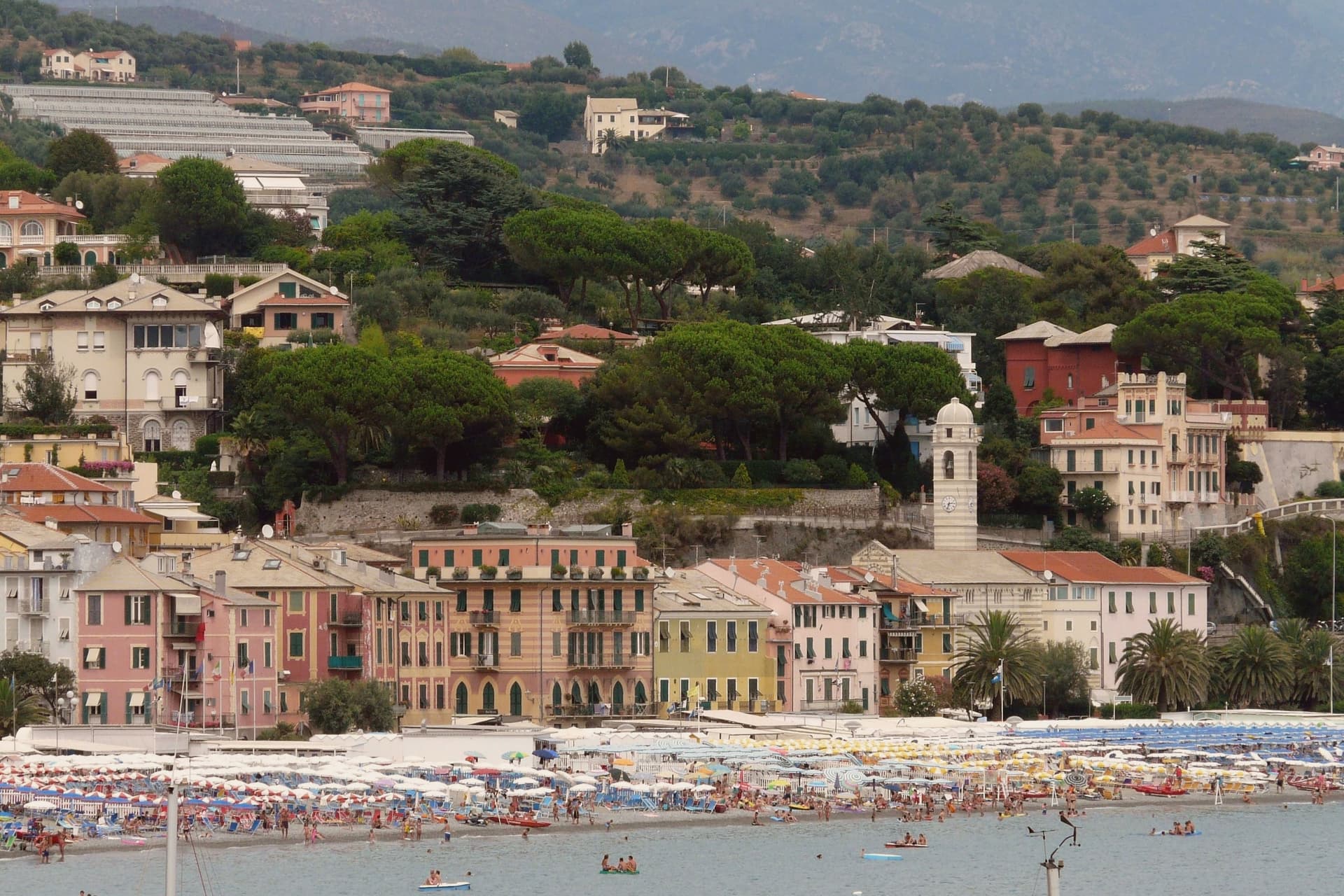
Why visit Celle Ligure
Celle Ligure sits at sea level on the Riviera di Ponente, ten kilometers west of Savona. The Aleramici marquises gave the lands to a Piedmontese monastery in 1014; the Genovese families took them over within a generation.
Pope Sixtus IV's family came from here. The lower town runs along the lungomare, with Piazza dei Mille at its center, while the centro storico sits behind it as a borgo of narrow caruggi, one of the Borghi più belli d'Italia.
A handful of artisan kilns still work these streets, ceramic shop signs marking the buildings where the trade continues. The parish church stands within this old town, its façade carrying the ceramic Assumption by Lucio Fontana, San Michele defeating the dragon rendered in the same medium the town has fired since the seventeenth century.
The pieces read as one place rather than several: a fishing and beach economy along the shore, a ceramic trade worked into the old quarter behind it, and a native artist's public commission set into the church that anchors both.
Meta Ristorante have been named by a guide.
What to see in Celle Ligure
- Chiesa di San Michele Arcangelo. Inside, a Via Crucis by Caminati hangs alongside ceramic stations by Emanuele Luzzati, a pairing of local ceramic craft with the Fontana work on the façade outside.
- Centro storico. Borgo of narrow caruggi behind the lungomare, with active artisan ceramic workshops and ceramic shop signs on the buildings themselves.
- Spiaggia di Celle Ligure. Sand and gravel beach that forms the basis of the town's summer economy, backed by the lungomare and the old town behind it.
How to get to Celle Ligure
There is a railway station in the town, so you can arrive without a car and never need one while you are here. Genova is roughly 40 minutes away by road.
Our tip
April through June and September into October are the dry months on this stretch of the Ponente. The sea warms enough for swimming by late May. July and August are full: the lungomare slows, the beach establishments fill with weekenders from Torino, and the Aurelia stays clogged from Albisola to Varazze on Friday afternoons. Acciugalonga falls in September.
More from Anywhere Italy
- The best small towns with a food festival that eat well within 90 minutes of Genova
- The best small towns with a serious restaurant that eat well within 90 minutes of Genova
- The best small coastal towns you can reach by train in Liguria
- The best small beach towns that eat well in Liguria
- The prettiest small villages that eat well in Liguria
- The prettiest villages that eat well within 90 minutes of Genova