
The best beach towns in the province of Genova
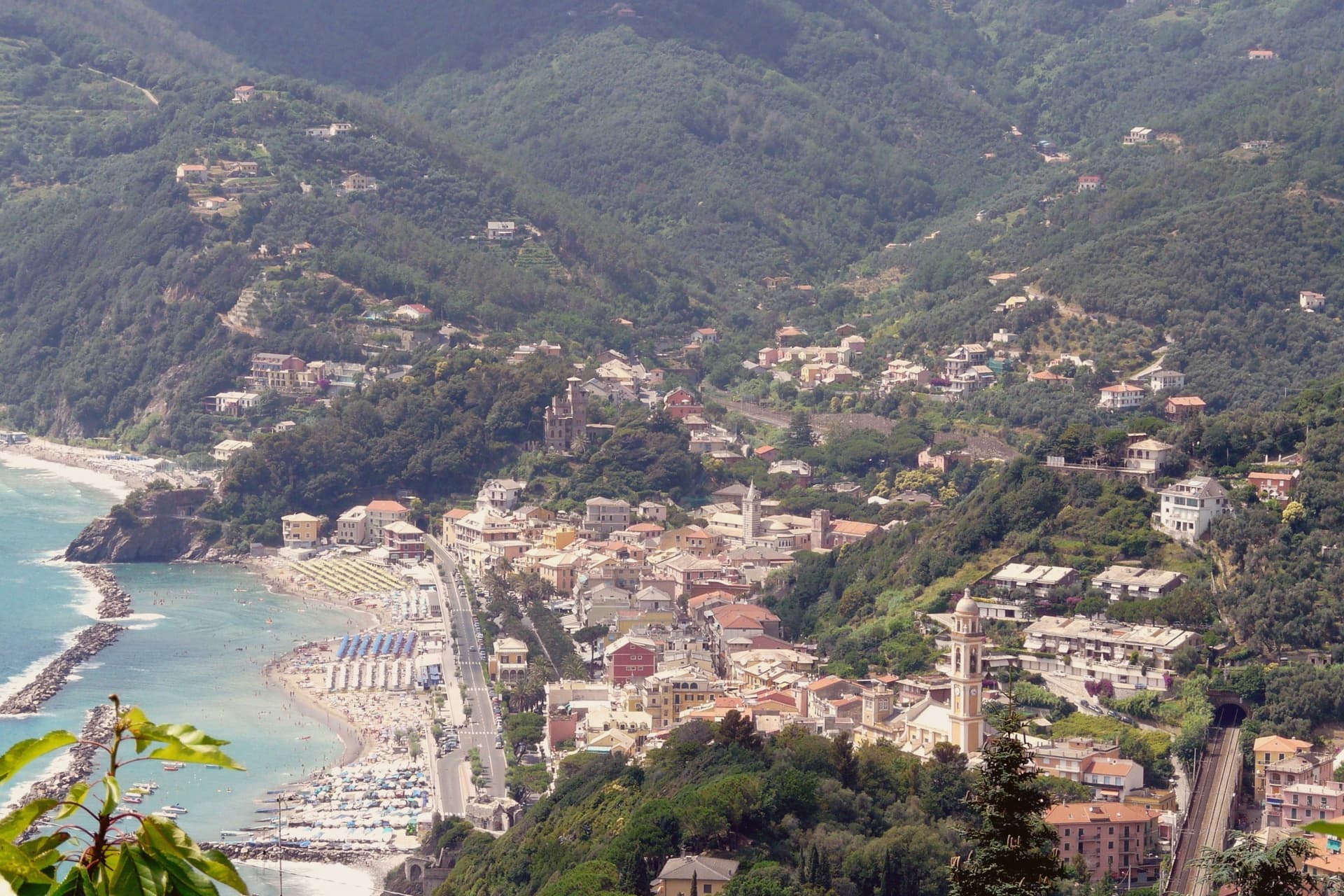
The coast east of Genova is built of dark green hills that stop abruptly at the water, with slate quarried inland framing doorways and painted plaster standing in for stonework and shutters that were never there. The beaches are a mix of grey pebble and coarse sand, the water clear enough in June to see the bottom well past your knees, and the swimming season runs long into September when the crowds thin and the sea is at its warmest. Food here is anchovies, fried or salted or marinated in lemon, focaccia eaten warm from paper at breakfast, cheese-filled focaccia from the Recco tradition, and pesto made with the small sweet basil grown on terraces above the coast. Bathing establishments open in late spring with rows of umbrellas and a bar that sells granita and negronis in the same hour.
The famous version of this coastline sits just south of here, where the Cinque Terre and Portofino absorb most of the visitors the region gets. Trains into Monterosso and Vernazza run full through summer, the footpaths between the villages are ticketed and queued, and Portofino's harbour is small enough that a single arriving cruise tender changes the character of the whole piazzetta. Both places deserve their reputation. Both are also very hard to swim from in August without planning your day around other people.
The same slate, the same anchovies and the same clear water carry on north and east of that stretch, through the Golfo Paradiso and the Golfo del Tigullio, where the towns are bigger on ordinary life and smaller on postcard traffic. These are working harbours and railway towns with proper beaches, promenades used by residents in the evening, and restaurants that stay open in winter. Fewer people go, and the ones who do tend to be Genovesi and Milanesi with a family flat. Every town below holds the national award for clean bathing water and well-run beaches.
Of the 13 communes we have mapped in the province of Genova, 7 qualify as beach towns: each holds the national award for clean bathing water and well-run beaches. The smallest, Moneglia, has 2,528 residents.
Elsewhere in the catalogue: The best towns you can reach by train that eat well in the province of Genova and The best coastal towns within 45 minutes of Genoa.
Moneglia
Why visit Moneglia
Moneglia sits at four meters in a bay on the Riviera di Levante, bracketed by two wooded headlands, one to the west and one to the east. The Romans used the bay as a stop on the Via Aurelia, and the village was a fief of the Fieschi family from Lavagna until 1153, when it passed to the Republic of Genoa, which raised fortifications on both headlands to hold the bay and the coast road below them.
The painter Luca Cambiaso, the town's defining figure, was born here in 1527, one of the most important Genoese painters of the sixteenth century. The single railway tunnel under the eastern headland, alternating one-way traffic, still controls car access to the village in summer, a modern detail that keeps the old geography of a bay closed by two points of land in working order today.
The beach here holds the national bathing award, which a comune has to win back every year on water quality, beach management and safety.
What to see in Moneglia
- Chiesa di San Giorgio. Reached through a parvis at the edge of the centro storico, in use by the Franciscans since 1396. The Adoration of the Magi by Luca Cambiaso hangs inside, a work by the town's own painter still in the building he would have known.
- Bay of Moneglia. The sand gives way at either end to smaller rocky coves reachable only from the sea, a rougher edge to the beachfront that the Bandiera Blu award does not describe.
- Castello di Monleone. Medieval fortification on the western headland, raised by the Genoese to control the bay and the Via Aurelia.
How to get to Moneglia
There is a railway station in the town, so you can arrive without a car and never need one while you are here. Genova is roughly 57 minutes away by road.
Our tip
May through October is the run for Moneglia. May, June and September are the calm months, with the bay open, the sea warm enough from late June, and the alternating-traffic railway tunnel on the eastern access road still manageable. July and August are the difficult months: the beachfront fills, and the single-lane tunnels under both headlands become a daily bottleneck. Carnevale Della Zucca falls in February.
Santa Margherita Ligure
Why visit Santa Margherita Ligure
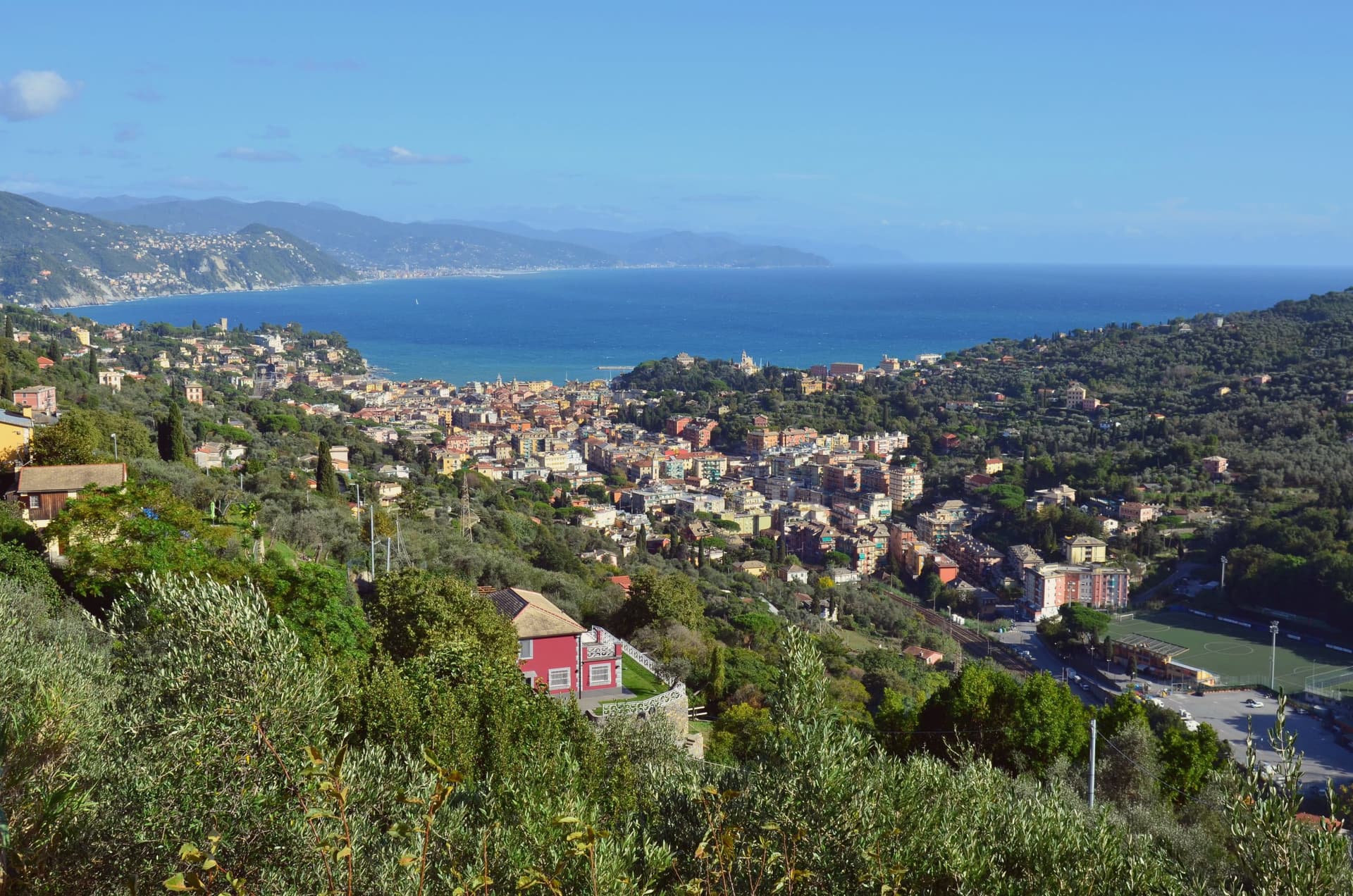
Santa Margherita Ligure sits on the inner curve of the Tigullio gulf, 35 kilometers southeast of Genova, between Camogli and Portofino. The two medieval burghs of Pescino and Corte were unified in 1813 under Napoleonic rule as Porto Napoleone, then renamed when the Kingdom of Sardinia took the coast back in 1815.
Genoese architecture survived the merger: trompe-l'oeil facades on the seafront, the 1658 Basilica of Santa Margherita d'Antiochia with its baroque interior of marble and crystal, the 1550 castle built against North African corsair raids by the architect who built Rapallo's. Villa Durazzo, raised in 1678 as a Genoese summer residence, holds three hectares of terraced gardens above the harbor.
The port still works fishing boats alongside the yachts. Most day-trippers continue to Portofino.
The ones who stop find a town that uses its seafront rather than performing it.
The beach here holds the national bathing award, which a comune has to win back every year on water quality, beach management and safety. It is also rated for accessibility, which most of this coast is not.
What to see in Santa Margherita Ligure
- Basilica di Santa Margherita d'Antiochia. Baroque parish basilica from 1658, crystal chandeliers and gilded statuary, dominating Piazza Caprera in the centro storico.
- Villa Durazzo-Centurione. Genoese summer villa from 1678 with frescoed Piano Nobile apartments and a three-hectare terraced park above the Tigullio gulf.
- Castello di Santa Margherita Ligure. Coastal fort raised by the Republic of Genoa in 1550 against Saracen and Barbary raids, designed by the architect of Rapallo's castle.
How to get to Santa Margherita Ligure
There is a railway station in the town, so you can arrive without a car and never need one while you are here. Genova is roughly 40 minutes away by road.
Our tip
April through June and September into October are the strongest months. The sea is warm enough from late May, the Tigullio quiets after September, and Villa Durazzo's gardens are at their best in shoulder season. July and August fill the seafront, the Portofino ferries run packed, and the inland streets keep a few degrees of shade.
Recco
Why visit Recco
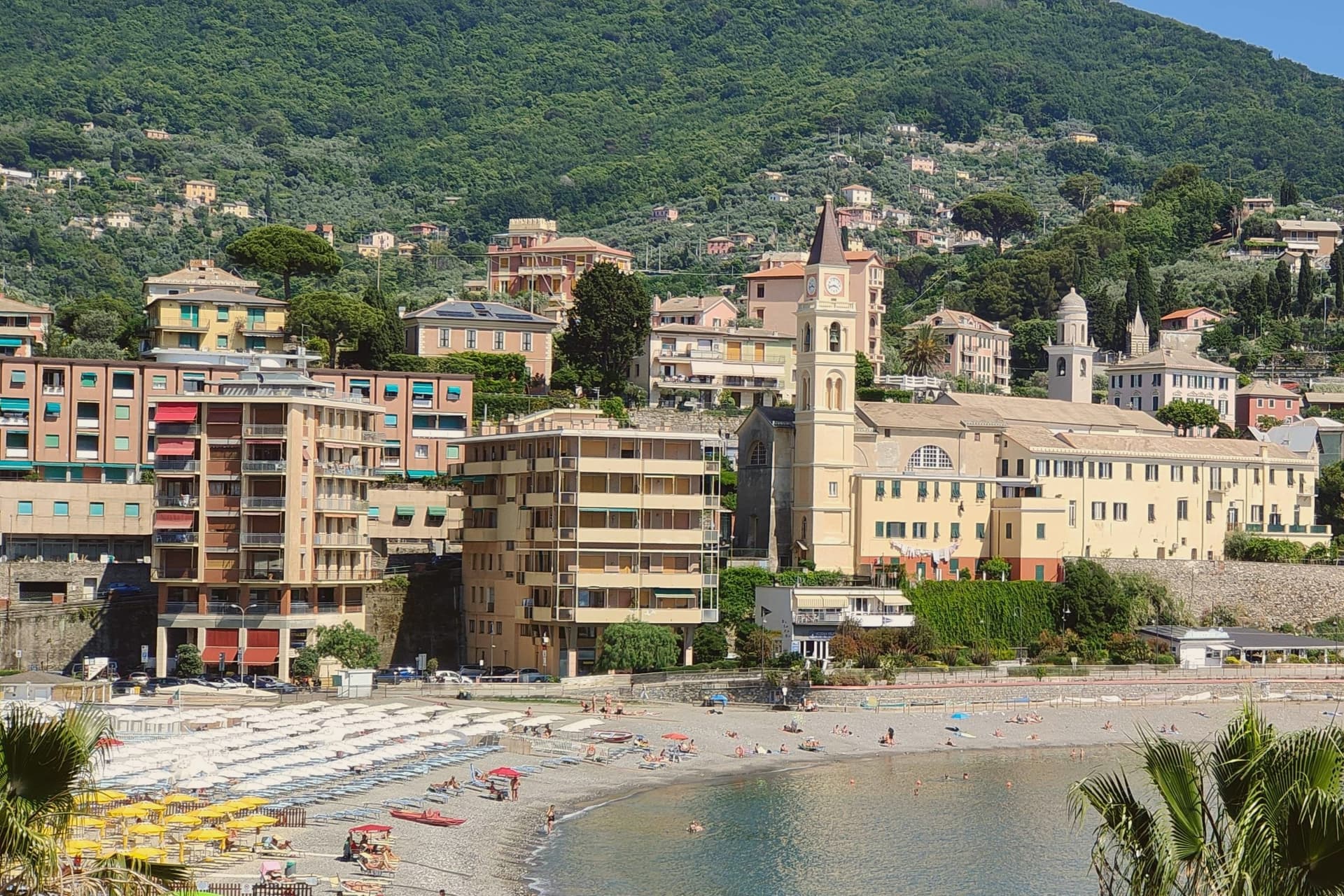
Recco sits on a small inlet of the Golfo Paradiso between Sori and Camogli, fifteen kilometers from Genova. The town's viaduct made it a strategic Allied target in the second world war; the 1943 bombings killed 127 inhabitants and left the town to be rebuilt through the late 1940s and early 1950s, so the church, the bridge and much of the fabric standing today date from that reconstruction rather than before it.
The focaccia has documented origins in the nineteenth century, well before the war or the IGP designation gave it formal status, and it is made in a small cluster of towns along this stretch of coast, of which Recco is only one, though the one that gives the dish its name. Pro Recco's history runs on a separate track entirely, a club founded in 1913 whose record has nothing to do with the town's postwar rebuilding.
What ties the two together is only the place itself: a small gulf town, destroyed and remade, that carries a nineteenth-century food and a twentieth-century sporting dynasty as its two claims to notice.
The beach here holds the national bathing award, which a comune has to win back every year on water quality, beach management and safety.
What to see in Recco
- Santuario di Nostra Signora del Suffragio. The campanile rebuilt on the site of the main church lost to the bombings is the tallest postwar bell tower in Liguria.
- Golfo Paradiso seafront. Small inlet between Sori and Camogli, with the Bandiera Blu beach and a short lungomare looking south to the Portofino peninsula.
- Ponte di Recco. The rebuilt railway viaduct stands on the site of the structure that drew the wartime bombings, and remains the spine of the modern town.
How to get to Recco
There is a railway station in the town, so you can arrive without a car and never need one while you are here. Genova is roughly 25 minutes away by road.
Our tip
April through June and September into October are the strongest months on the Golfo Paradiso, with mild water and the fewest day-trippers from Genova. The Sagra della Focaccia col Formaggio in the last week of May is the date that fills the seafront. July and August are warm, often 28 to 30 degrees, and the beaches fill on weekends with Genovesi on the train line. Mangialonga Nel Golfo Paradiso falls in April.
Camogli
Why visit Camogli
Camogli sits on the west side of the Portofino peninsula, twenty kilometers from Genova on the Golfo Paradiso. The earliest record dates to the tenth century, when it was already a tuna and shrimp fishing port.
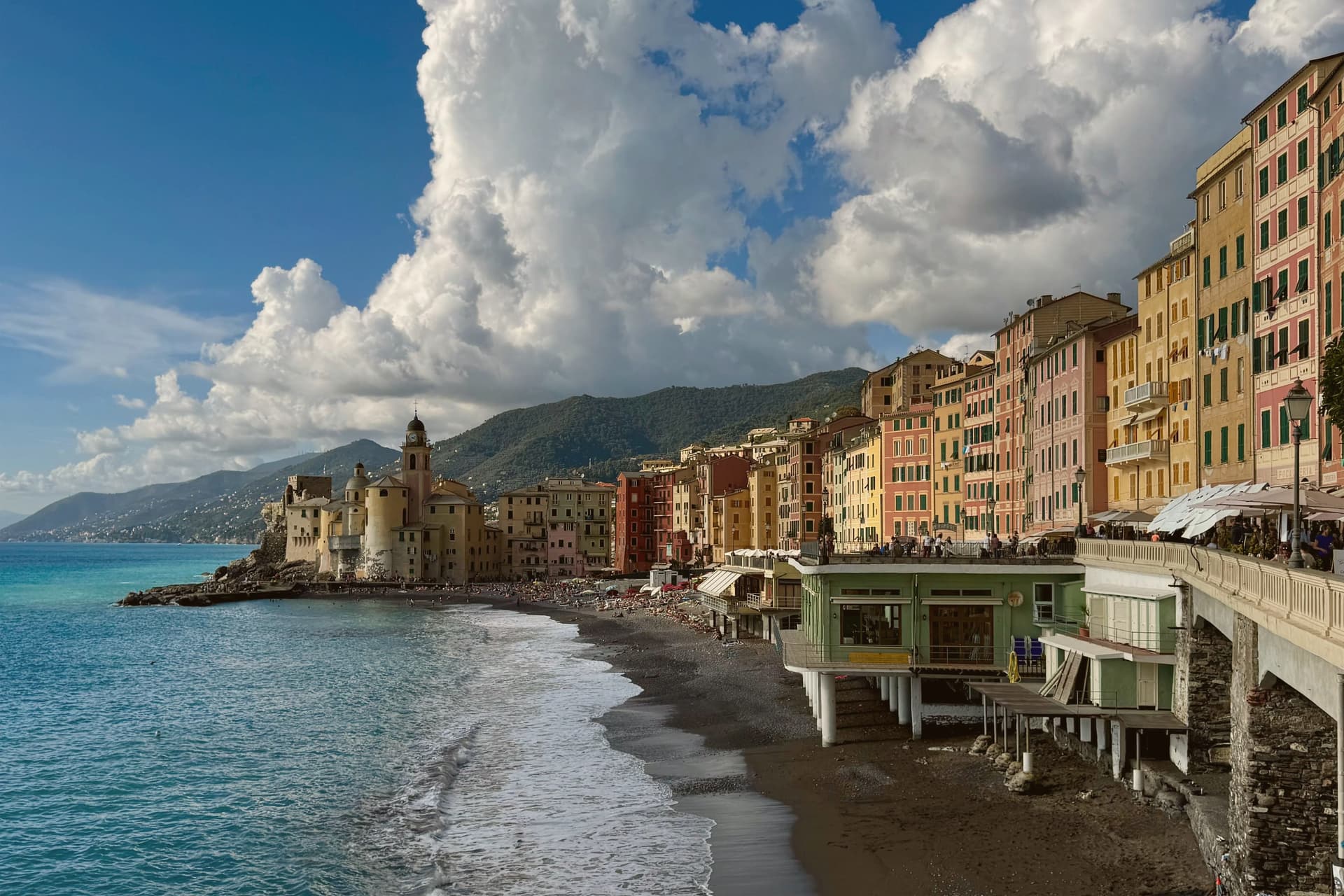
By the nineteenth century, the town's fleet of merchant sailing ships ran to several hundred vessels and Camogli was called the city of a thousand white sails. After the naval defeat at Abukir against the British, the camogliesi shipowners reinvested in building merchant sailers under contract to the major European states.
The painted façades of the seafront houses, with their false windows and trompe-l'oeil cornices, served the returning sailors as recognition marks from sea. The Castello della Dragonara, built in the thirteenth century, still guards the harbor.
Every second Sunday of May, the Sagra del Pesce fries thirty thousand portions of fish in a single giant pan on the wharf, in honor of San Fortunato. San Fruttuoso, the eleventh-century abbey reachable by boat or trail, sits in the next cove.
The beach here holds the national bathing award, which a comune has to win back every year on water quality, beach management and safety. It is also rated for accessibility, which most of this coast is not.
What to see in Camogli
- Castello della Dragonara. Thirteenth-century fortress guarding the harbor, used as municipal seat and now a venue for exhibitions and cultural events.
- Basilica di Santa Maria Assunta. Parish basilica next to the castle on the harbor, baroque interior with marble inlays and seventeenth-century paintings.
- Abbazia di San Fruttuoso. Eleventh-century Benedictine abbey in the next cove, reachable by boat or by the coastal trail across the Portofino peninsula.
How to get to Camogli
There is a railway station in the town, so you can arrive without a car and never need one while you are here. Genova is roughly 33 minutes away by road.
✷ We have written about Camogli
“A steep hill falls into the sea. The houses are crammed on the slope and painted in bright colors because they are old, packed tight, and need help. There is a small port if the cove allows it and a bigger port if the cove is generous. There is a small piazza around a small church, with maybe four restaurants, three bars, and a gelato place. There is no space for a grand square, because there is no space for grand anything in Liguria.”
Read our piece on Camogli →Tigullio Roadtrip | Four Versions of the Same Liguria
Our tip
April through June and September into October are the strongest months for the Camogli seafront, with mild evenings and clean water before the Genova weekend traffic peaks. The Sagra del Pesce on the second Sunday of May is the date that fills the wharf. July and August are warm, often 28 to 30 degrees, and the painted-façade harbor fills with day-trippers off the Genova trains. Sagra Del Pesce falls in May.
Sestri Levante
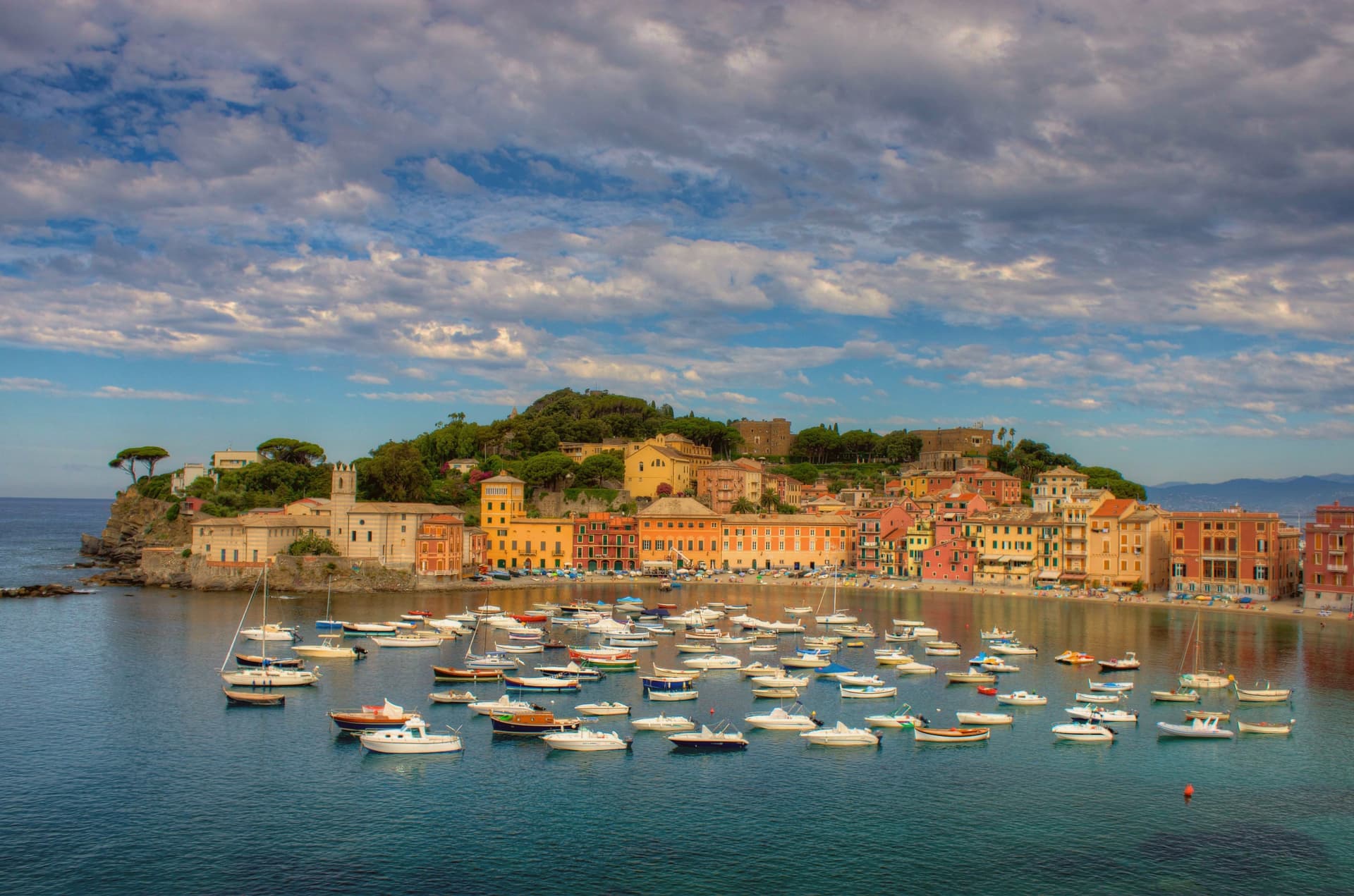
Why visit Sestri Levante
Sestri Levante sits at the head of the Tigullio gulf, forty kilometers southeast of Genova, on a former island the Gromolo river silted into a peninsula by the eighteenth century. Roman Segesta Tigullorum was the predecessor; the town joined the Republic of Genova in 1133.
The peninsula splits the coast into two bays that face different ways and carry different names. To the north lies the long beach known as the Bay of Fables, named by a television host in a 1950s broadcast for the Danish writer who stayed here in 1833.
To the south lies the smaller, quieter bay, named by a Ligurian poet in 1919. Between them, on the high ground of the peninsula, stands the old watchtower where an inventor ran some of his most advanced shortwave radio work, work significant enough that the Navy renamed the gulf itself for him.
A town this small holds a beach with a literary name, a bay with a poet's name, and a headland with an engineer's name, three separate claims to attention pressed into one stretch of coast shaped by a silted river.
The beach here holds the national bathing award, which a comune has to win back every year on water quality, beach management and safety.
What to see in Sestri Levante
- Baia del Silenzio. Smaller southern bay enclosed by colorful seventeenth- and eighteenth-century houses, named by poet Giovanni Descalzo in 1919.
- Baia delle Favole. Long northern beach and the Bandiera Blu stretch of the town, its name recalling Hans Christian Andersen, who looked out over the water from his inn.
- Torre Marconi. Old watchtower on the heights of the peninsula where Guglielmo Marconi carried out shortwave radio experiments in 1933 and 1934.
How to get to Sestri Levante
There is a railway station in the town, so you can arrive without a car and never need one while you are here. Genova is roughly 44 minutes away by road.
Our tip
April through June and September into October are the dry months on the Tigullio. The sea warms enough for swimming by late May. The Premio Andersen children's literature festival runs in June with author events across the town. Sagra dei Testaieu e Asado a Montedomenico falls in August.
Chiavari
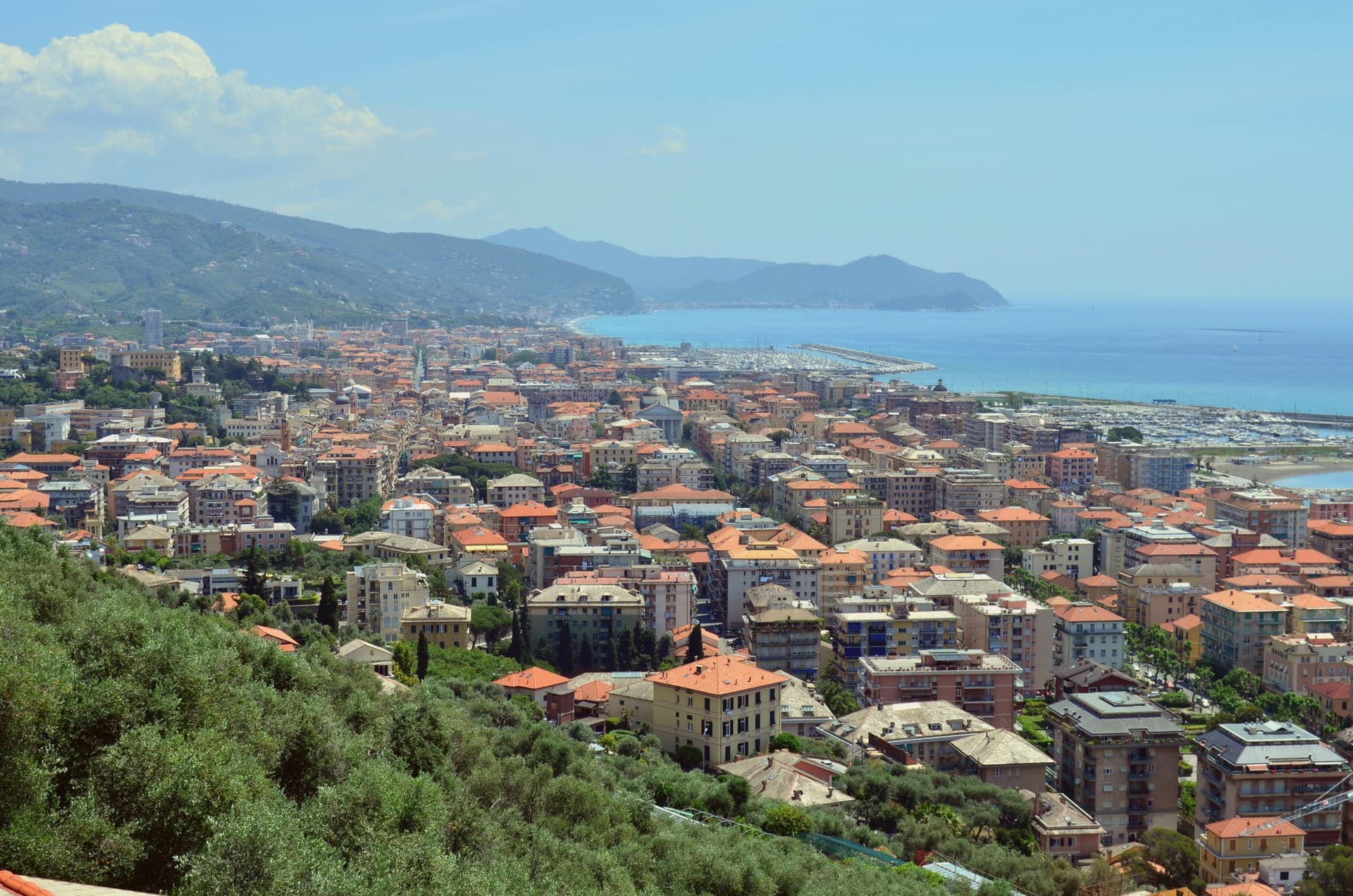
Why visit Chiavari
Chiavari sits on the Riviera di Levante where the Entella meets the Gulf of Tigullio, thirty kilometers east of Genoa. A pre-Roman necropolis from the eighth and seventh centuries BC has been excavated under the centre.
Genoa raised a castle here in 1147 and laid out the medieval town as a grid of porticoed streets, both sides of the carruggio continuous under Gothic columns, the most complete thirteenth-century Genoese commercial plan in Liguria. The Chiavari family produced two doges of the Republic.
In 1801 Napoleon made the city the capital of the Apennines department, one of three administrative units that absorbed Liguria into the French Empire. The Cattedrale di Nostra Signora dell'Orto was built 1613-1633 after a Marian apparition on 2 July 1610 to a local citizen, Sebastiano Descalzo; the neoclassical marble portico modelled on the Pantheon went up in 1841 as a vow for survival from cholera.
Chiavari became a diocese in 1892 and the church a minor basilica in 1904. Slate work, silk weaving and the eponymous Chiavari chair are still made in town.
The beach here holds the national bathing award, which a comune has to win back every year on water quality, beach management and safety.
What to see in Chiavari
- Cattedrale di Nostra Signora dell'Orto. Built 1613-1633 after a Marian apparition in 1610, neoclassical Pantheon-style portico added 1841 as a cholera vow, minor basilica from 1904.
- Caruggio porticato. Thirteenth-century medieval commercial street, both sides continuous under Gothic-columned porticoes, the most intact Genoese plan in Liguria.
- Castello di Chiavari. Genoese fortress built in 1147 above the original town, irregular polygonal walls, partly absorbed into later residential buildings.
How to get to Chiavari
There is a railway station in the town, so you can arrive without a car and never need one while you are here. Genova is roughly 32 minutes away by road.
Our tip
April through June and September to October are the working months: Bandiera Blu beach swimmable from late May, the seafront walk to Lavagna open in any weather, evenings on Piazza Mazzini under 25 degrees. The Sagra del Pesce in Lavagna next door and the Chiavari book festival in late September draw weekend crowds. July and August fill the lungomare with Milanese and Genovese families, and accommodation runs at three times shoulder rates.
Lavagna
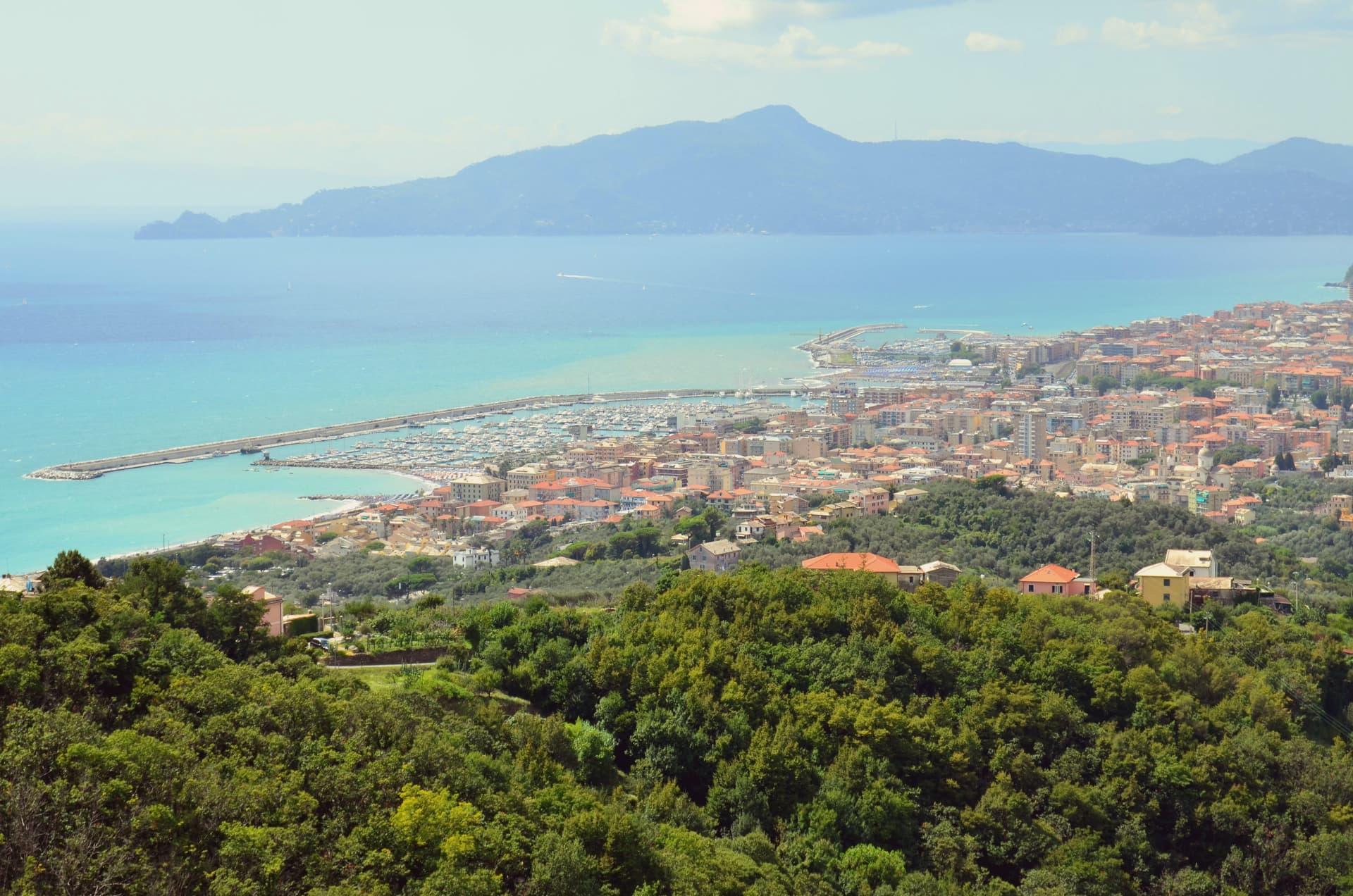
Why visit Lavagna
Lavagna sits at sea level on the eastern Tigullio, thirty-five kilometers southeast of Genova. The slate quarried from the San Giacomo mountains behind the town roofed the Genovese palazzi and lined the schoolrooms of half of Italy, which is why the Italian word for chalkboard is also lavagna.
Around the year 1000 the Counts of Lavagna held this territory, and the family that descended from them, the Fieschi, rose from it to produce two popes. The frazione of San Salvatore sits above the main town, holding the basilica that one of those popes ordered built in bands of white marble and slate.
Down at sea level, the old center folds around the staircase and square where, on 14 August, the town reenacts a thirteenth-century wedding with the Torta dei Fieschi, a giant cake carried out to the crowd. The beach holds Bandiera Blu at the opposite edge of town, near the port.
A town built on a stone that traveled far beyond it, and on a family that did the same.
The beach here holds the national bathing award, which a comune has to win back every year on water quality, beach management and safety.
What to see in Lavagna
- Basilica di Santo Stefano. Parish church rebuilt over a sixth-century foundation, crowning the main square at the top of a wide staircase where the annual cake pageant begins its procession.
- Basilica di San Salvatore dei Fieschi. Thirteenth-century basilica in the frazione of San Salvatore, ordered by Pope Innocent IV in 1244, façade in alternating bands of white marble and local slate.
- Spiaggia di Lavagna. Long Bandiera Blu beach on the Tigullio, with one of the largest tourist ports in northern Italy at the western end.
How to get to Lavagna
There is a railway station in the town, so you can arrive without a car and never need one while you are here. Genova is roughly 44 minutes away by road.
Our tip
April through June and September into October are the dry months on the Tigullio. The beach water warms enough for swimming by late May. The 14 August Torta dei Fieschi is the central event of the summer: period costumes, procession from the Basilica di San Salvatore down to Piazza Marconi, and a giant cake distributed to anyone who matches a paired ticket. La Torta dei Fieschi falls in August.
More from Anywhere Italy
 The best towns you can reach by train that eat well in the province of Genova
 The best coastal towns within 45 minutes of Genoa
- The best olive oil towns within 45 minutes of Genoa
- The best towns that eat well within 45 minutes of Genoa
- The best towns you can reach by train within 45 minutes of Genoa
- The best hidden coastal towns in the province of Genova