Guide | Umbria
Two banks, no sea
Every morning at Lake Trasimeno started with coffee in front of a photograph. The house we rented in San Savino was built around one floor-to-ceiling window facing the water, and on the wall beside it hung a picture the owner’s father had taken decades ago: a fisherman alone in his boat, working the lake. I thought it was a good photograph and nothing more. Then we walked up to the little castle, one street bent into a circle, with a huge red cat called Leone asleep on its only bench, and looked down from the edge. Two small boats were fishing inside the reeds below us, moving so little they could have been painted there. The photograph was fifty years old. It could have been taken that afternoon.
That afternoon is Umbria. It is the only region in the middle of Italy with no coastline: no sea, no Renaissance, no big capital, and every neighbor outranks it in the tourist imagination. Tuscany has the art, Lazio has Rome, and the Marche has spent the last few years being everybody’s newly discovered beach. Umbria has forest over almost half of its land, steep valleys, and stone towns on hilltops that nobody outside Italy could place on a map. For centuries it had little to sell the rest of the peninsula except its men, and Umbrian mercenaries fought for Florence, Bologna and the Popes, then came home and ruled their own towns with the same swords.
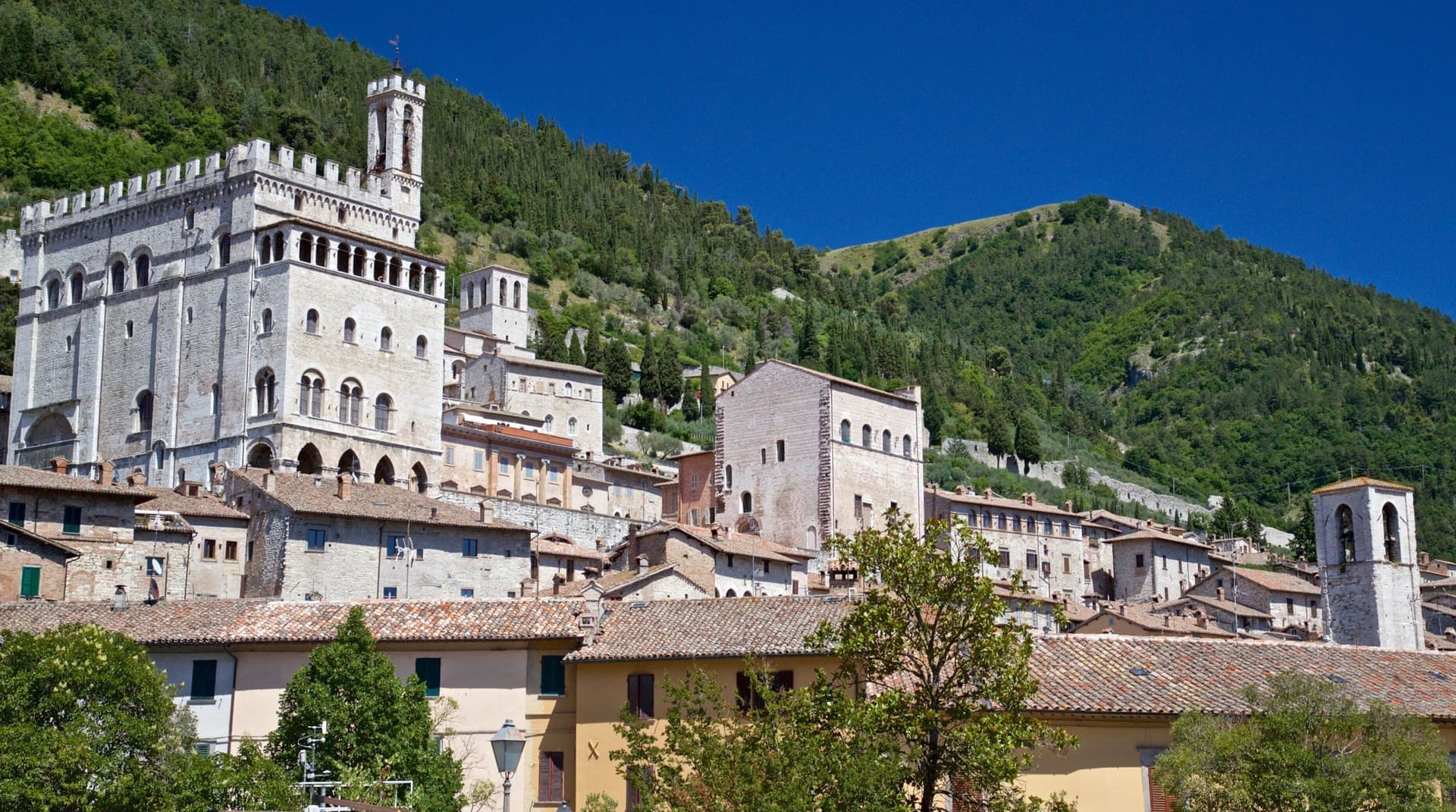
The Tiber runs straight down the middle of it, and long before Rome the river was a border. The Etruscans lived on the west bank. The Umbrians lived on the east bank, a people who left almost nothing behind except seven bronze tablets in Gubbio. Rome swallowed both. This Guide follows that old line, because you can still feel it: the lake, Perugia and Orvieto on one side, Gubbio, Assisi and the valley towns on the other.
I came in two halves. The south first, on trips to Todi, where a Hungarian writer friend lives and where I watched Italy win the Euro final on the main square. The north this April, from that house on the lake.
In a nutshell aka TLDR
This is not Tuscany, and the towns are alive. The Tuscan countryside is planned and built: the tree lines, the organized roads. Umbria’s is tended but raw, with valleys so small that from the walls of one town you can see the next. And unlike the medieval villages of Lazio, which turn into ghost towns after eight in the evening, Umbrian towns still have young people on the main square, shops for locals, and people living inside the old walls.
After ten hill towns, you have seen the formula. A main square with a church, narrow streets climbing up to it from four directions, a cat, an old couple, good wine with a plate of cold cuts. Umbria is the best place in Italy to taste them rather than study them: three to five towns in a day, an hour or two each. That is what the Umbrian Circle is for.
Bring a car and good knees. Almost every town comes in two layers, an upper and a lower, and you park in the lower one and climb. Perugia needs escalators and its own small automated metro to get you up. The roads between towns are very good, and half of the Circle runs on main roads or even the A1.
There is exactly one crowd. Assisi. Everything else, including a town with a nine-hundred-year-old festival on the regional flag, is largely unknown to international tourism. Give Assisi an afternoon, then eat and sleep somewhere else.
A new town in your inbox. Free.
Get the next letter free, and read the rest of this one.
Already subscribed? Continue reading
Another letter