
Sicily · Ragusa
Ispica
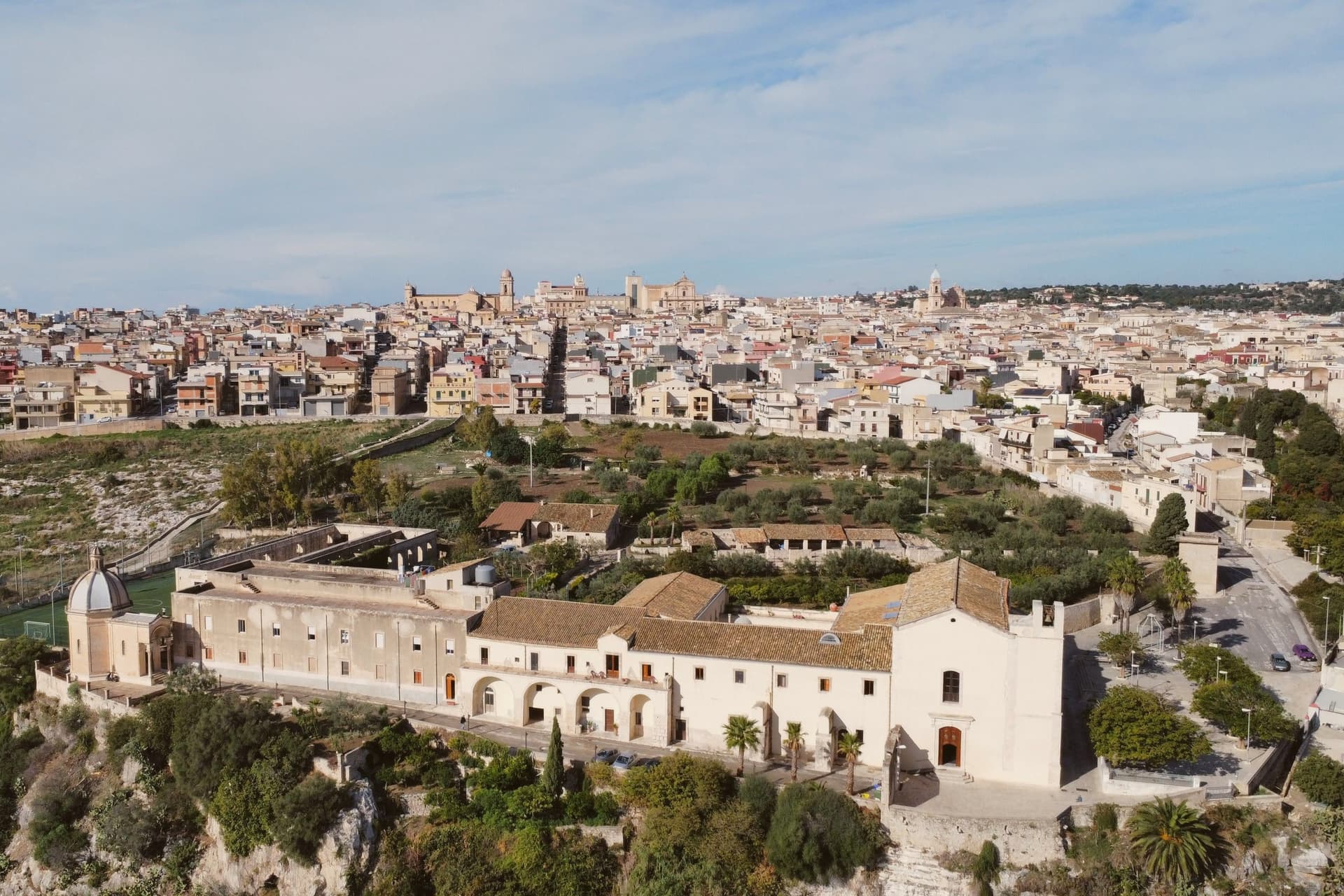
A Val di Noto Baroque hilltown on the southern Iblei plateau anchored by the 13-km Cava d'Ispica canyon with its 3,000+ rock-cut tombs and prehistoric dwellings, one of the largest cave-necropolis sites in the Mediterranean.
- Best time
- Apr–Oct
- By car
- 1 h 32 min from Catania
- By train
- Station in the comune
- Population
- 16,253
Known for
CAVA D'ISPICA
13-km canyon with 3,000+ rock-cut tombs and prehistoric dwellings — among the largest cave-necropolis sites in the Mediterranean.
VAL DI NOTO BAROQUE
Post-1693 Vaccarini-era late-Baroque architecture; considered for the UNESCO Val di Noto listing in 2002.
CHERRY TOMATOES
The Pachino-area Val di Noto agriculture extends to Ispica — cherry tomatoes, carrots, and cumin.
RAGUSANO
The commune also lies inside the Ragusano DOP production zone.
When to visit
Best · Apr–Oct
- J15°
- F16°
- M17°
- A20°
- M24°
- J30°
- J34°
- A33°
- S29°
- O25°
- N20°
- D17°
- Best
- Hot or crowded
- Quiet
- Mostly closed
Daytime averages, 2020–2024. Weather data by Open-Meteo.com.
The festa: Nostra Signora del Monte Carmelo, 16 July
Why come
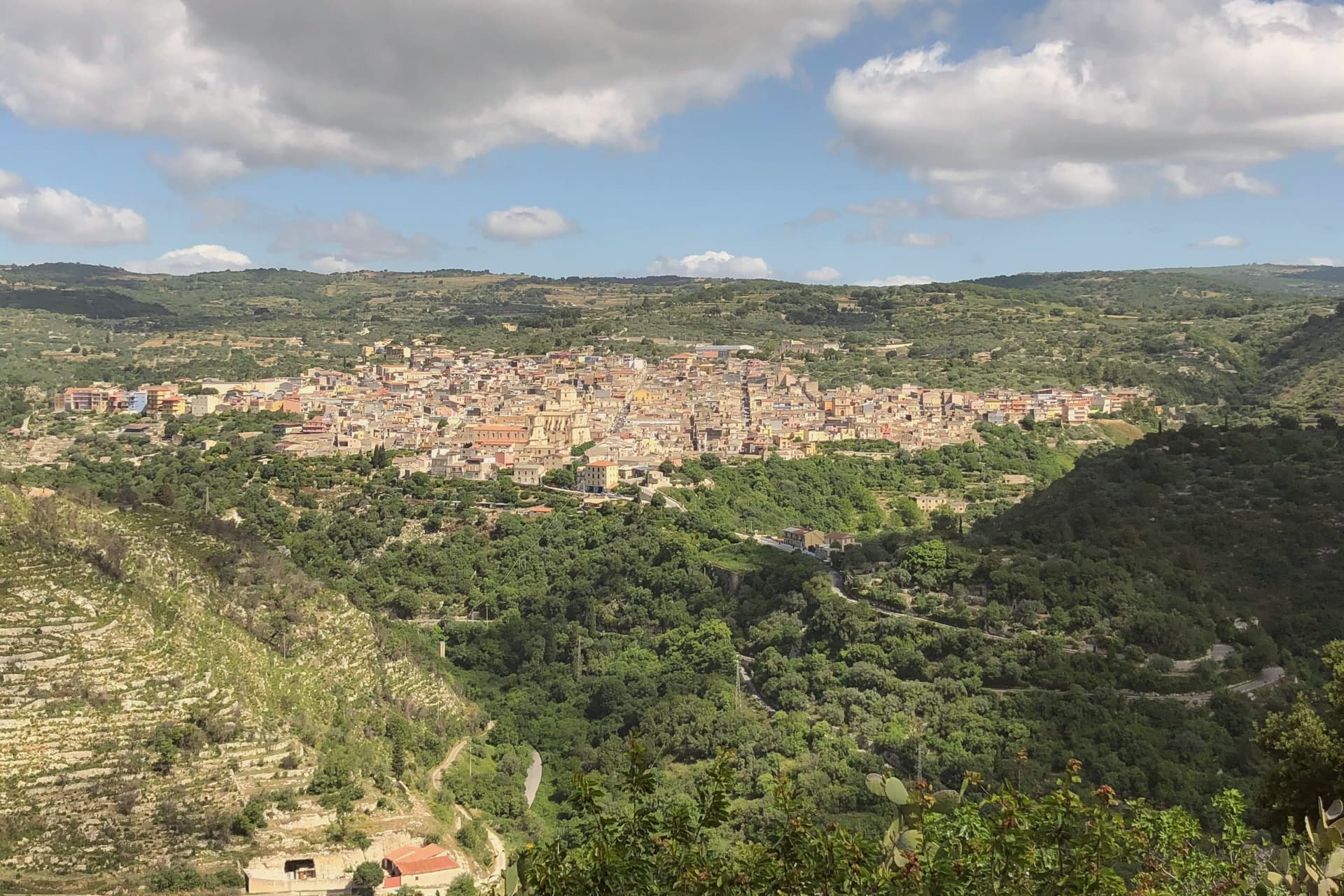
Ispica sits on the southern edge of the Iblei plateau in south-east Sicily, 40 kilometres from Ragusa and 15 kilometres from the southern coast. The current Baroque town was rebuilt after the 1693 Val di Noto earthquake on a site slightly north of the medieval village destroyed in the shock; the Basilica di Santa Maria Maggiore (rebuilt 1750) and the Basilica della Santissima Annunziata both date to that reconstruction, and Ispica is one of the candidates that was considered for inclusion in the Val di Noto UNESCO listing in 2002 (it ultimately wasn't chosen but the architecture is the same Vaccarini-era late-Baroque). The town's real distinction is geological: the Cava d'Ispica, a 13-kilometre canyon cut into the limestone by the Pernamazzoni stream, with over 3,000 rock-cut tombs, prehistoric dwellings, early Christian catacombs, Byzantine oratories and medieval cave settlements in its walls — one of the largest cave-necropolis sites in the Mediterranean, occupied continuously from the Copper Age to the medieval period. The Parco Archeologico della Forza at the northern end of the canyon preserves the late-Roman / Byzantine castle and the early Christian catacombs of Larderia.
The Sunday letter
Ispica is on our list. Its letter is still to come.
We are writing about all 1,000 of these towns, one at a time, in a free letter every Sunday: the photo, the food, the festa. That is our mission. Sign up and you will be there when Ispica comes up. By Peter & Sophia, from Pietrasanta.
How to get there
From Catania (CTA), about 1h 30m by car.
By car from the centre of Palermo 3h 52m.
There is a railway station in the comune, so you can arrive without a car.
Coming by train into Siracusa? Ispica is about 51 minutes away by road.
What to see
Cava d'Ispica
13-km canyon with 3,000+ rock-cut tombs, prehistoric dwellings, Byzantine oratories, and medieval cave settlements. Occupied continuously from the Copper Age through the medieval period. One of the largest cave-necropolis sites in the Mediterranean.
Basilica della Santissima Annunziata
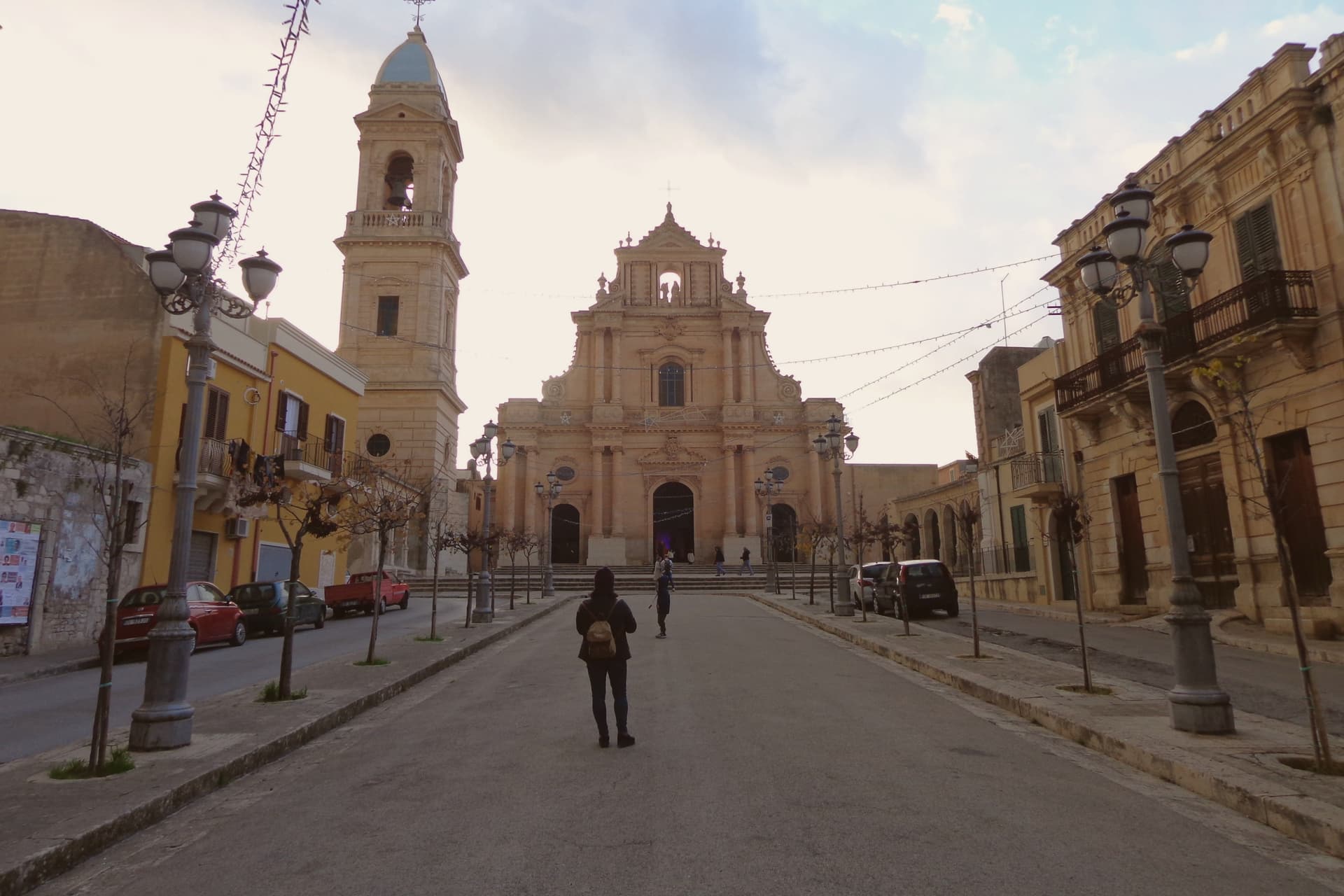
Post-1693 late-Baroque basilica in the centro storico, with a vaulted nave decorated by Olivio Sozzi and a 1729 wooden Crucifix by Pietro Padula.
Parco Archeologico della Forza
Northern end of the Cava d'Ispica preserving the late-Roman / Byzantine castle (Forza), early Christian catacombs of Larderia, and the medieval cave settlement of Cavetta.
Basilica di Santa Maria Maggiore
Post-1693 Baroque parish church (rebuilt 1750), one of the two major Vaccarini-era churches in the new town. Carlo Carasi frescoes.
The slow-trip planner
Building a trip? Find where Ispica fits in a slow Italy circuit.
Answer five questions. We will shape a geographically coherent slow trip from the 1,000 Italian towns most travelers skip. Yours to save and share.
Through the year
What happens here
Feasts and festivals that come back year after year. We give the month rather than the date, because the date moves and the month rarely does. Check with the source before you plan a journey around one.
Sagra 'Ra Tunninafood festival
usually held in July. itinerarinelgusto.it
Living here
- Population 16,253
- In-betweeni
- Pharmacy in town
- High school within a 30-minute drive
- Train station in the comune
- Nearest airport Catania, 1 h 30 min drive
- Regional capital Palermo, 3 h 52 min drive
Common questions
- What is Ispica known for?
- Ispica is a Val di Noto Baroque hilltown on the southern Iblei plateau anchored by the 13-km Cava d'Ispica canyon with its 3,000+ rock-cut tombs and prehistoric dwellings, one of the largest cave-necropolis sites in the Mediterranean.
- Where is Ispica?
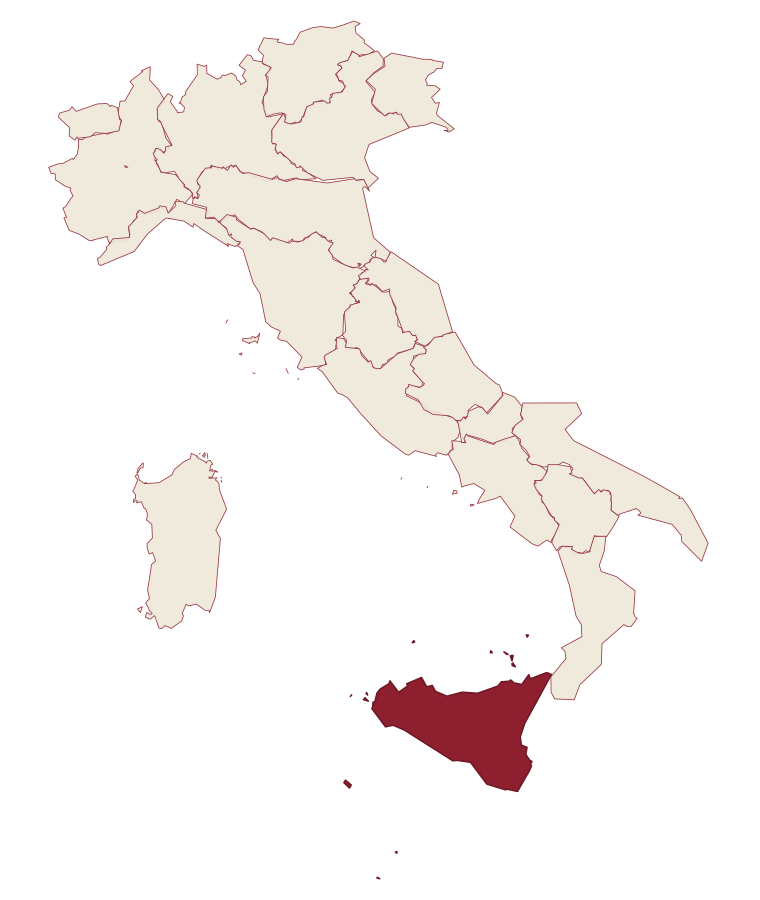
- Ispica is a comune in the province of Ragusa, in Sicily, at 170 meters above sea level.
- What is the nearest airport to Ispica?
- Catania (CTA), about 1h 30m by car.
- Can you get to Ispica without a car?
- Yes. There is a railway station in the comune, so you can arrive by train.
- How long is the drive from Palermo to Ispica?
- About 3h 52m by car.
- When is the best time to visit Ispica?
- Best in Apr–Oct. July is the warmest month, averaging 34 degrees, and November the wettest, with about 9 rain days.
- Is there a sagra or a festival in Ispica?
- Yes. Sagra 'Ra Tunnina. July is when the first of them falls.
- Which other towns are like Ispica?
- Oria, Castelvetro di Modena and Vignola.
- How many people live in Ispica?
- 16,253 at the 2023 count.
Tags & datadesignations · numbers · sources
Recognised as
The numbers
- Elevation: 170 m
- Population: 16,253
- Surface area: 113.75 km²
These figures were compiled from public directories: ISTAT, OpenStreetMap and Wikidata, and from the official listings of the guides named on this page. Town details change; verify with official sources before you travel.
Similar
Towns like Ispica
Oria
Province: Brindisi
both inland, away from the coast · both over 10,000 people
Castelvetro di Modena
Province: Modena
both inland, away from the coast · both over 10,000 people
Vignola
Province: Modena
both inland, away from the coast · both over 10,000 people
Nardò
Province: Lecce
both inland, away from the coast · both over 10,000 people
Sasso Marconi
Province: Bologna
both inland, away from the coast · both over 10,000 people
Galatone
Province: Lecce
both inland, away from the coast · both over 10,000 people
🌿 Riserva Naturale
More Riserva Naturale towns in Sicily
Aci Castello
Province: Catania
A coastal town just north of Catania on the Riviera dei Ciclopi, where the basalt headland holds the 1076 Norman Castello d'Aci and the seven volcanic Faraglioni dei Ciclopi rise from the sea, the rocks the Cyclops threw at Odysseus in Homer's Odyssey.
Caltagirone
Province: Catania
Sicily's ceramic capital at 611 meters on the Erei ridge, 142 majolica-tiled steps to Santa Maria del Monte and a Val di Noto UNESCO baroque rebuild.
Cammarata
Province: Agrigento
A Sicani town at 700 meters on the northeast slope of the peak that gives the comune its name and shape.
Castelvetrano
Province: Trapani
The Belice valley town that owns Selinunte, the largest archaeological park in Europe, and bakes black bread from grain found in its tombs.
Catania
Province: Catania
Sicily's second city and the cultural anchor of the Ionian coast, a UNESCO late-Baroque centro storico rebuilt in lava-black stone after the 1693 earthquake, sitting at the foot of Etna with a 17th-century elephant fountain (U Liotru) as its civic symbol.