
The best hidden towns you can reach by train in Friuli-Venezia Giulia
Friuli-Venezia Giulia is the part of Italy where the Alps drop almost directly onto a lagoon, and the trains run through the middle of it. The building material changes as you go: white Karst limestone near the border, river cobble and brick out on the Isonzo plain, dark timber balconies up in the mountain valleys. Food shifts with it, from frico and cjarsons in the Friulian interior to boiled pork and horseradish in the Triestine bars, drunk with a glass of Friulano or Ribolla Gialla from the Collio hills. Autumn is the season that rewards the traveller most, when the vineyards turn copper and the polenta comes hot at lunch, though late spring brings the Isonzo running clear and green.
Most visitors take the line to Trieste, spend a couple of days on Piazza Unita d'Italia, ride the tram up towards the Karst and photograph Miramare from the shore. It is a good city and the train from Venice or Udine delivers you into the middle of it, which is exactly why the waterfront cafes fill up and the castle grounds move at a shuffle on summer weekends. Cruise ships add to the crowd in the warm months. Nothing about it is a mistake, but it is where nearly everyone stops.
The same railway carries on past it, north towards Tarvisio and Austria, west towards Pordenone, and out across the reclaimed flats to the lagoon. Along those lines sit walled towns, abbey villages, Roman ports now stranded inland and wine towns where the Slovenian border is a field away. Fewer people go, in part because the guidebooks stop at the city, in part because the stations are small and the connections take a little reading. We have confirmed that each of the towns below can be reached without a car.
Of the 26 communes we have mapped in Friuli-Venezia Giulia, 13 qualify as towns you can reach by train: we have confirmed each is reachable without a car. This list is the hidden ones, 9 in all, ordered smallest first. The smallest, Venzone, has 1,939 residents.
Elsewhere in the catalogue: The best wine towns in Friuli-Venezia Giulia and The best hidden wine towns you can reach by train within 90 minutes of Udine.
Venzone
Why visit Venzone
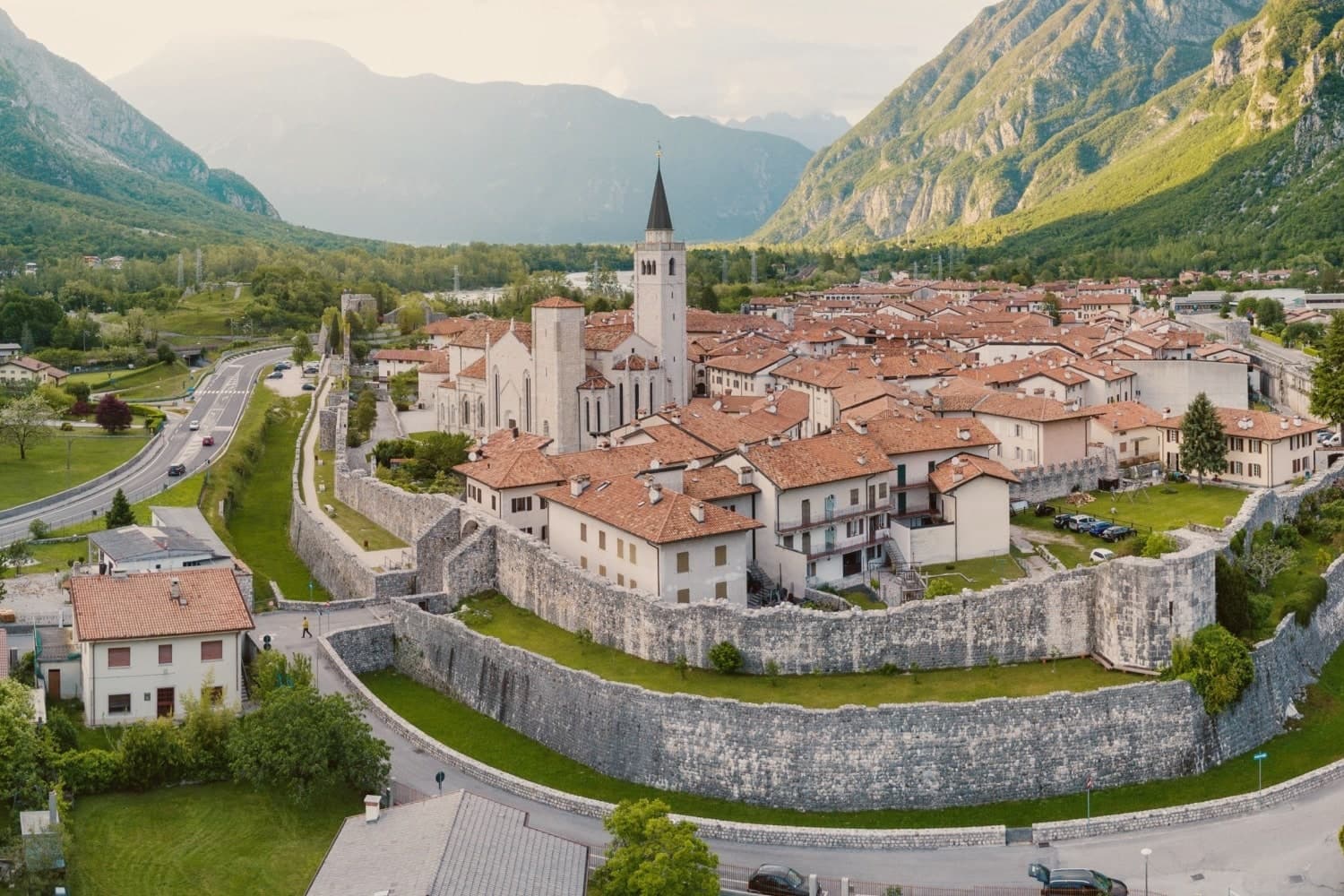
Venzone sits at 230 meters in the upper Tagliamento valley, ninety kilometers northwest of Trieste. The hexagonal walls, double-built and eight meters high, were started in 1258 by Glizoio of Mels and circled by a moat and fifteen towers.
The town survived intact into the twentieth century, the best-preserved walled town in Friuli. On 6 May 1976 the Friuli earthquake leveled it: forty-seven residents died, the duomo collapsed, almost every house came down.
The reconstruction took the rare path of anastilosis, recovering each fallen stone and putting it back where it had been. The Duomo di Sant'Andrea Apostolo, erected in 1308, was reassembled by 1990.
In the crypt of the San Michele Chapel are five of the mummies of Venzone, naturally preserved corpses found from the 1600s onward, their preservation still unexplained. The town was voted Borgo dei Borghi 2017 by the RAI program Kilimangiaro.
We confirmed you can reach this one by train.
What to see in Venzone
- Duomo di Sant'Andrea Apostolo. Cathedral built in 1308, destroyed by the 1976 earthquake and reassembled stone by stone by 1990 using the original blocks.
- Cinta muraria. Hexagonal double walls eight meters high, started in 1258 by Glizoio of Mels, surrounded by moat and fifteen defensive towers.
- Mummie di Venzone. Five naturally mummified bodies preserved in the crypt of the San Michele Chapel, found from the 1600s onward, cause of preservation still unknown.
How to get to Venzone
There is a railway station in the town, so you can arrive without a car and never need one while you are here. Udine is roughly 41 minutes away by road.
Our tip
May through October is the window when the Tagliamento valley is reliably warm and the walls show best against green slopes; winter brings cold air sinking off the Carnic Alps and shortened hours at the duomo and mummy crypt. The Festa della Zucca in late October stages the centro storico as a medieval village and draws crowds from across Friuli. July and August can be hot at midday; the valley cools sharply after sundown.
Aquileia
Why visit Aquileia
Aquileia sits at five meters above sea level on the Friuli plain, ten kilometers inland from the Adriatic at the head of the Grado lagoon. Rome founded it as a military colony in 181 BC.
By the second century AD it held close to 100,000 people, was the capital of Augustus's Regio X, and ranked among the nine great cities of the empire. Attila's Huns sacked it in 452, the population scattered to the lagoon islands, and the surface town never recovered.
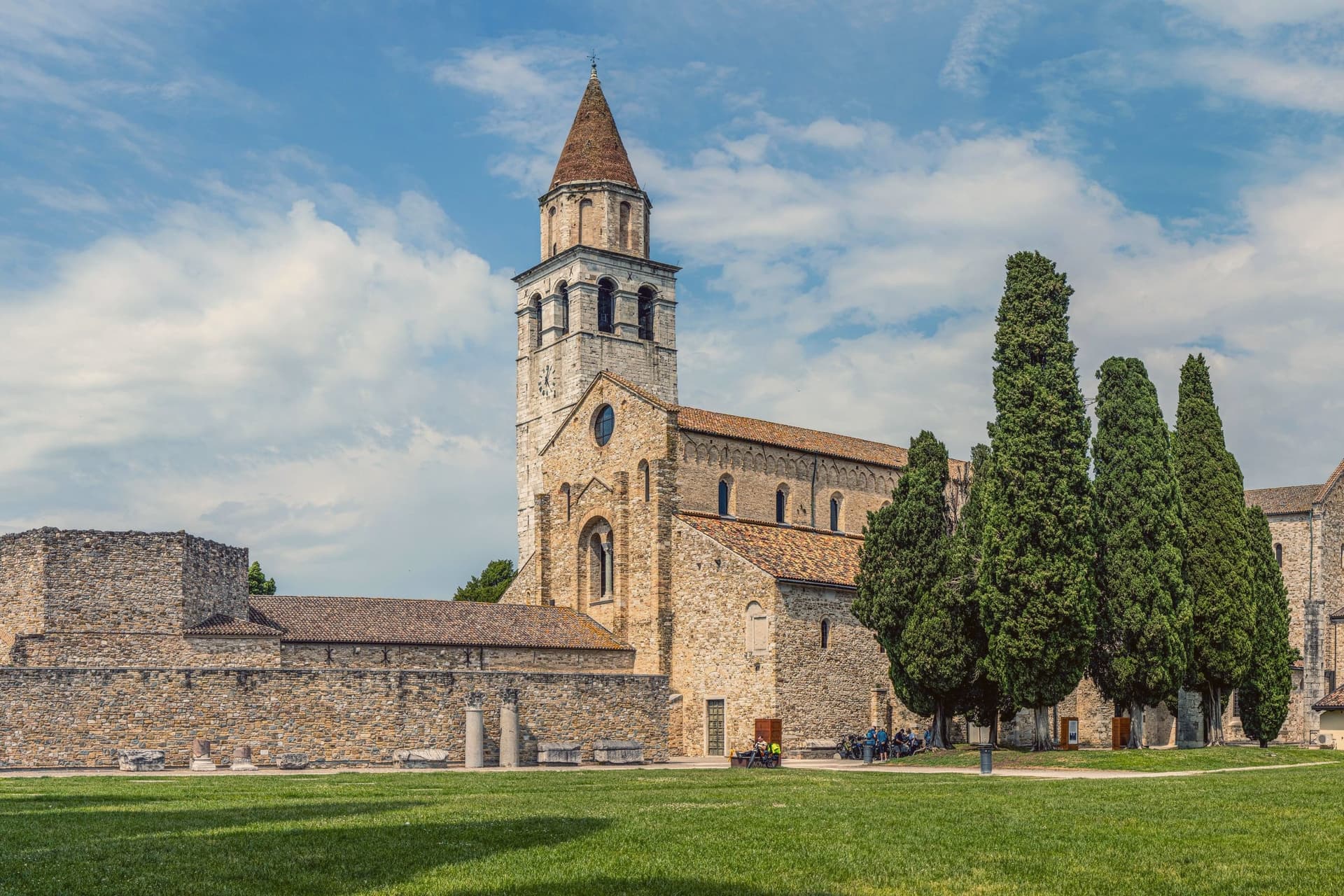
The Roman city below is largely unexcavated, which makes Aquileia, in UNESCO's words, the most complete example of an Early Roman city in the Mediterranean. Above it, Patriarch Poppo rebuilt the basilica in 1031 over a fourth-century church.
Its floor is the largest paleochristian mosaic in the Western world, 760 square meters of fish, birds, jonah and the whale, uncovered by archaeologists in 1909. The 73-meter campanile uses stone quarried from the Roman amphitheater.
The Patriarchate of Aquileia survived until 1751.
We confirmed you can reach this one by train.
What to see in Aquileia
- Basilica di Santa Maria Assunta. Patriarch Poppo's eleventh-century basilica over a fourth-century church, with a 760-square-meter paleochristian mosaic floor uncovered in 1909.
- Campanile di Poppo. Free-standing 73-meter bell tower built in the eleventh century with stone quarried from the Roman amphitheater, raised again in the fourteenth.
- Foro Romano. Excavated section of the Roman forum along the Via Sacra, with the bases of columns and reused capitals from the second century AD.
How to get to Aquileia
There is a railway station in the town, so you can arrive without a car and never need one while you are here. Udine is roughly 43 minutes away by road.
Our tip
May through September is the working season for Aquileia. The basilica is open daily, the archaeological park stays light until late, and the lagoon at Grado five kilometers south is swimmable. July and August are hot and humid on the plain, often pushing above thirty-two degrees, and the mosaic floor is the coolest room in town. Festa dell'Unità falls in July.
Palmanova
Why visit Palmanova
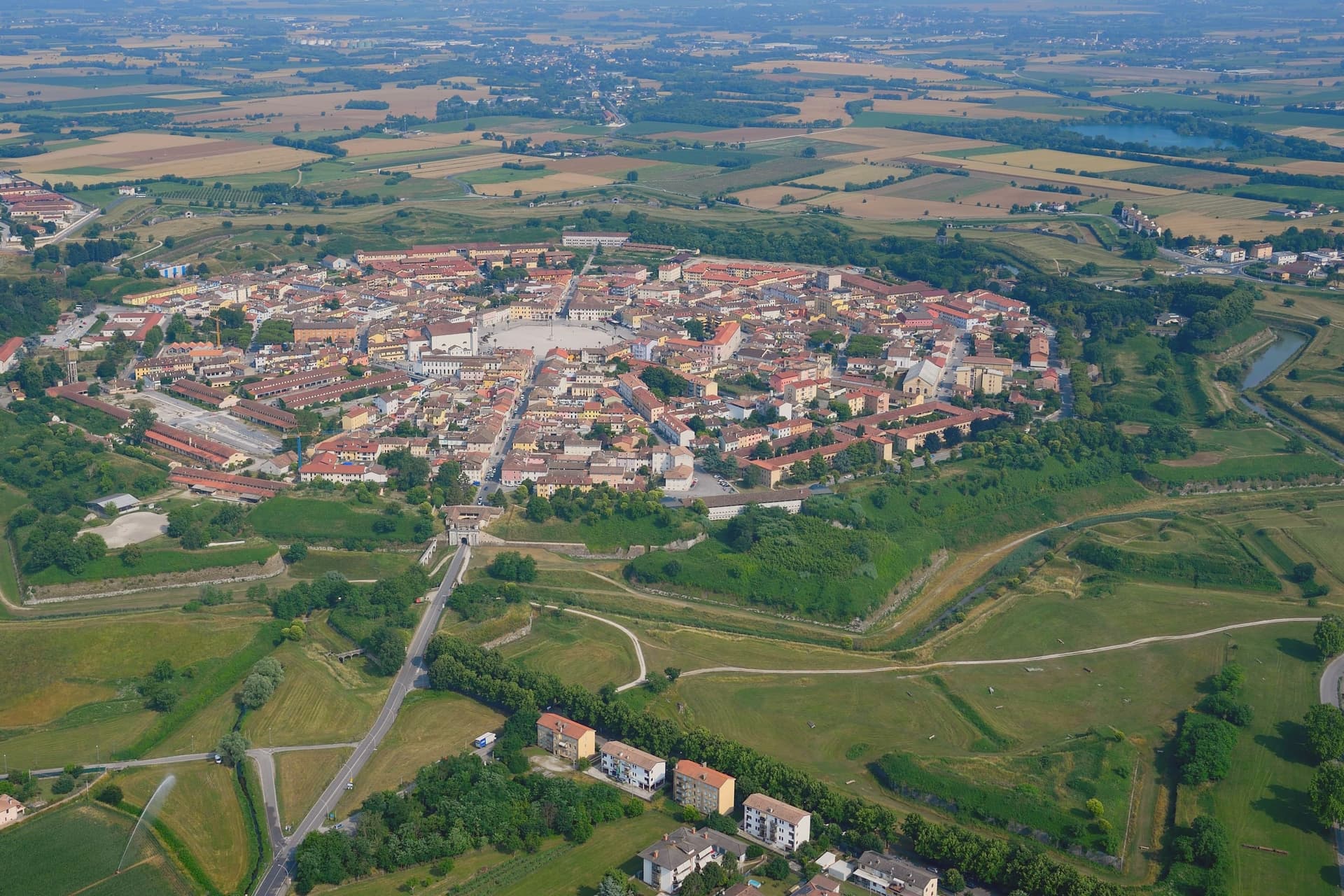
Palmanova stands at 26 meters on the Friuli plain, between Udine and the Adriatic, on ground that in 1593 was open country twenty kilometers from the Habsburg border. The Venetian Republic chose the feast of Santa Giustina to found it, and built the geometry on Marcantonio Barbaro's design: nine points radiating from a six-sided center, three ring streets running concentric to the walls, ramparts angled so each point covers the one beside it.
The town has no separate old and new quarter, no upper and lower half. It is one plan, laid down whole and then filled in slowly: the piazza paved in 1602, the first ring of bastions closed in 1623, the second between 1658 and 1690, the third under a different army entirely between 1806 and 1813.
Venice began the design, an emperor finished it, and the interval between the two is longer than most towns take to form by accident. The city never had to defend itself in earnest.
What was built as a machine for war became, over three centuries and two occupations, simply a shape. Everything the town now shows a visitor, the star, the gates, the ring roads, is the residue of a defense that was never used.
We confirmed you can reach this one by train.
What to see in Palmanova
- Piazza Grande. Hexagonal square laid out in 1602, six sides facing six radiating streets, ringed by the Duomo Dogale, the Loggia della Gran Guardia, and six bronze statues of the founding Provveditori.
- Duomo Dogale. Commissioned 1603, finished 1636, attributed to Scamozzi and Longhena. Baroque facade fronting a single Venetian nave, standing at the piazza's edge.
- Cinta muraria. The rings can still be walked in sequence: the 1623 line, the 1690 line, and the outer 1813 line, each built to a different generation of cannon range.
How to get to Palmanova
There is a railway station in the town, so you can arrive without a car and never need one while you are here. Udine is roughly 29 minutes away by road.
Our tip
April through June and September into October are the months Palmanova rewards. The fortress walls and the glacis around them are walkable in the cool, the Piazza Grande sits in shade by mid-afternoon, and the historical reenactment A.D. 1615 fills the centro in early September with Venetian-era costume drills. July and August push past thirty-three degrees on the open plain and the hexagonal piazza, fully exposed, becomes one of the hotter squares in the region between noon and four. Palmanova torna al 1615 falls in the season.
Sesto al Reghena
Why visit Sesto al Reghena
Sesto al Reghena sits at 13 meters on the Friuli-Venetian plain, between the Tagliamento and the Reghena, a small river bordered by linden trees that runs through the centro. The name records the sixth Roman mile out of Concordia Sagittaria on the road to Iulia Augusta.
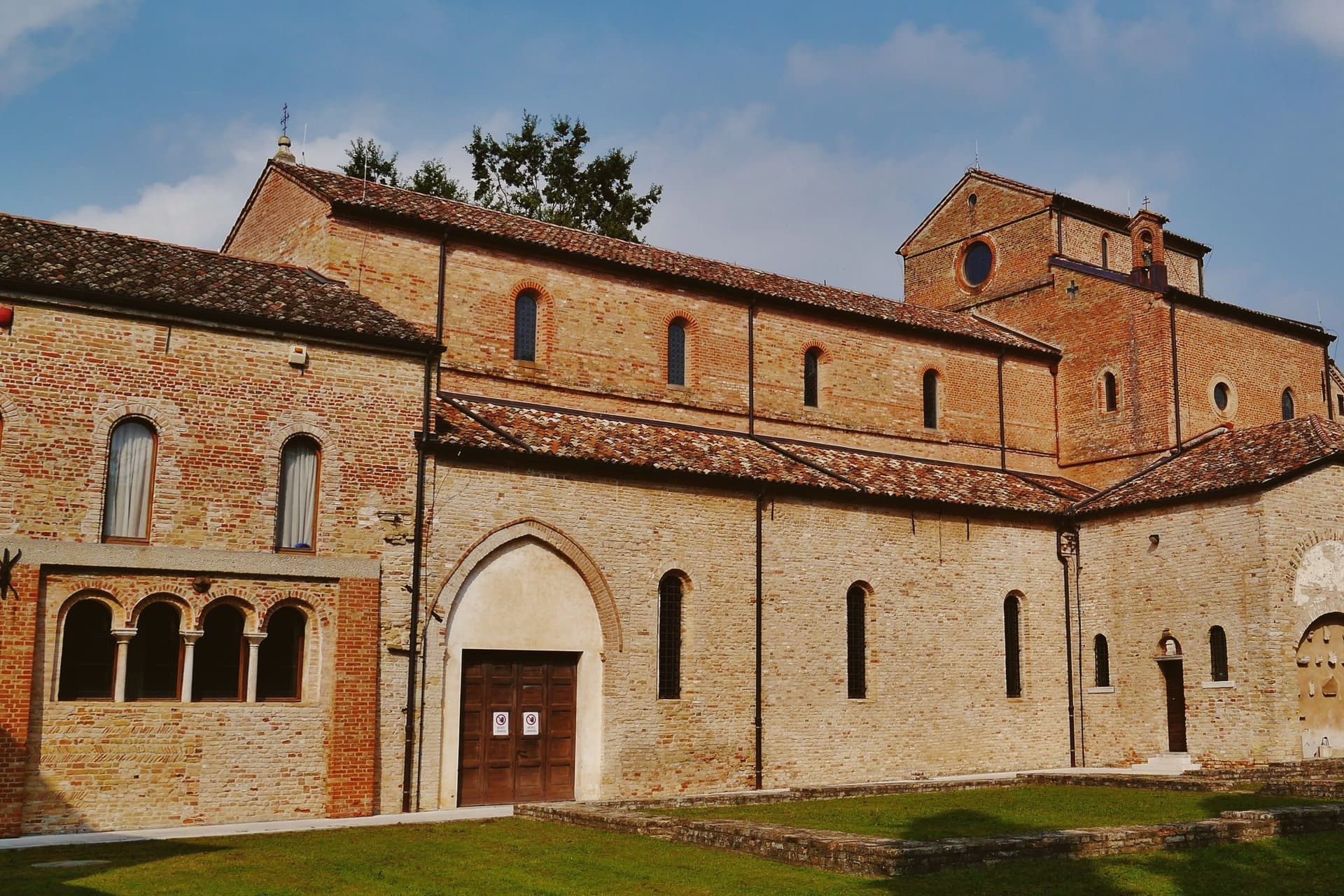
The town is one place: the Abbazia di Santa Maria in Sylvis, founded by the Lombard nobles Erfo, Marco, and Anto between 730 and 735, occupied by Benedictines until 762, sacked by a Magyar raid in 899, and refortified with walls and a moat in the tenth century. The abbey crypt is supported by twenty columns, several of them Roman spolia.
At the center stands the Urn of St. Anastasia, a single block of Greek marble carved by Cividale masters in the eighth century, with rose, cross, and arched motifs.
The abbey complex is the current town hall, the only commune in Italy headquartered inside a fortified Benedictine monastery. In Friulian, the village is called Siest.
We confirmed you can reach this one by train.
What to see in Sesto al Reghena
- Abbazia di Santa Maria in Sylvis. Eighth-century Benedictine abbey, refortified after the 899 Magyar sack, with a crypt of twenty columns and Carolingian-era frescoes; now the town hall.
- Urna di Sant'Anastasia. Single block of Greek marble in the abbey crypt, carved by Cividale masters in the eighth century with roses, crosses, arches, and rosettes.
- Torre Grimani. Surviving gate-tower of the medieval abbey defenses, named for the Venetian commendatory abbots who held the monastery in the sixteenth century.
How to get to Sesto al Reghena
There is a railway station in the town, so you can arrive without a car and never need one while you are here. Udine is roughly 53 minutes away by road.
Our tip
April through June and September into October are the months Sesto reads best. The Reghena banks are walkable, the abbey courtyard catches afternoon sun, and the Lison-Pramaggiore vineyards south of town are in their working seasons. July and August push past thirty-three degrees with the heavy humidity of the lower Friulian plain, and the abbey's crypt becomes the coolest room in the comune.
Gradisca d'Isonzo
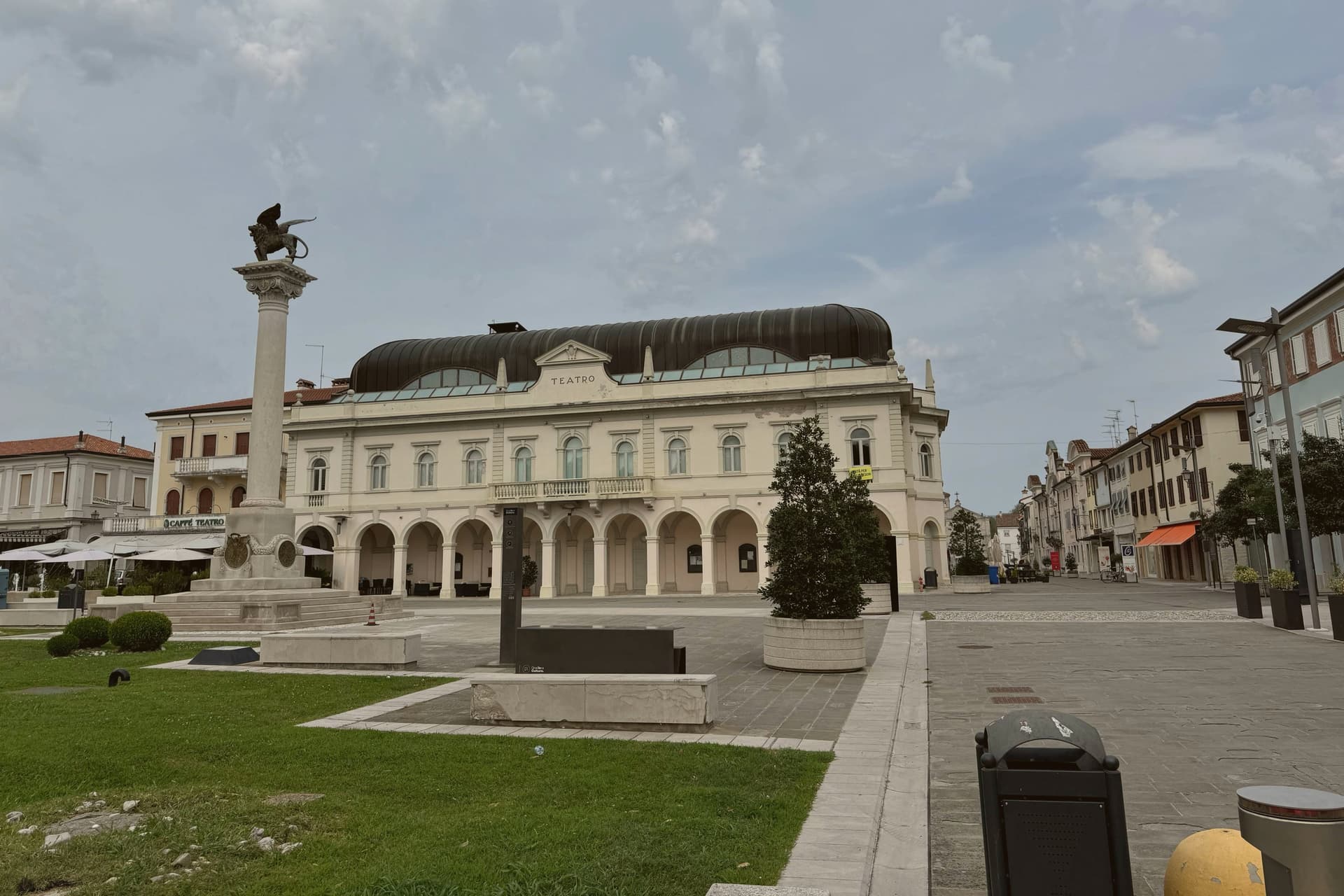
Why visit Gradisca d'Isonzo
Gradisca d'Isonzo sits at 32 meters on the right bank of the Isonzo, ten kilometers downriver from Gorizia. The Venetian Republic built it from scratch starting in 1479 as a frontier bastion against Ottoman raids that had reached Friuli the previous decade.
The fortification consumed twenty years and the advice of Leonardo da Vinci, sent here by the Senate in 1500 to redesign the artillery defenses. The result was a walled town twenty meters high, ringed by seven towers and a wide moat, with the river itself diverted into the defenses.
Maximilian I took it for the Habsburgs in 1511 during the War of the League of Cambrai, and it stayed in Austrian hands as the seat of the Principesca Contea di Gorizia e Gradisca for the next four centuries. The town that grew inside the walls is Baroque: the Palazzo Torriani, the Loggia dei Mercanti, the Casa de Fin, all built under the Habsburgs.
Casanova passed through in 1773. Today the walls, towers, and grid still hold.
We confirmed you can reach this one by train.
What to see in Gradisca d'Isonzo
- Fortezza Veneziana. Walled town from 1479, twenty meters high, ringed by seven towers and a wide moat, designed in part by Leonardo da Vinci in 1500.
- Torre di San Giorgio. Northwest bastion tower of the Venetian wall, the most complete of the seven and the symbol of the borgo.
- Palazzo Torriani. Sixteenth-century palazzo of the Della Torre family, later the residence of the Austrian Capitano, now the Town Hall on Via Roma.
How to get to Gradisca d'Isonzo
There is a railway station in the town, so you can arrive without a car and never need one while you are here. Udine is roughly 34 minutes away by road.
Our tip
April through June and September into October are the best months for Gradisca. The Isonzo runs blue-green from the Julian Alps snowmelt, the cycle path along the river opens, and the Saturday market fills the Spianata. July and August bring the heat the Friuli plain is known for, often above thirty-three degrees with high humidity, and the centro storico empties from two until six.
Cormons
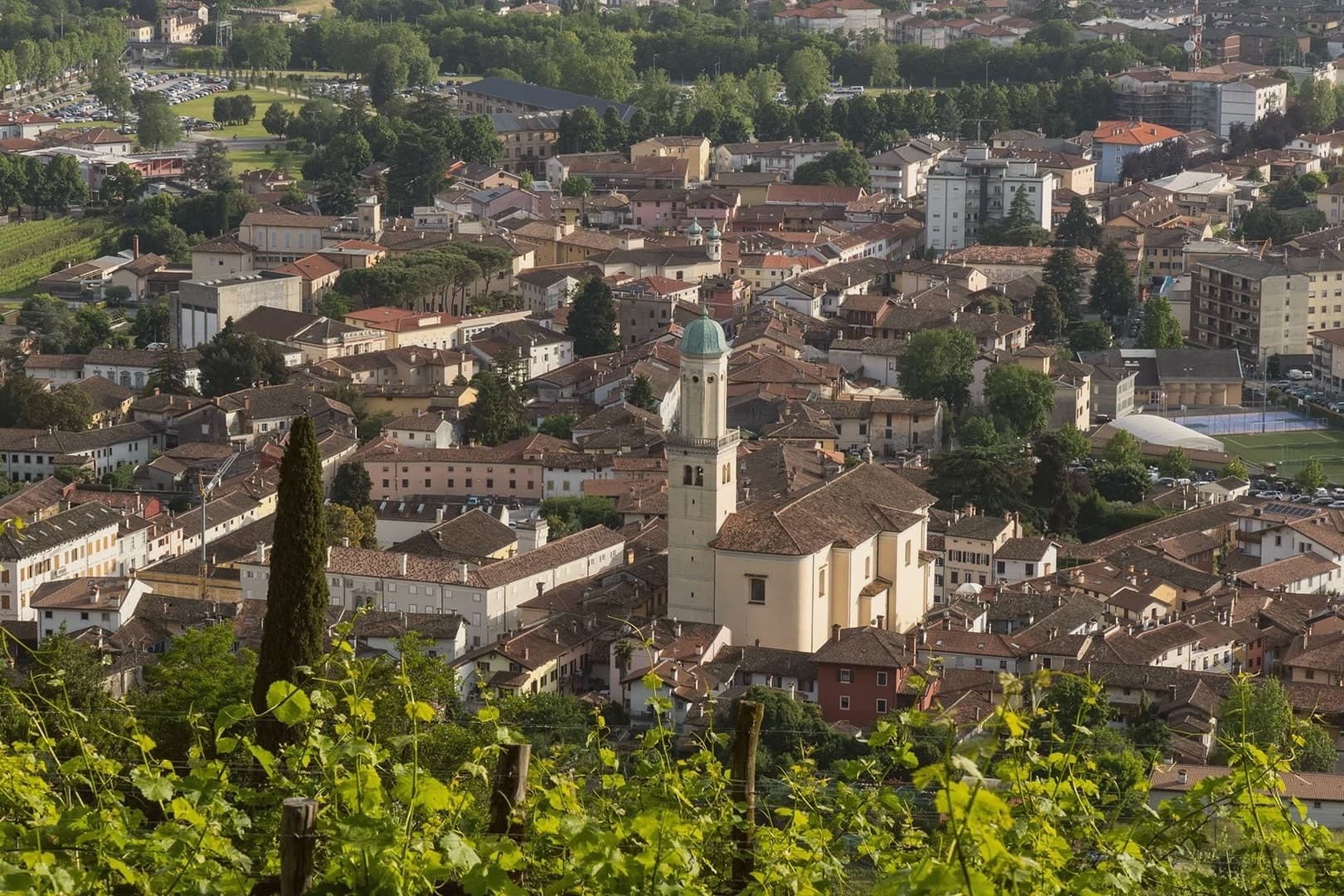
Why visit Cormons
Cormons sits at 51 meters where the Friulian plain rises into the Collio hills, twelve kilometers west of Gorizia on the Slovenian border. Once a Lombard fortress, then a residence of the Patriarchs of Aquileia, the town was contested between Venice and the Habsburgs and stayed Austrian from 1500 to 1918.
Palazzo Locatelli and Palazzo Waiz Del Mestri, facing the main square, keep the Viennese restraint of that period, and the church that anchors the square dates from the same Habsburg-era rebuilding. The vineyards begin on the slopes immediately north of town, where the soil locals call ponka gives way to the hill of Monte Quarin above, its ruined fortress looking down over the DOC zone and across the border into Slovenia.
The cooperative cellar draws its grapes from growers scattered through those same slopes. In 1870 Count La Tour brought French vines into nearby Russiz di Capriva for the Imperial Court palate, which the 1891 Austrian Oenological Congress in Gorizia codified.
What holds the town together is the border itself: a fortress height, a planted slope, and a square built by the empire that once ruled both, still standing in the order Austrian rule left them.
We confirmed you can reach this one by train.
What to see in Cormons
- Piazza della Libertà. Central Habsburg-era square framed by Palazzo Locatelli and other Austrian-influenced civic buildings, with the statue of Emperor Maximilian I at its center.
- Duomo di Sant'Adalberto. Eighteenth-century cathedral on the central square, the principal church of the Habsburg-era town, with painted ceiling and altarpieces of the period.
- Monte Quarin. Hill above Cormons (274 m) with ruins of the Lombard-patriarchal fortress, panoramic views over the Collio vineyards and into Slovenia.
How to get to Cormons
There is a railway station in the town, so you can arrive without a car and never need one while you are here. Udine is roughly 34 minutes away by road.
Our tip
April through June is the green window on the Collio hills, vines budding then leafing, ponka soil still cool from spring. September and October are the vendemmia months, the harvest dictating the rhythm of every cantina in the commune. July and August are warm and humid, the plain's heat pushed into the hills; tasting rooms run on appointment. Borgnano in Festa! falls in August.
Cividale del Friuli
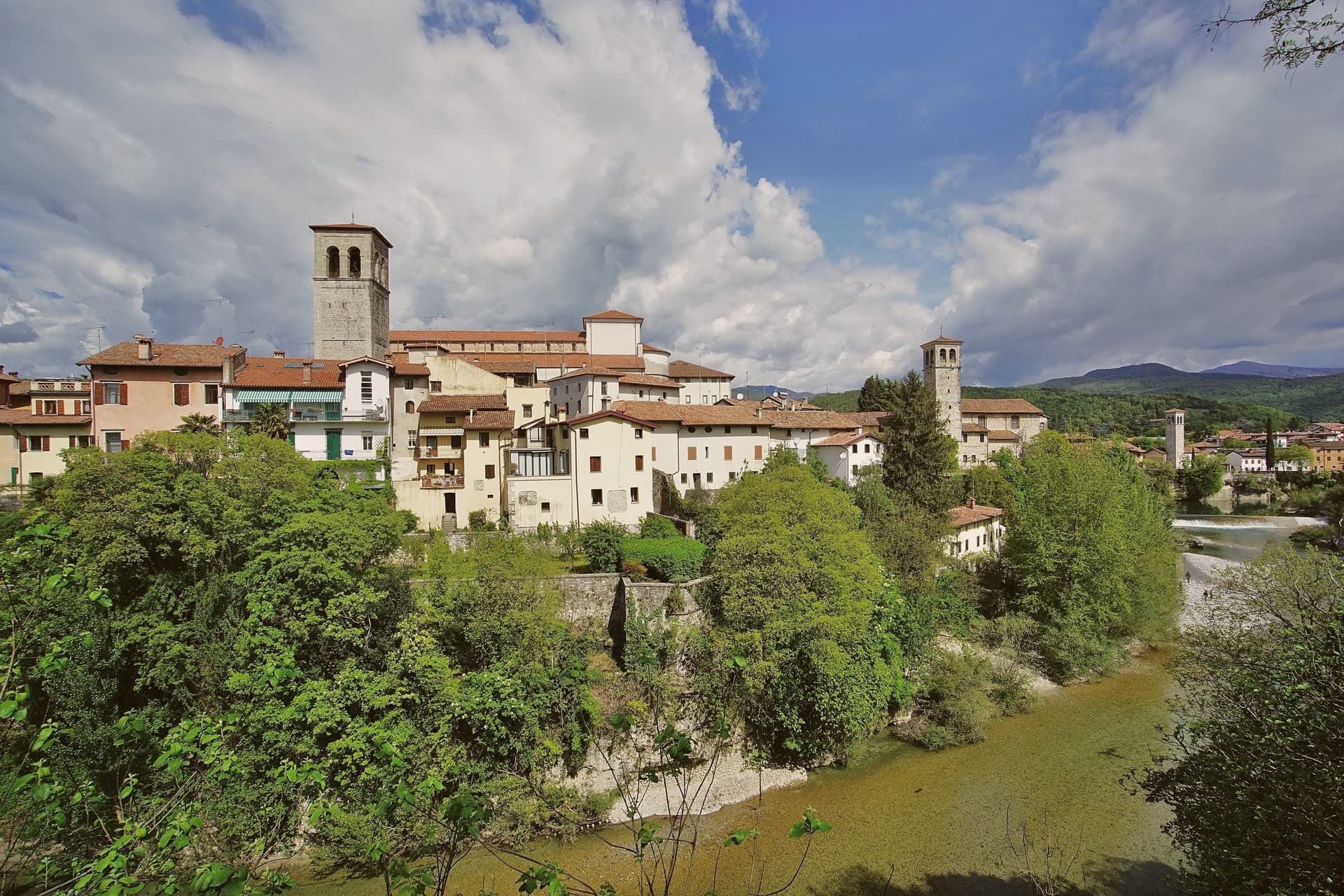
Why visit Cividale del Friuli
Cividale del Friuli sits at 138 meters on the right bank of the Natisone, fifteen kilometers from Udine and close enough to the Slovenian border that the river marks it. Julius Caesar founded the place as Forum Iulii in the first century BC, the name that eventually gave Friuli its own.
In 568 the Lombard king Alboin made it the capital of his first Italian duchy, and the Patriarchate of Aquileia later moved its seat here for four centuries. The Tempietto Longobardo, an eighth-century palatine chapel, holds six stucco female saints carved around 760, the best-preserved sculpture of the Lombard age in Europe.
It is one of seven sites in the UNESCO serial nomination Longobardi in Italia. The Ponte del Diavolo, begun in 1442, spans the Natisone gorge in two asymmetrical arches.
The Palio di San Donato fills the streets in late August, and Mittelfest brings Central European theater and music to the piazzas every July.
We confirmed you can reach this one by train.
What to see in Cividale del Friuli
- Tempietto Longobardo. Eighth-century palatine chapel in the Monastero di Santa Maria in Valle, with six stucco female saints in high relief, UNESCO-listed since 2011.
- Ponte del Diavolo. Stone bridge over the Natisone gorge, begun in 1442 on two asymmetrical arches resting on a central rock outcrop.
- Duomo di Santa Maria Assunta. Fifteenth-century cathedral with the Pala di Pellegrino II, a twelfth-century gilded silver altarpiece, and an attached Museo Cristiano.
How to get to Cividale del Friuli
There is a railway station in the town, so you can arrive without a car and never need one while you are here. Udine is roughly 26 minutes away by road.
Our tip
April through June and September into October are the months when the Natisone valley shows best, with green hills, mild evenings, and the Slovenian border country open for walking. July brings Mittelfest and August the Palio di San Donato, so the centro storico fills with theater crowds and historical pageant. Both months can push past thirty degrees, though 138 meters of elevation and the river keep nights cooler than the Friulian plain. Palio di San Donato falls in August.
Muggia
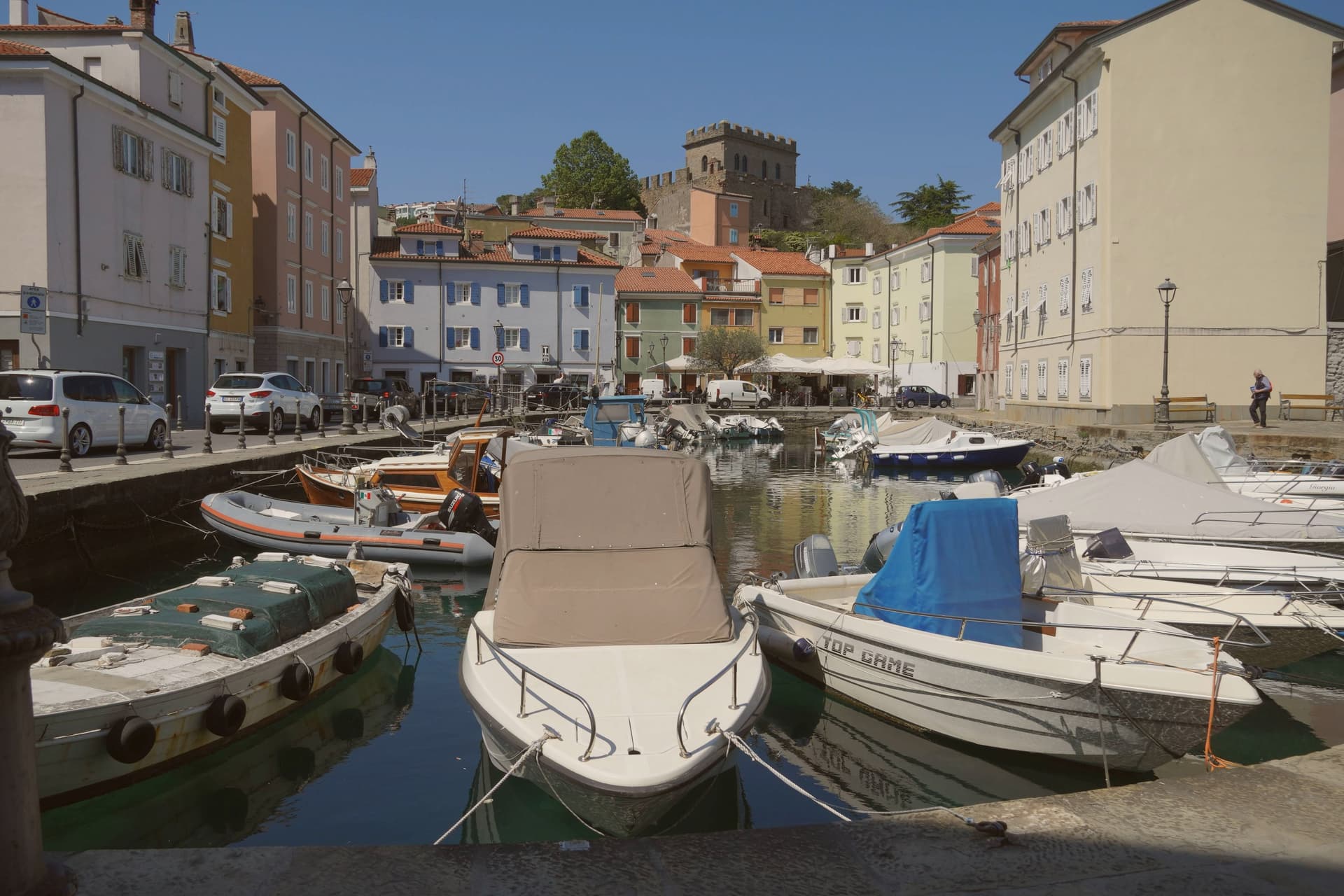
Why visit Muggia
Muggia sits at 13 meters on the eastern flank of the Gulf of Trieste, the only Italian port town on the Istrian peninsula and the last commune before the Slovenian border. The bones go back to a prehistoric castelliere, eighth or seventh century BC, which the Romans turned into Castrum Muglae in 178 BC.
After Venice took it in 1420 the town acquired the architecture it still wears: tri-lobed Gothic facades, narrow calli, a mandracchio harbor ringed by pastel houses. The Duomo of Santi Giovanni e Paolo was consecrated in 1263 and faced with Aurisina limestone in 1467 in Venetian Renaissance Gothic.
After Venice fell in 1797, Muggia entered the Austrian Empire and grew on naval shipbuilding through World War II. The town joined Italy in 1918.
The Carnevale, ten parading companies in custom costumes, runs as the oldest in Friuli-Venezia Giulia.
We confirmed you can reach this one by train.
What to see in Muggia
- Duomo dei Santi Giovanni e Paolo. Cathedral consecrated in 1263, refaced in 1467 with Aurisina limestone and a tri-lobed Venetian Renaissance Gothic façade, the visual symbol of the town.
- Castello di Muggia Vecchia. Hilltop fortress above the town on the site of the prehistoric castelliere, rebuilt by Romans, the Patriarchate of Aquileia, and Venice, then abandoned.
- Mandracchio. Sheltered small-boat harbor at the center of the town, pastel houses lining the water, ranked among the fifteen most beautiful small ports in Italy.
How to get to Muggia
There is a railway station in the town, so you can arrive without a car and never need one while you are here. Trieste is roughly 22 minutes away by road.
Our tip
May through September is the open season on the gulf. The mandracchio fills with boats, tables spread along the water, evening temperatures stay in the low twenties. July and August bring crowds out of Trieste; the harborfront restaurants book up. Carnevale Estivo di Muggia falls in August.
Cervignano del Friuli
Why visit Cervignano del Friuli
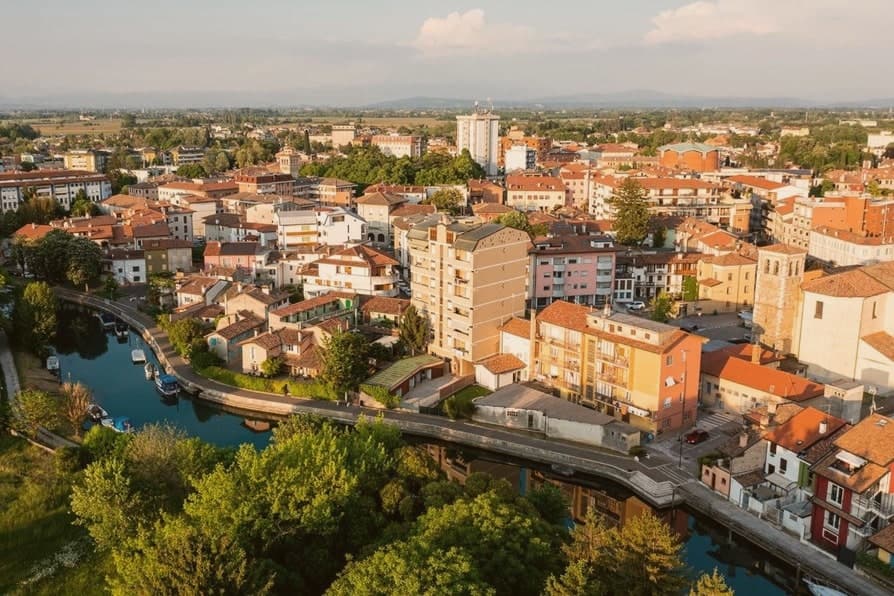
Cervignano del Friuli sits at five meters on the lower Friuli plain, eight kilometers north of Aquileia and forty from Trieste. The town's origin is tied to Aquileia's founding in 181 BC: the Ausa, a short river that rises in karst springs and reaches the lagoon, served as a service port for the Roman colony, and the anchor in the comune's coat of arms still records that function.
The eleventh-century abbey dedicated to San Michele Arcangelo placed the village under the monastery of Aquileia. Venice took it in 1420, the Habsburgs retook it in 1521 with the Treaty of Worms, and it remained Austrian until World War I.
The railway to Trieste opened in 1860 and the station became one of the principal stops on the Vienna-Trieste line, which is why Cervignano grew faster than the older centers around it. Today, with 13,573 residents, it is the largest commune of the Bassa and the administrative anchor between Palmanova, Aquileia, and Grado.
We confirmed you can reach this one by train.
What to see in Cervignano del Friuli
- Duomo dei Santi Michele e Adalberto. Modern cathedral consecrated in 1964 on the site of the medieval abbey church, dedicated to the archangel and to the missionary saint of Prague.
- Chiesa di San Michele Arcangelo. 1780 parish church on the former Benedictine abbey footprint, with a single nave and a Baroque altar from the eighteenth century.
- Fiume Ausa. Short spring-fed river running through the centro, the historic inland port that linked Cervignano to Aquileia and the Adriatic in Roman times.
How to get to Cervignano del Friuli
There is a railway station in the town, so you can arrive without a car and never need one while you are here. Udine is roughly 31 minutes away by road.
Our tip
April through June is the right window in Cervignano. The plain is green, the cycle path along the Ausa runs all the way to Grado, and the temperature still leaves the centro walkable at three in the afternoon. July and August push into thirty-three degrees with high humidity coming off the lagoon; the centro empties between two and six.
More from Anywhere Italy
- The best wine towns in Friuli-Venezia Giulia
- The best hidden wine towns you can reach by train within 90 minutes of Udine
- The prettiest villages you can reach by train within 90 minutes of Udine
- The best towns you can reach by train within an hour of Trieste
- The 6 best towns you can reach by train in the province of Udine
- The best towns you can reach by train that eat well in Friuli-Venezia Giulia